Reference Decision: cc • N° 84-17.222 • 1986-06-11 • View the decision →
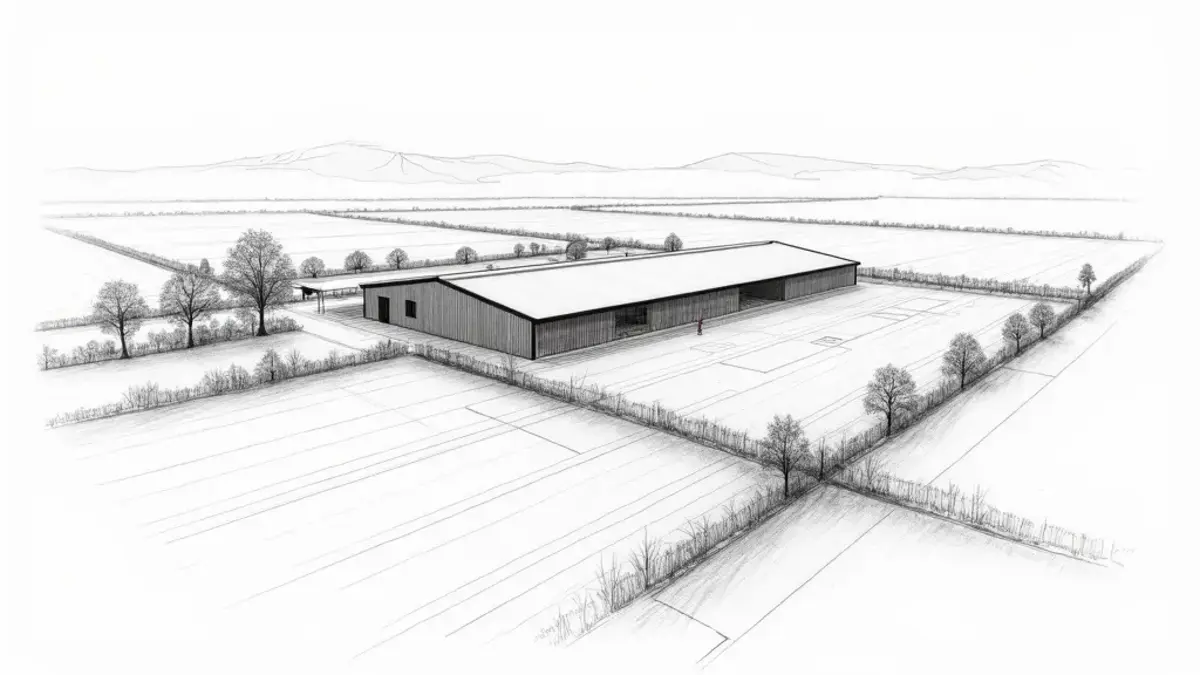
Imagine: you are the owner of a bare plot of land in Joué-lès-Tours. A trader offers to lease it to you for twenty years, with the possibility of building a warehouse on it. But without an obligation to build. You sign. Ten years later, the rent has tripled, and you want to revise it. The lessee objects, arguing that it is a building lease, subject to different rules. What should you do?
This is precisely the question the Court of Cassation decided in 1986. A case opposing a married couple (the owners) to a commercial company, which sheds light on the boundary between two often confused types of leases: the emphyteutic lease (long-term lease with the right to build) and the building lease (which requires building).
The High Court gave a clear answer: a lease of bare land granted for twenty years, which authorises the lessee to erect buildings without requiring him to do so, is an emphyteutic lease. And it is subject to the decree of 30 September 1953 for rent revision. A landmark decision that directly concerns any landowner or tenant.
The Facts: A Story Like Many Others
In 1970, Mr and Mrs X, owners of a plot of land in Joué-lès-Tours, lease it to a commercial company specialising in the sale of building materials. The lease is signed for twenty years, renewable. The contract specifies that the lessee may erect any building for commercial or industrial use, but he has no obligation to do so. The rent is set at 10,000 francs per year (about 1,500 euros).
In 1976, the couple request a rent revision. The company refuses, arguing that it is a building lease, which falls outside the 1953 decree on commercial leases. The owners take the matter to court. First instance: they win. The Versailles Court of Appeal confirms in 1984: it is an emphyteutic lease, therefore subject to revision.
The company appeals to the Court of Cassation. It argues that the twenty-year term and the freedom to build characterise a building lease. But the Court of Cassation dismisses the appeal on 11 June 1986. It upholds the reasoning of the lower courts: the lease is emphyteutic because it does not require building. Full stop.
The Court's Reasoning — Analysed
The Court of Cassation relies on two key texts. First, Article L. 451-1 of the Rural Code (now codified as Article L. 451-1 of the Rural and Maritime Fishing Code), which defines the emphyteutic lease as a long-term lease (18 to 99 years) conferring a real right on the lessee, with an obligation to improve the land. Second, the decree of 30 September 1953 (since incorporated into the Commercial Code), which governs the revision of rents for commercial leases.
The central question was: does the disputed lease fall under the emphyteutic lease or the building lease? The difference is crucial because the building lease requires the lessee to build and maintain the buildings for the entire term of the lease, while the emphyteutic lease does not require construction, but simply an improvement of the land (for example, planting, fencing, or even buildings if the contract allows).
The judges analysed the intention of the parties. The contract authorised the lessee to build, but did not oblige him to do so. However, for there to be a building lease, the obligation to build must be an essential condition of the contract. Here, the lessee could well exploit the land without building anything. Therefore, it is an emphyteutic lease.
The Court of Cassation also noted that the lease had a term of twenty years, which corresponds to the minimum term of an emphyteutic lease (18 years). And it emphasised that the lessee was a property professional, which reinforced the idea that he knew the nature of the contract.
What This Means for You — Practically
This decision has important practical consequences for owners and tenants of bare land.
- For the landlord: If you lease bare land for a long term (20 years or more) without requiring construction, you have an emphyteutic lease. This means the rent can be revised under the rules for commercial leases (1953 decree). You can request a revision every three years if the rent has varied by more than 10%. In Chinon, for example: a plot leased at €5,000 per year in 2020, if the rental value has increased by 15% in 2023, you can demand a revision to €5,750.
- For the tenant: You benefit from a right to renew the lease (except for serious grounds). But be careful: the emphyteutic lease does not give you the status of a trader, unless you carry out a commercial activity there. You must also ensure you improve the land, even without building.
- For the purchaser: If you buy land leased under an emphyteutic lease, you must respect the existing lease. The lessee has a real right over the land, which may limit your projects.
A concrete example: in Joué-lès-Tours, a 25-year emphyteutic lease with an initial rent of €8,000 can see its rent revised to €10,400 after 5 years if the index has increased by 30%. Without this decision, the landlord would have been stuck with the initial rent.
Four Tips to Avoid This Type of Dispute
- Draft a precise contract: Clearly state whether the lessee has an obligation to build or not. An ambiguous clause may be interpreted against the landlord.
- Include a revision clause: Even if the 1953 decree applies automatically, a contractual clause can avoid disputes. Indicate the reference index (e.g., ICC, ILC) and the periodicity.
- Consult a lawyer before signing: A professional can correctly classify the lease. A classification error can be costly: loss of revision, or conversely, application of an unfavourable regime.
- Archive all correspondence: Letters, emails, draft contracts show the intention of the parties. In case of dispute, these elements are crucial to prove the nature of the lease.
Further Reading: Related Case Law and Developments
This 1986 decision is part of a consistent line of authority. The Court of Cassation has always distinguished the emphyteutic lease from the building lease based on the obligation to build. In a judgment of 13 December 1984 (No. 83-14.123), it had already held that the building lease requires an obligation to build, not a mere option.
Since then, the law of 16 December 1964 (building lease) has been codified in Articles L. 251-1 et seq. of the Construction and Housing Code. But the case law remains stable. The courts are particularly attentive to the real intention of the parties, beyond the terms of the contract.
A recent development: the Pinel law of 2014 amended the rules for revising commercial leases, but the principle remains the same. The emphyteutic lease continues to be governed by the 1953 decree for revision, unless the parties have agreed on a different mechanism.
In Practice: What to Do
Checklist to verify if your lease is emphyteutic:
- Does the lease concern bare land? (Yes → possibly emphyteutic)
- Is the term at least 18 years? (Yes → indicative)
- Does the lessee have an obligation to build? (No → rather emphyteutic)
- Does the contract grant a real right to the lessee (right to sell the lease, mortgage it)? (Yes → emphyteutic)
- Is the rent revisable according to indices? (Yes → compatible with the 1953 decree)
Quick FAQ:
- Can I terminate an emphyteutic lease before its term? Yes, if the lessee does not pay the rent or maintain the land. Otherwise, you must wait until the term.
- Does an emphyteutic lease give a right to an eviction indemnity? No, not as such. But if the lessee builds, he may claim an indemnity for the constructions.
- How to revise the rent? By registered letter with acknowledgement of receipt, respecting a 6-month notice period. If the lessee refuses, seize the tribunal judiciaire.
Are you in a similar situation? A first 30-minute consultation with Maître Zakine (€45) can save you months of proceedings — and often much more. Book an appointment →
📌 Does this apply to your situation? Maître Cécile Zakine, French real estate lawyer, practises throughout France.
→ Prendre rendez-vous pour une consultation |
→ Browse all our legal articles
