Reference Decision: cc • No. 14-23.224 • 2015-11-25 • View the decision →
Imagine for a moment: you are the owner of agricultural land in Mauguio, passed down through generations. To avoid inheritance disputes and preserve the farm, you create an agricultural land group (GFA). You lease the plots to a local farmer who cultivates them. Everything is going well, until the day the GFA accumulates debts and can no longer repay them. You tell yourself: 'We will file an over-indebtedness application, like any individual.' Wrong. The Court of Cassation has just reminded that a GFA which leases its land carries on a non-commercial professional activity, and therefore cannot benefit from this procedure. Why? Because the law distinguishes between professional debts and personal debts. And this distinction can be costly.
This decision, handed down on 25 November 2015, went relatively unnoticed, but it changes the game for thousands of GFAs in France. Whether you are an owner in Castelnau-le-Lez, Lyon or Nantes, understanding what constitutes a non-commercial professional activity is crucial to anticipating your group's financial difficulties. So, what exactly does this judgment say? And above all, how do you apply it at home? That is what we will see.
The Facts: A Story That Happens Every Day
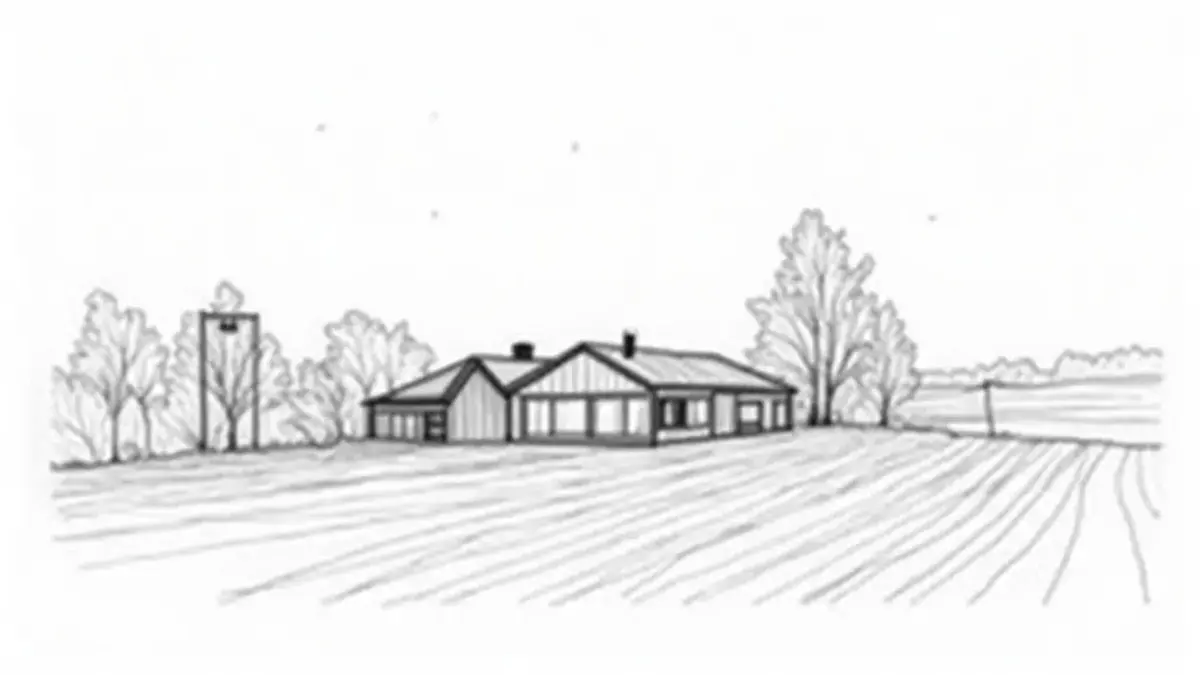
The case begins with a GFA, whose articles of association provide that its object is 'the ownership and administration of all buildings and real estate rights for agricultural purposes comprising its assets.' Specifically, this GFA owns several plots of land, notably in the municipality of Saint-Léonard-des-Parcs. Most of these plots are leased to tenant farmers. The articles of association formally prohibit any direct farming, meaning the GFA cannot cultivate its own land: it must lease it out.
The GFA encounters financial difficulties. It accumulates debts to creditors. In an attempt to escape enforcement, it files an application for individual over-indebtedness with the over-indebtedness commission. But the commission rejects its application, considering that the GFA carries on a professional activity and therefore cannot benefit from this procedure reserved for non-professional individuals. The GFA challenges this decision before the district court, then the court of appeal. Each time, the judges uphold the rejection. The GFA appeals to the Court of Cassation.
The legal debate focuses on a specific point: does a GFA that merely leases its land carry on a professional activity? For the GFA, the answer is no: it merely receives rent, without any commercial, craft or liberal activity. It is a simple management of private assets, like an individual who rents out a flat. But the Court of Cassation does not see it that way.
The Reasoning of the Court — Analysed
To understand the judgment, we must delve into Article L. 313-3 of the Consumer Code (in its version then in force). This text defines individual over-indebtedness as a situation where 'an individual in good faith is manifestly unable to meet all his non-professional debts which are due and to fall due.' In other words, only personal debts, not debts related to a professional activity, can be written off or rescheduled through this procedure.
The question therefore is: is a GFA an individual carrying on a professional activity? No, a GFA is a legal person (a company). But case law equates the debts of a legal person to professional debts if that legal person carries on a professional activity. And that is where the problem lies for our GFA.
The Court of Cassation, in its judgment of 25 November 2015, approves the court of appeal's finding that the GFA carries on a non-commercial professional activity. Why non-commercial? Because the GFA does not perform commercial acts (buying to resell, etc.). It leases agricultural land, which falls under the management of an agricultural estate. But this management is considered a professional activity as long as it is the very object of the group and is carried out habitually. In this case, the GFA was created for this purpose, and the leasing of its plots is its main and exclusive activity.
The judges emphasise that the articles of association prohibit any direct farming. The GFA cannot therefore cultivate itself; it is compelled to grant leases. This statutory constraint reinforces the professional nature of the activity: the GFA is a vehicle for land holding, not a mere individual managing his assets. Consequently, the GFA's debts are professional debts, and the over-indebtedness procedure is closed to it.
This judgment is a confirmation of previous case law. It does not create a change of direction, but it firmly anchors the judges' position: a GFA carries on a professional activity, even if it only leases its land. This has serious consequences for landowners.
What This Changes for You — Concretely
If you own agricultural land through a GFA, you must understand that your structure is considered a professional. This means that if your GFA encounters financial difficulties, you will not be able to file an over-indebtedness application to wipe out the debts. You will have to resort to other procedures, such as judicial reorganisation or judicial liquidation, which are more complex and often more costly.
Let us take a concrete example. You are in Castelnau-le-Lez, you have created a GFA with your brothers and sisters to manage the family land. The GFA borrowed 100,000 euros to buy an additional plot. But the weather ruined the harvests, your tenant can no longer pay the rent, and the GFA can no longer repay the loan. You think you can file an over-indebtedness application to have the debt cancelled. Wrong: the bank can seize the land, and you will be personally pursued if you have stood as guarantor.
For agricultural tenants, this decision is less directly impactful, but it confirms that the GFA landlord is a professional. In the event of a dispute over the lease, the GFA cannot hide behind its status as a mere individual to avoid enforcement.
If you are a property professional (notary, lawyer, wealth management adviser), this judgment reminds you of the importance of properly characterising the GFA's activity when drafting the articles of association. A clause prohibiting direct farming, as in this case, reinforces the professional nature. If, on the contrary, you wish the GFA to be considered as simple private asset management, you should perhaps authorise direct farming, even occasionally.
Four Tips to Avoid This Type of Dispute
- Draft clear articles of association: if you want your GFA to be considered a non-professional activity, avoid completely prohibiting direct farming. Leave a possibility for direct farming, even minimal, to show that the activity is not exclusively rental.
- Diversify income sources: if the GFA also receives subsidies, sells agricultural products (even occasionally), this may strengthen the argument that the activity is commercial, but also demonstrate a professional activity. Conversely, if you want to remain in the realm of individuals, limit yourself to receiving rent.
- Anticipate financial difficulties: be aware that over-indebtedness is not an option. Provide for a safety cash reserve, or take out rent loss insurance. In case of problems, quickly consult a lawyer specialising in rural law to study alternatives (ad hoc mandate, conciliation).
- Do not stand as guarantor in your personal capacity: if the GFA borrows, avoid standing as guarantor in your own name. Otherwise, if the GFA defaults, you will be pursued on your personal assets without being able to benefit from over-indebtedness for these professional debts.
Further Reading: Related Case Law and Developments
This judgment is part of a consistent line of the Court of Cassation. Already, in a judgment of 19 March 2013 (No. 12-10.079), the Court held that the activity of leasing buildings could be a non-commercial professional activity, particularly when carried out habitually and in an organised framework. More recently, a judgment of 10 January 2019 (No. 17-26.748) applied the same logic to a real estate company (SCI) that leased properties: the SCI carries on a professional activity if it is constituted for that purpose and leasing is its habitual activity.
The trend is therefore clear: judges consider that any legal person whose corporate object is the leasing of property, and which carries out this activity habitually, is a professional. It does not matter whether the leasing is agricultural, commercial or residential. This broad interpretation of the concept of professional activity aims to protect the over-indebtedness scheme, reserved for consumers in personal distress, and to prevent professional structures from using it to escape their debts.
For the future, we can expect the courts to continue in this direction. GFAs, SCIs, forestry groups… all those who live from leasing their property are likely to be excluded from over-indebtedness. Increased vigilance is therefore required for landowners.
Key Points to Remember
- A GFA that leases its land carries on a non-commercial professional activity.
- This activity renders it ineligible for the individual over-indebtedness procedure.
- The GFA's debts are professional debts: they can only be written off or rescheduled through collective procedures (reorganisation, liquidation).
- If you are a personal guarantor of the GFA, you risk being pursued on your own assets without being able to benefit from over-indebtedness.
- To avoid this trap, draft suitable articles of association and anticipate financial difficulties.
Besoin d'un conseil personnalisé ? Contactez Maître Zakine — première consultation 30 min à 45€.
Are you in a similar situation? A first 30-minute consultation with Maître Zakine (€45) can save you months of proceedings — and often much more. Book an appointment →
📌 Does this apply to your situation? Maître Cécile Zakine, French real estate lawyer, practises throughout France.
servitude-droit-passage-avocat/" rel="dofollow">→ Avocat servitudes & foncier |
→ Browse all our legal articles
