Reference decision: cc • N° 03-16.266 • 2005-02-16 • View the decision →
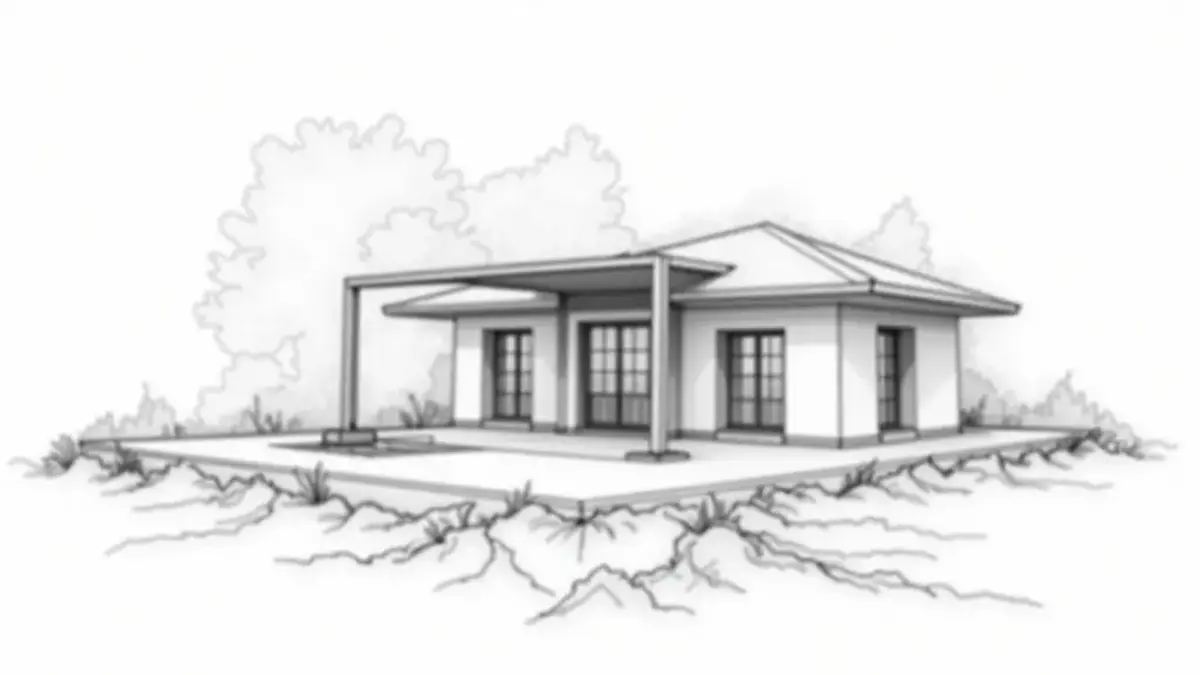
Imagine: you have just purchased a house in Saint-Gilles, in the Gard, with a swimming pool. The works are finished, but the building is so poorly constructed that the cracks threaten its stability. The expert concludes: everything must be demolished. You turn to the judge to obtain judicial acceptance – that is, an official recognition that the work is completed, in order to trigger the warranties. The question every owner then asks: can judicial acceptance be obtained for a building condemned to demolition?
The Court of Cassation, in its judgment of 16 February 2005 (no. 03-16.266), answers in the negative. A building that must be demolished is not capable of being the subject of judicial acceptance. This decision, rendered in the context of a complex dispute between an owner and his architect, upends the strategy of victims of defects. It forces a rethinking of remedies: rather than seeking recognition of completion, one must directly pursue the liability of the builders.
Whether you are an owner, developer or co-owner in Uzès or elsewhere, understanding this decision is crucial. It delimits the scope of judicial acceptance and indicates the path to follow when the building is irremediably defective. Let us delve into the facts, the judges' reasoning and the practical consequences.
The facts: a story like many that happen every day
Mr X, owner in Saint-Gilles, entrusts an architect, Mr Y, with the construction of a villa with swimming pool. The plans are drawn up, the building permit obtained. But very quickly, disorders appear: the building has such serious defects that its demolition is envisaged. Mr X sues the architect and the company RC Architecture, responsible for the execution plans, before the tribunal de grande instance of Nîmes.
The owner seeks judicial acceptance of the building – in other words, that the judge declares that the construction is completed and that he can benefit from the legal warranties (in particular the decennial liability). He also claims damages for the losses suffered. For their part, the architects contest any liability, arguing that the amended building permit was not their doing.
The court of Nîmes dismisses Mr X's claim for judicial acceptance. The court of appeal of Nîmes confirms: the building, destined for demolition, cannot be accepted. Mr X appeals to the Court of Cassation, but the Court of Cassation dismisses his appeal by the judgment of 16 February 2005. It holds that the court of appeal rightly found that demolition was necessary, rendering any judicial acceptance impossible. The lower courts did not have to inquire whether the architect had been instructed with the amended permit: the essential point is that the building must disappear.
The reasoning of the court — dissected
The Court of Cassation relies on a simple principle: judicial acceptance, provided for in Article 1792-6 of the Civil Code, is the act by which the employer (the client) accepts the building with or without reservations. It only makes sense if the building is in a state to be preserved. However, a building condemned to demolition cannot be the subject of such acceptance. The judges recall that acceptance is not an end in itself: it serves to trigger the warranties, but if the building is irremediably defective, the path of contractual liability (Article 1231-1 of the Civil Code, which sanctions non-performance of obligations) is more appropriate.
In this case, the court of appeal had found, by a sovereign decision, that the disorders were such that demolition was required. Therefore, it mattered little whether the amended permit had been entrusted to the architect or not: the building could not be accepted. The Court of Cassation validates this reasoning: it dismisses the applicant's argument that the court of appeal had failed to verify whether the architect had been instructed with the amended permit. For the Court, this question was irrelevant to the impossibility of accepting a building destined for destruction.
This decision is neither a reversal nor an evolution, but a confirmation of previous case law: judicial acceptance presupposes that the building is capable of fulfilling its function. It fits within a logic of pragmatism: what is the point of declaring a building completed if it must be razed? On the other hand, it closes the door to a dilatory strategy of obtaining acceptance in order to then trigger the warranties, when the real responsible party is the builder.
What this changes for you — concretely
If you are the owner of a seriously defective property, this decision directs you towards a direct action in liability against the builder, rather than attempting to obtain judicial acceptance. For example, in Uzès, an owner who discovers structural cracks in his villa after construction must immediately have the defects noted by an expert and sue the contractor for repair or compensation, without going through acceptance. The time limit to act is 10 years from the actual acceptance (decennial liability), but if acceptance never took place, the starting point is the date of discovery of the defects. Warning: if you wait too long, you risk limitation.
For a property developer in Nîmes, this case law implies not to neglect reservations during amicable acceptance. If the building is so defective that it must be demolished, you cannot rely on judicial acceptance to protect yourself. It is better to refuse acceptance and pursue the builder's liability without delay. A quantified example: a housing development of 5 houses in Saint-Gilles has widespread water ingress. The cost of repairs is estimated at €150,000, but the expert recommends demolition for €80,000. The developer cannot seek judicial acceptance; he must directly claim the cost of demolition and reconstruction from the builder, on the basis of contractual liability.
For a co-owner, the situation is similar: if common parts (roof, foundations) are irremediably defective, the syndic cannot seek judicial acceptance. He must act against the developer or contractor within the legal time limits. In practice, if you are in this situation, you must consult a specialist lawyer to determine the nature of the disorders and the strategy to adopt. An attempt at judicial acceptance would be futile and would waste precious time.
Four tips to avoid this type of dispute
- Have a soil study carried out before any construction project, especially in areas like Saint-Gilles or Uzès where the ground may be unstable. A geotechnical study (analysis of the soil nature) costs between €1,000 and €3,000, but it prevents major disorders.
- Demand solid guarantees from your builder: ensure that he takes out decennial liability insurance and building defects insurance (assurance dommages-ouvrage). Check the certificates before work begins.
- During amicable acceptance, do not sign without reservations if defects are visible. Take photos, list the anomalies, and call in an expert if necessary. An acceptance without reservations deprives you of the possibility to claim for apparent defects.
- In case of serious disorders, consult a lawyer without delay. Do not try to obtain judicial acceptance if the building must be demolished: pursue the builder's liability directly. Each month lost may reduce your chances of obtaining full compensation.
Further reading: related case law and developments
This decision is part of a line of cases requiring that the building be in a state to be preserved in order to be accepted. For example, in a judgment of the 3rd Civil Chamber of 8 June 1994 (no. 92-16.514), the Court of Cassation held that judicial acceptance cannot be granted if the building is unfit for its purpose due to serious defects. More recently, the same chamber recalled, on 13 September 2018 (no. 17-21.212), that judicial acceptance presupposes that the building is completed and conforms to the contractual specifications, which excludes condemned constructions.
The trend of the courts is therefore clear: judicial acceptance is not a means to circumvent builders' liability. It is merely a declaration of completion. If the building is irremediably defective, the only remedy is a claim for damages. For the future, this case law could be reinforced by the concept of "hidden defect" (grave hidden defect) in construction contracts, which gives the right to rescission of the contract (cancellation) rather than acceptance.
Summary and next steps
What to remember:
- A building to be demolished cannot be the subject of judicial acceptance.
- The owner must act directly in liability against the builder, on the basis of Article 1231-1 of the Civil Code (contractual liability) or decennial liability (Article 1792).
- Time limits to observe: 10 years from acceptance for decennial liability, or 5 years from discovery of defects for an action in contractual liability.
Besoin d'un conseil personnalisé ? Contactez Maître Zakine — première consultation 30 min à 45€.
If you are faced with a similar situation, here are the steps to follow:
- Have the defects noted by a judicial or amicable expert.
- Put the builder on formal notice to repair or compensate.
- Consult a lawyer specialising in property law to assess your options.
- Bring legal proceedings within the limitation periods.
Are you in a similar situation? A first 30-minute consultation with Maître Zakine (€45) could save you months of proceedings — and often much more. Book an appointment →
📌 Does this apply to your situation? Maître Cécile Zakine, French real estate lawyer, practises throughout France.
vefa-ccmi/" rel="dofollow">→ Avocat VEFA & construction |
→ Browse all our legal articles
