Reference Decision: cc • No. 22-21.132 • 2024-04-04 • View the decision →
Imagine: you own a charming house in Obernai, with an open view over the vineyards. One morning, your neighbour undertakes works to raise the height of his chalet. Result: your panorama is obstructed, your terrace loses all privacy. You bring legal proceedings. The court recognises the damage, but… reduces the compensation because the demolition works would cost the neighbour too much. Unfair, right?
This is exactly the issue decided by the Court of Cassation in its judgment of 4 April 2024 (No. 22-21.132). And its answer is unequivocal: the principle of full compensation (Article 1240 of the Civil Code) requires that the victim be compensated without loss or gain, without the judge being able to invoke the disproportionate cost of the remedial measures for the responsible party.
Whether you are a property owner, tenant or real estate professional, this decision changes your understanding of the right to compensation. So, concretely, what can you expect? Explanations.
The Facts: A Story That Happens Every Day
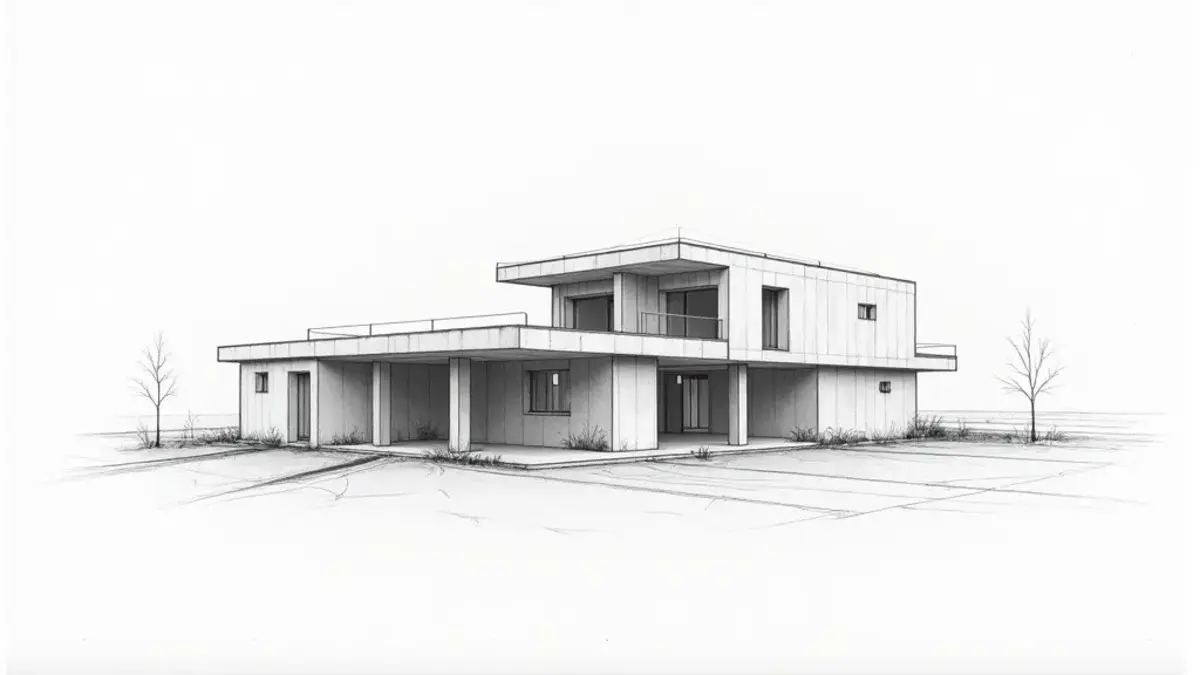
Mr. X, owner of a house in Obernai, sees his neighbour, Mr. Y, building a chalet. Works begin based on a building permit (administrative authorisation). But quickly, Mr. Y obtains a modified permit that increases the height of the ridge (the highest point of the roof). Result: the chalet far exceeds what was initially planned and encroaches on Mr. X's view.
Mr. X sues Mr. Y. He demands the demolition of the excess part and damages (financial compensation) for the loss of view and sunlight. The Strasbourg High Court (Tribunal de grande instance) finds in his favour: it orders demolition and awards Mr. Y to pay €10,000 in damages. Mr. Y appeals (requests a review of the judgment).
The Colmar Court of Appeal, in 2022, confirms the principle of fault (non-compliance with the permit) and the damage, but… surprise: it refuses to order complete demolition on the ground that the cost of the works (approximately €50,000) would be disproportionate to the damage suffered (assessed at €10,000). It merely orders Mr. Y to pay €10,000. Mr. X is not satisfied: he wants his chalet to be brought into compliance, not just money. He appeals to the Court of Cassation.
The Reasoning of the Court — Analysed
The Court of Cassation quashes (annuls) the Court of Appeal's judgment. It recalls the fundamental principle: "any act of man which causes damage to another obliges the person by whose fault it occurred to repair it" (Article 1240 of the Civil Code). This principle implies full compensation: the victim must be compensated without loss or gain. The judges of fact (those who decide the facts) cannot adjust the compensation based on the cost to the responsible party.
Concretely, the Court says: if the only way to repair the damage is to demolish the illegal construction, the judge must order it, even if it costs the neighbour a lot. The disproportionate nature of the cost is not a legal reason to refuse restoration. This is a clear confirmation of previous case law, notably the Court of Cassation judgment of 11 March 2016 (No. 15-14.722).
Mr. Y's arguments (high cost of works, proportionality) were dismissed. The Court recalls that proportionality has no place in non-contractual matters (outside contract): the cost of repair is not compared with the benefit obtained by the victim.
What is new is the firmness of the message: the judges of fact cannot, under the guise of proportionality, empty the right to compensation of its content. A victim has the right to restoration of their property, full stop.
What This Changes for You — Concretely
If you are a property owner and your neighbour builds or modifies their property in violation of rules (easement, building permit, legal distance), you can now demand the demolition of the unlawful structures without fear that the judge will invoke the cost to the neighbour. Example: in Lingolsheim, a property owner saw his neighbour raise his terrace, causing him to lose 30% of sunlight. The restoration works were estimated at €20,000. Before this judgment, a judge might have reduced compensation to €5,000. Now, he must order demolition if necessary.
For tenants: if your home suffers from a neighbourhood disturbance (noise, obstructed view) due to an illegal construction, you can take action against the owner of the neighbouring land. The judgment strengthens your right to obtain corrective works.
For buyers: before buying, check the easements and building permits of neighbours. If an illegal construction exists, you can demand its demolition, even if the seller did not mention it.
For co-owners: if a co-owner carries out unauthorised works modifying common parts, the co-ownership can demand restoration. The judgment confirms that the cost to the co-owner is not an obstacle.
Caution: the damage must be certain and direct. You must prove the fault (e.g., non-compliance with the permit) and the causal link (e.g., loss of sunlight). Keep photos, bailiff's reports, letters.
Four Tips to Avoid This Type of Dispute
- Before building, check planning rules and easements: consult the Local Plan of Urban Planning (PLU) and the land registry. In Obernai, some areas have strict maximum heights. Do not rely on a modified permit without checking its impact on neighbours.
- Inform your neighbours of your projects: a simple registered letter with acknowledgement of receipt can defuse tensions. Explain the nature of the works and their potential impact. An amicable agreement costs less than a trial.
- In case of disturbance, act quickly: actions for demolition are time-barred after 5 years from completion of the works (Article 2224 of the Civil Code). Do not delay. Have the facts recorded by a bailiff at the first signs.
- Consult a specialist lawyer before any proceedings: a professional will assess your chances and save you unnecessary costs. A judicial expert may be appointed to quantify the damage. In Lingolsheim, an expertise cost €3,000 but allowed obtaining €15,000 in damages.
Further Reading: Related Case Law and Developments
This decision is part of a consistent line: the Court of Cassation has always refused proportionality in non-contractual matters. For example, in the judgment of 11 March 2016 (No. 15-14.722), it had already censured a Court of Appeal that had refused the demolition of an illegal construction due to cost. The originality of 2024 is that it reaffirms this forcefully, without exception.
A notable development: some courts, such as the Strasbourg Judicial Court, were beginning to apply a "soft proportionality" in neighbourhood disturbance matters. This judgment calls them to order. In future, expect a stricter application of the principle of full compensation, including for minor damage.
However, note: if the damage can be repaired by a sum of money (e.g., loss of market value), the judge may choose that route. But if restoration is the only solution, he must order it. The question of abuse of right (action brought solely to harm) remains open, but the Court of Cassation did not entertain that argument here.
Key Points to Remember
- Disproportionate cost is no longer an excuse: the party responsible for damage cannot avoid restoration on the pretext that it costs them a lot.
- Full compensation prevails: the victim must be compensated without loss or gain. The judge must order the necessary measures, whatever they may be.
- Act within 5 years: the limitation period runs from completion of the works. After that, you can no longer demand demolition.
- Keep evidence: photos, statements, bailiff's reports. Without proof, no compensation.
- Consult a lawyer: each case is unique. A professional will help you assess your chances and build your case.
Are you in a similar situation? A first 30-minute consultation with Maître Zakine (€45) can save you months of proceedings — and often much more. Book an appointment →
📌 Does this apply to your situation? Maître Cécile Zakine, French real estate lawyer, practises throughout France.
→ Prendre rendez-vous pour une consultation |
→ Browse all our legal articles
