Reference Decision: cc • N° 68-91.616 • 1969-02-26 • View the decision →
You have installed a small wooden chalet in your garden in Le Barcarès or Cabestany, to house your mother-in-law or to rent to tourists. It sits on concrete blocks, you have connected electricity, water, and even a small toilet. It is just an improved garden shed, right? Well, the courts ruled more than fifty years ago: it is not a simple cabin, it is a construction within the meaning of the French Planning Code. And without a permit, you risk a fine, demolition, and a lot of trouble.
This decision of the French Supreme Court of 26 February 1969 (No. 68-91.616) is a classic that every owner should know. It raises a fundamental question: when does an installation become a construction requiring authorisation? The answer is not in the size or the material, but in the purpose and equipment. A wooden chalet with water and electricity is a house. Full stop.
So, before you start fitting out a tiny house, a static mobile home or a beach cabin, read the following. I will tell you the story, dissect the judges' reasoning, and give you keys to avoid litigation. Because, believe me, I have seen cases where a simple undeclared shelter cost thousands of euros.
The Facts: A Story Like Many Others
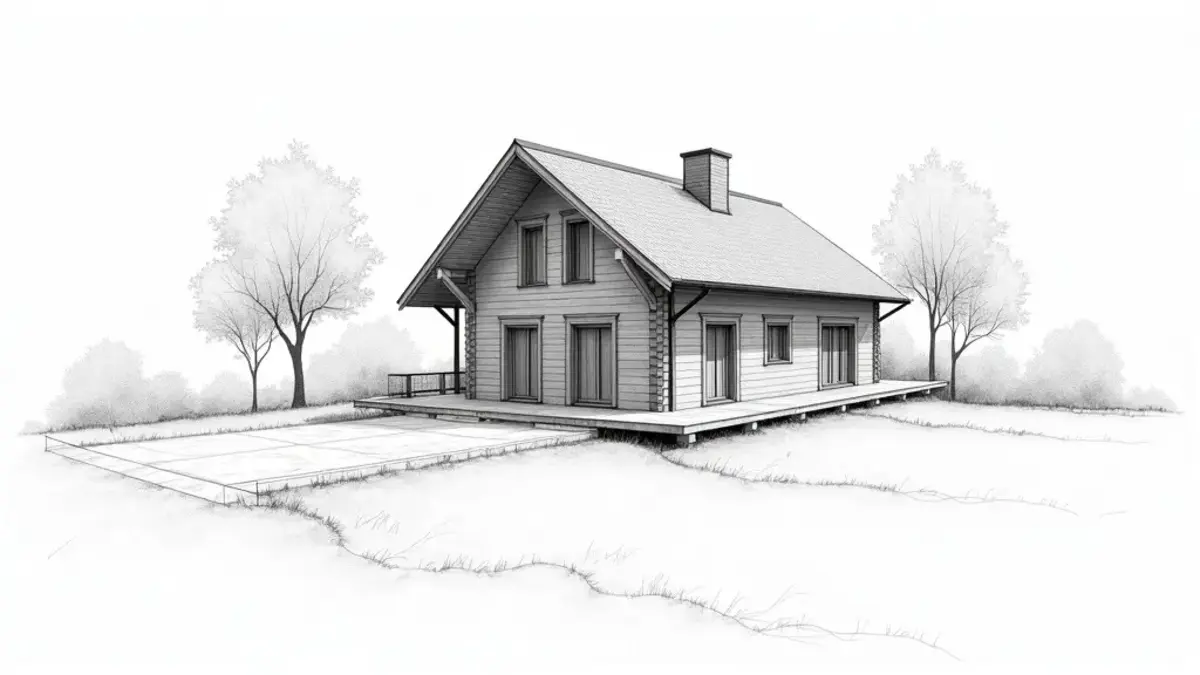
In this case, a lady, let us call her Mrs Y, owned a plot of land in the Amiens region. She had applied for a building permit for a dwelling house and a small prefabricated wooden building. The permit was refused. Despite this refusal, she installed the small wooden building on her land. This building, of modest size, rested on concrete blocks, was equipped with running water, electricity and a toilet. In short, it was habitable.
The town hall drew up a report for violation of the Planning Code: construction without a permit. Mrs Y was prosecuted before the criminal court, then on appeal. The Amiens Court of Appeal, on 23 April 1968, convicted her. She then appealed to the Supreme Court.
Before the Supreme Court, Mrs Y argued that this building was not a construction within the meaning of Article 84 of the Planning Code (now codified in Article L. 421-1). According to her, it was a simple temporary installation, dismantlable, without foundations. She pleaded that a wooden chalet on concrete blocks was no more a construction than a caravan on chocks. But the Court did not follow this argument.
For the high court, the absence of solid foundations or the prefabricated nature does not detract from the classification as a construction. What matters is that the building is fixed to the ground (even by concrete blocks) and that it is intended for habitation with the necessary equipment. In this case, the small building was used as a dwelling, it was provided with water, electricity and sanitation. It was therefore a construction subject to a permit.
This case illustrates a typical dispute: an owner thinks he can circumvent the rule by using light materials or quick assembly. But the courts look at the reality of the use, not the appearance.
The Reasoning of the Court — Dissected
The legal basis of the decision is Article 84 of the old Planning Code, which provides that no one may, without obtaining a building permit, erect a new construction, even if it does not have foundations. The Supreme Court interprets this text extensively: a construction is any structure fixed to the ground, intended to remain in place, and used for habitation, commerce or activity.
Concretely, for the judges, the small prefabricated wooden building met all the criteria: it rested on concrete blocks (thus anchored to the ground), it was equipped with water, electricity and a toilet (therefore habitable), and it was actually used as a dwelling (use). It did not matter that it was theoretically dismantlable or that it was made of wood. The purpose of habitation triggers the classification.
An important point: the Court did not require concrete foundations. Concrete blocks are sufficient to characterise a durable installation. It also dismissed the argument of precariousness: a construction that can be dismantled is not necessarily precarious if it is installed to last. In this case, the building was there to stay, with connections to networks.
This decision is part of a consistent body of case law: the courts are strict on the notion of construction. A simple wooden hut with a bed and a stove can be reclassified as a construction if it is fixed and inhabited. The trend is towards protecting planning and combating informal housing.
If compared with a later decision (e.g., Cass. crim., 12 January 1999), the Court confirmed that a caravan placed on chocks, without connections, is not a construction. The difference lies in the absence of durable fixing and equipment. So, it is all a question of the degree of installation.
What This Means for You — Practically
This decision has immediate practical consequences for several profiles.
Landlord Owner: You rent a wooden chalet on your land, in Cabestany for example, as seasonal accommodation. If this chalet has no permit, you risk a fine of €1,200 to €300,000 (according to recent case law) and an obligation to demolish. In addition, your tenant could sue you for substandard housing if standards are not met. I had a case in Perpignan where an owner had to repay €15,000 in collected rents and pay €5,000 in damages. Not to mention legal fees.
Purchaser: You buy a house with a fitted cabin. Check if this cabin has been declared. If not, you could be forced to demolish it after the sale. Ask the seller for planning documents and make a declaration of completion of works. If in doubt, an operational planning certificate can inform you.
Individual Who Wants to Fit Out a Tiny House: You dream of a small wooden house on your land. Know that even without concrete foundations, if you place it on concrete blocks and connect it to networks, it is a construction. You must submit a building permit if the floor area exceeds 20 m², or a prior declaration below that. Do not neglect this step: in Le Barcarès, the town hall is particularly vigilant about illegal constructions in the coastal zone.
In summary: any habitable shelter, fixed and equipped, is a construction. Do the formalities before installing.
Four Tips to Avoid This Type of Dispute
- 1. Before installing a shelter, request an operational planning certificate from your town hall. This document will inform you of the rules applicable to your land (buildable zone, floor area ratio, etc.). It will prevent you from building in a flood zone or protected area.
- 2. For any building with a floor area or footprint greater than 5 m², make a prior declaration. Above 20 m², a building permit is mandatory. Do not rely on the nature of the material: wood, metal, plastic, the rule is the same.
- 3. If you buy a property with an existing cabin, demand from the seller the planning permissions. In the absence of documents, you can ask for a warranty or reduce the price. Use the hidden defects warranty clause if necessary.
- 4. In case of inspection, do not deny the facts. Cooperate with the planning officers. If the infringement is minor, you can regularise the situation by filing a retrospective building permit application. But beware: if the building is in a non-buildable zone, regularisation will be impossible.
Further Reading: Related Case Law and Developments
The 1969 decision has been confirmed several times. For example, in a judgment of 14 January 1997 (No. 96-80.134), the Supreme Court ruled that a corrugated iron hut used as a dwelling, placed on concrete blocks with water and electricity, constituted a construction. Same logic: use and equipment prevail.
Conversely, a judgment of 12 January 1999 (No. 98-80.450) acquitted an owner who had installed a caravan on chocks, without connections, because it was not durably fixed to the ground and did not have fixed equipment. The caravan remained a habitable land vehicle subject to different rules.
The current trend of the courts is to consider that any fixed premises, even wooden, with networks, is a construction. Judges are increasingly strict, especially in tourist areas like Le Barcarès or Cabestany, where property pressure is high. The aim is to combat uncontrolled urbanisation and preserve the environment.
For the future, with the development of tiny houses and lightweight housing, the issue is likely to arise again. The government has even considered a specific status for lightweight leisure dwellings, but today, the rule remains that of 1969: if it is habitable and fixed, it is a construction.
What You Absolutely Must Remember
Checklist to Follow Before Installing a Habitable Shelter:
- Check the zoning of your land (local planning plan, municipal map).
- Measure the floor area and footprint of the future building.
- File a prior declaration (DP) if the area is less than 20 m², a building permit (PC) above that.
- Connect to networks only after obtaining authorisation.
- Keep the authorisation and the receipt of the completion declaration safe.
FAQ:
- Can I install a wooden chalet without a permit if it has no foundations? No, because concrete blocks are enough to fix it to the ground. The absence of concrete foundations is not a valid argument.
- What if I have already built without a permit? You can try to regularise by filing a retrospective permit. But if the land is non-buildable, the only solution is demolition.
- What is the fine for building without a permit? It can range from €1,200 to €300,000, with the possibility of demolition ordered by the court. In case of repeat offence, the penalty may be heavier.
- Is a mobile home a construction? Yes, if it is fixed to the ground (by chocks or concrete blocks) and connected to networks. If it remains on wheels and not connected, it is a habitable land vehicle, subject to different rules.
- Can I rent an undeclared cabin on Airbnb? No, because you risk a fine and a ban on renting. Moreover, your insurance may not cover losses.
Besoin d'un conseil personnalisé ? Contactez Maître Zakine — première consultation 30 min à 45€.
Are you in a similar situation? A first 30-minute consultation with Maître Zakine (€45) can save you months of proceedings — and often much more. Book an appointment →
📌 Does this apply to your situation? Maître Cécile Zakine, French real estate lawyer, practises throughout France.
→ Avocat servitudes & foncier |
→ Browse all our legal articles
