Reference Decision: cc • No. 75-11.536 • 1976-11-23 • View the decision →
Imagine: you live peacefully in Saint-Martin-d'Hères, in a house with a garden that you maintain with care. One day, your neighbour undertakes to build an imposing barn, directly on the boundary line of your two properties. You wonder: does he have the right to build so close to you? What does the planning permission say? And if that permission is modified or cancelled, does that change anything? These are precisely the questions the Court of Cassation had to answer in 1976 in a case that remains a reference for all property owners.
The decision we are about to analyse concerns a classic neighbourhood dispute but with complex legal issues. Mr Robidet, a landowner in Voiron, had obtained planning permission for a barn, but this permission required a setback of three metres from the party wall. However, the barn was built in violation of this condition. Worse still, a second permission had been granted, then cancelled, creating confusion as to the validity of the first. The neighbour, Mr X, suffered the consequences: loss of view, loss of sunlight, risk of fire. The Court of Cassation ruled: the initial permission remained valid, and the illegal construction had to be demolished.
Whether you are a homeowner, tenant or property professional, this decision concerns you. It reminds us that planning rules are not mere formalities: they protect the health and safety of everyone. And above all, that a cancelled planning permission does not extinguish obligations arising from an earlier permission. Let us delve into the details of this case to understand how to avoid finding yourself in a similar situation.
The Facts: A Story Like Many Others
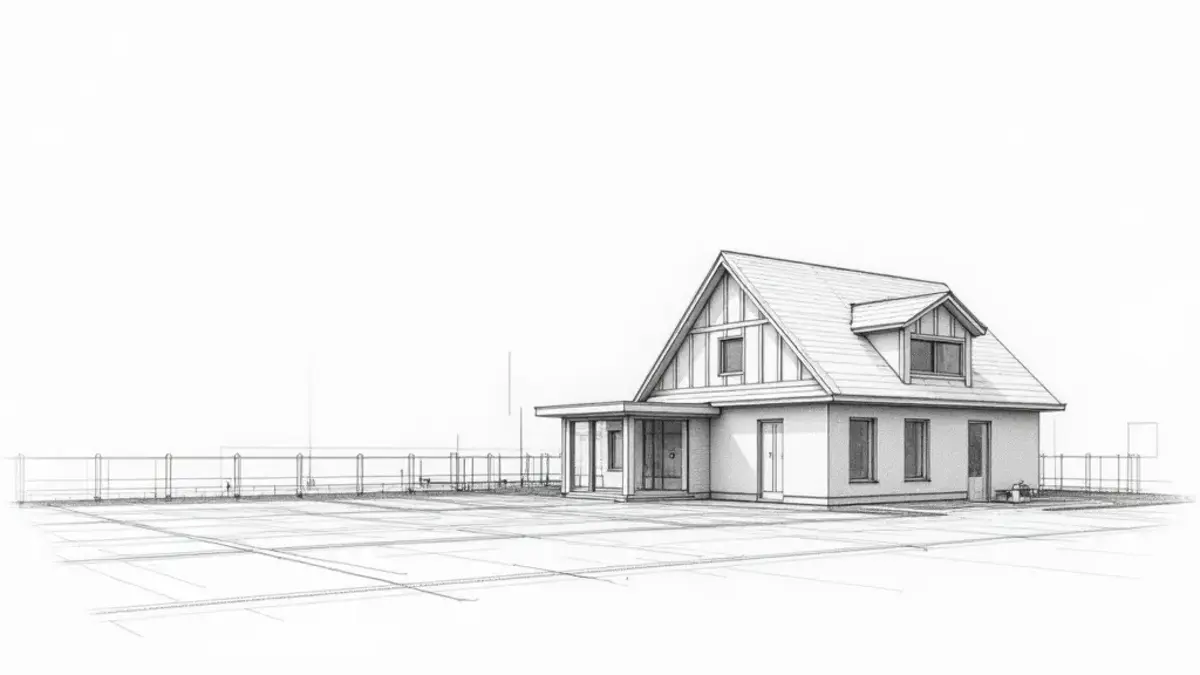
In Voiron, Isère, Mr Robidet owns a plot of land on which he wishes to build a barn of significant size. In March 1966, he obtained a first planning permission, but the administration made its grant subject to a specific condition: the building must respect a setback of three metres from the boundary with the neighbouring property owned by Mr X. This condition was aimed at ensuring health (avoiding damp, allowing ventilation) and safety (preventing fire risks, facilitating emergency access).
However, Mr Robidet did not comply with this requirement. He built his barn directly on the boundary line, without any setback. How is this possible? In reality, a second planning permission was granted on 12 July 1967, which did not provide for any setback. But this second permission was cancelled by the Conseil d'État for procedural defects. Mr Robidet then argued that the cancellation of the second permission had also cancelled the first, and that his construction was therefore lawful. The neighbour, Mr X, disagreed: he suffered direct harm — loss of sunlight, obstructed view, increased fire risk — and sought demolition of the barn.
The Tribunal de grande instance of Grenoble ruled in favour of Mr X, ordering demolition. Mr Robidet appealed, but the Cour d'appel of Grenoble upheld the judgment. He then appealed to the Court of Cassation. The question posed to the Court of Cassation was decisive: does the cancellation of the second planning permission render the first permission, which required a setback, void? And, if not, does non-compliance with this condition justify demolition?
The Reasoning of the Court — Analysed
The Court of Cassation, in its judgment of 23 November 1976, dismissed Mr Robidet's appeal and confirmed the demolition of the barn. Its reasoning proceeded in two stages.
First, the High Court rejected Mr Robidet's argument that the cancellation of the second permission had cancelled the first. It recalled that the cancellation of an administrative act (the 1967 permission) only affects that act, unless the law provides otherwise. In this case, the first permission of 1966, although replaced in practice by the second, had never been cancelled. It remained valid and its requirements — notably the three-metre setback — continued to be binding on the builder. In other words, a planning permission does not automatically disappear when a subsequent permission is cancelled. This may be surprising, but it is logical: the cancellation of a later permission does not retroactively affect an earlier permission that was lawfully granted.
Second, the Court examined the harm suffered by Mr X. It noted that the construction of the barn on the boundary, without respecting the setback, harmed health (lack of air and light, damp) and safety (fire risk, difficulty of access for firefighters). These nuisances constituted an abnormal neighbourhood disturbance, grounding civil liability under Article 1382 of the Civil Code (predecessor to the current Article 1240). The Court stated that the harm was direct and personal: Mr X suffered a loss of view, a reduction in sunlight, and legitimate concern for his safety. Therefore, demolition was the only proportionate measure to put an end to the disturbance.
This decision is not a change in case law but a confirmation of established principles: a planning permission is an individual act whose cancellation does not affect earlier acts, and non-compliance with the requirements of a valid permission engages the builder's liability. The Court of Cassation here shows itself protective of neighbours' rights, reminding that planning rules are not mere administrative formalities but concrete guarantees for the quality of life and safety of all.
What This Means for You — Practically
If you are a landowner or homeowner, this decision directly concerns you. Imagine you buy a plot in Saint-Martin-d'Hères, with a planning permission obtained by the seller. You build an extension, but later discover that the permission required a two-metre setback from the neighbouring boundary. You thought a cancelled amending permission freed you from that obligation? You are wrong, as this judgment reminds you. You could be forced to demolish your construction at your own expense, without any compensation.
For tenants, the situation is different. If your landlord builds an annex on the boundary without respecting the permission's requirements, you are not directly responsible. But you suffer the nuisances (noise, loss of light) and can claim a rent reduction or lease termination for disturbance of enjoyment. However, if you are a tenant and your neighbour builds illegally, you can take legal action, just as the owner can. Courts recognise that abnormal neighbourhood disturbance also affects occupants.
For property professionals (agents, developers, notaries), this case law is an essential reminder: when selling or building, you must scrupulously check the history of planning permissions. A cancelled permission does not extinguish obligations under an earlier permission. For example, in Voiron, if you sell a plot with a building erected under a first permission, but a second permission was cancelled, you must inform the buyer of the requirements of the first permission. Failure to inform engages your liability.
In practice, if you are in a similar situation, you must act quickly. The limitation period for seeking demolition of an illegal construction is 30 years from completion of the works (Article 2227 of the Civil Code). But beware: the longer you wait, the harder it will be to prove harm. If the construction was completed more than 10 years ago, you cannot rely on planning rules (Article L. 111-12 of the Planning Code), but you can still base your claim on abnormal neighbourhood disturbance. The amounts at stake can be high: demolition costs (often several tens of thousands of euros), loss of property value (up to 20%), damages for loss of enjoyment (a few thousand euros).
Four Tips to Avoid This Type of Dispute
- Always check the initial planning permission before buying or building. Do not rely solely on the most recent permission. Verify the full history of planning permissions at the town hall. A cancelled permission does not affect a prior valid permission.
- Scrupulously comply with the requirements of a planning permission, even if they seem minor. A three-metre setback may seem trivial, but non-compliance can lead to an obligation to demolish. Take photos, make measurements, and if necessary, apply for an amending permission to regularise.
- In a dispute with a neighbour, first try an amicable solution. Before taking legal action, send a recorded delivery letter outlining the problem and requesting regularisation. You can also propose mediation. This can save you years of litigation and legal fees.
- If you are a victim of illegal construction, document the harm from the start. Take photos, measure the loss of sunlight, note the start and end dates of works. The stronger your evidence, the higher your chances of obtaining demolition. Consult a solicitor specialising in property law to assess the feasibility of your claim.
Besoin d'un conseil personnalisé ? Contactez Maître Zakine — première consultation 30 min à 45€.
Further Reading: Related Case Law and Developments
This 1976 decision is part of a line of case law protective of neighbours' rights. One can cite a judgment of the Court of Cassation of 8 July 1981 (No. 80-10.123) which held that construction on the boundary, even if compliant with permission, can constitute an abnormal neighbourhood disturbance if it causes excessive loss of sunlight. The trend is therefore towards a concrete assessment of harm, beyond mere compliance with planning rules.
More recently, the Court of Cassation clarified that the action for demolition based on abnormal neighbourhood disturbance is not subject to the limitation period for contractual liability (10 years) but to the ordinary limitation period of 30 years (judgment of 16 September 2020, No. 19-14.694). This strengthens the protection of neighbours, even for older constructions.
For the future, one can expect courts to continue to severely sanction constructions that do not comply with permission requirements, especially when health or safety are at stake. Judges are increasingly sensitive to environmental and public health issues. The lesson is clear: prevention is better than cure, and it is essential to scrupulously comply with planning rules from the outset.
Frequently Asked Questions
- Can I seek demolition of a construction that did not respect the setback required by the planning permission, if the permission has since been cancelled? Yes, if the initial permission (which required the setback) is still valid. The cancellation of a later permission does not affect the earlier permission. You must prove that the construction does not comply with the requirements of the valid permission.
- What is the time limit for bringing a demolition claim? You have 30 years from completion of the works to seek demolition on the basis of abnormal neighbourhood disturbance. However, if you rely on violation of planning rules, the time limit is 10 years from completion (Article L. 111-12 of the Planning Code).
- How much does a demolition procedure cost? Legal fees vary depending on the complexity of the case, but expect between €2,000 and €10,000 for first instance proceedings. Add to that expert fees (€1,000 to €5,000) and, if demolition is ordered, the cost of works (often several tens of thousands of euros).
- What if the builder is insolvent? You may obtain compensation through your legal expenses insurance, if you have one. Otherwise, you may pursue the seller of the land (if they warranted compliance) or the contractor (on the basis of the decennial liability).
- Can I prevent my neighbour from building before work even starts? Yes, if you are aware of a breach of planning permission, you can apply to the urgent applications judge for an order to suspend works. But you must act very quickly, before the foundations are laid. Once the construction is completed, it is more difficult to obtain demolition.
You find yourself in a similar situation? A first 30-minute consultation with Maître Zakine (€45) can save you months of litigation — and often much more. Book an appointment →
📌 Does this apply to your situation? Maître Cécile Zakine, French real estate lawyer, practises throughout France.
servitude-droit-passage-avocat/" rel="dofollow">→ Avocat servitudes & foncier |
→ Browse all our legal articles
