Reference Decision: cc • No. 73-10.270 • 1974-02-19 • View the decision →
Imagine: you live in Baume-les-Dames, in the Doubs, a small peaceful town. One morning, you see construction machinery on the neighbouring plot, although it is classified as a natural zone by the Local Plan (PLU). You go to the town hall: the planning permission has been granted, everything is in order, you are told. Yet your view is obstructed, your house loses value. What can you do? This decision of the Court of Cassation gives you an answer, perhaps surprising.
Many think that a planning permission is a definitive blank check. Wrong. As this 1974 judgment reminds, permission is never granted except subject to the rights of third parties. In other words, even if the construction is built in accordance with the permission, neighbours who consider themselves harmed can claim compensation for their loss, provided they prove the violation of their rights.
But be careful: these rights must exist and have been violated. The Court of Cassation specifies the limits of this action. So, how do you know if you are entitled to act? That is what we will see.
The facts: a story that happens every day
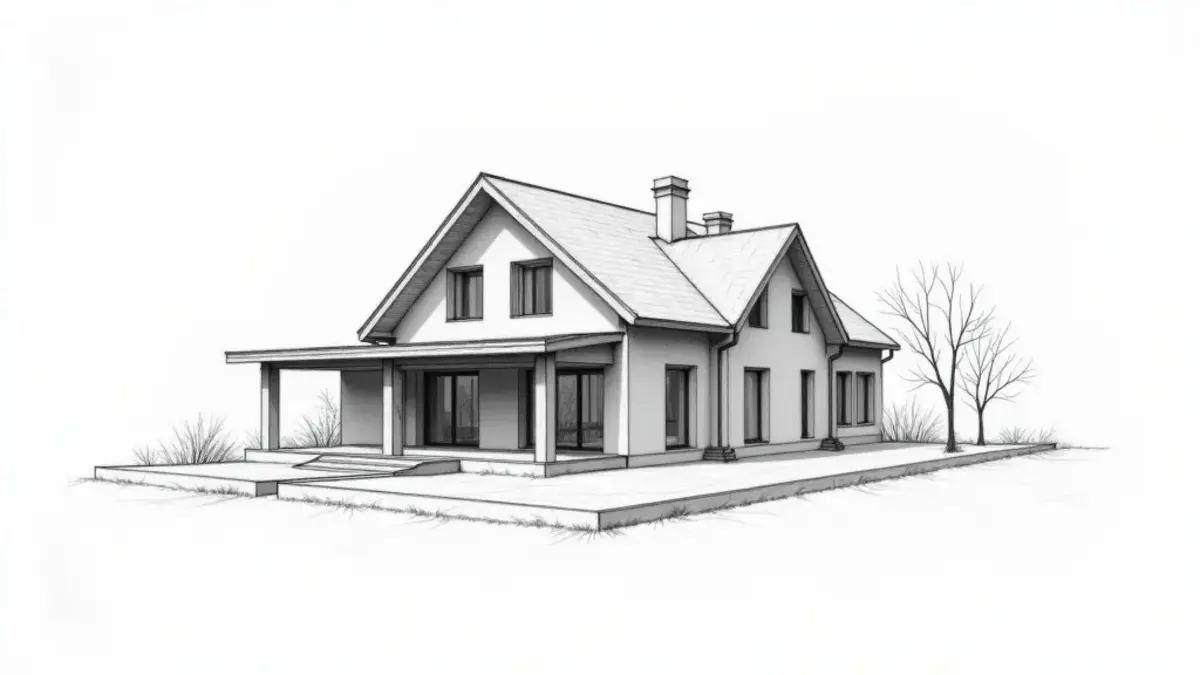
In Marseille, Mr and Mrs X own a plot of land. On the neighbouring plot, Company Y obtains planning permission to build a villa, with a prefectural exemption from the planning regulations. Mr and Mrs X, considering that the construction violates a public interest easement, sue Company Y for demolition of the villa.
The dispute comes before the Court of Appeal of Aix-en-Provence, which dismisses Mr and Mrs X. Why? Because, according to the judges, the planning permission and the exemption order are lawful, and Mr and Mrs X have not shown that their rights were violated. They then appeal to the Court of Cassation.
Before the Court of Cassation, Mr and Mrs X argue that planning permission is never granted except subject to the rights of third parties, and that they can therefore claim compensation. But the Supreme Court dismisses their appeal: it confirms that, while third parties can act, they must still prove the violation of their rights. In this case, they only invoked a public interest easement that had been the subject of a lawful exemption.
This case, although in Marseille, could just as easily have taken place in Montbéliard or Baume-les-Dames. The law is the same everywhere in France.
The reasoning of the court — analysed
The Court of Cassation relies on a fundamental principle: planning permission is an administrative act that is not intended to govern private law relations between neighbours. It confers no rights against third parties. This principle, stated in the judgment of 19 February 1974, is now codified in Article L. 421-1 of the Town Planning Code, but the spirit remains the same.
In concrete terms, if your neighbour builds in disregard of your rights (for example, a right to a view, a right of way, or a planning rule protecting your property), you can sue him on the basis of Article 1240 of the Civil Code (formerly 1382), which requires compensation for damage caused by fault.
But the Court of Cassation adds a condition: you must prove the actual violation of your rights. In this case, Mr and Mrs X did not prove that the construction violated a public interest easement that had not been lawfully exempted. The prefectural exemption was legal, the planning permission was also legal. Therefore, no private right was infringed.
This decision is a confirmation of constant case law: it does not create anything new, but it recalls the limits of third-party actions. The trial judges have sovereignly assessed that the violation was not established, and the Court of Cassation does not have to review this assessment.
Note: Mr and Mrs X sought demolition, but the Court of Appeal rejected this claim. Indeed, demolition is only possible if the violation is serious and the construction cannot be regularised. This was not the case here.
What this means for you — concretely
For a landlord in Montbéliard: you rent a building whose view is obstructed by a new construction. You can take action against the builder, even if his permission is in order. But be careful: if the construction complies with planning regulations and you have no right to a view (right not to be seen from a certain distance), your action is likely to fail.
For a buyer: before buying a property, check the neighbouring constructions. If a permission has been granted, that does not mean your rights are protected. A concrete example: if a 3-storey building project is authorised 2 metres from your boundary, and your house loses 20% of its value (i.e., €40,000 on a property worth €200,000), you could obtain damages if you prove that the permission violates the planning regulations (for example, an exceeded plot ratio).
For a co-owner: in a co-ownership, the construction of a new building can reduce the value of your lots. If you believe that the permission violates the Local Plan (PLU), you can take action. But you must demonstrate the concrete loss: for example, the loss of value due to overshadowing or loss of view.
If you are in this situation, you must act quickly: the civil liability claim is subject to a 5-year limitation period from the date you became aware of the damage (Article 2224 of the Civil Code). For demolition, the time limit is shorter: 2 years from completion of the works to challenge the permission (Article L. 600-2 of the Town Planning Code).
Four tips to avoid this type of dispute
- Check the Local Plan before buying: Consult the local urban planning plan (PLU) of your municipality (Baume-les-Dames, Montbéliard, etc.) to know the building rules, distances, heights. A professional (surveyor, lawyer) can help you interpret these documents.
- Have existing rights recorded: If you have a right to a view, a right of way or a right of party wall, have them recorded by a notarial deed or a bailiff's report. This will allow you to prove their existence in case of a dispute.
- Act quickly: As soon as you become aware of a neighbouring building project, consult the planning permission at the town hall. If you believe it violates your rights, file a preliminary appeal within two months of the display of the permission, then a judicial appeal within two months of the rejection.
- Consult a specialist lawyer: A property lawyer can assess your chances of success, quantify your loss, and assist you in the steps. In Baume-les-Dames as elsewhere, early consultation can avoid months of proceedings.
Besoin d'un conseil personnalisé ? Contactez Maître Zakine — première consultation 30 min à 45€.
Further analysis: related case law and developments
This 1974 decision is part of a consistent line: the judgment of the 3rd Civil Chamber of the Court of Cassation of 15 February 1972 (No. 70-13.580) had already established the principle that planning permission does not prevent third-party actions. More recently, the judgment of 13 January 2021 (No. 19-21.516) confirmed that planning permission does not constitute an authorisation to harm neighbours.
The trend of the courts is therefore to protect the rights of third parties, but requiring solid proof of the violation. Judges are more inclined to award damages than to order demolition, which remains an exceptional measure.
For the future, the reform of civil liability (Ordinance of 10 February 2016) did not change this principle: Article 1240 of the Civil Code remains the basis of the action. However, the requirement of proof could be strengthened with the digitalisation of PLUs and permissions, facilitating consultation of documents.
What you must absolutely remember
- A planning permission is not an absolute shield: It is granted subject to the rights of third parties. You can therefore act if your rights are violated.
- You must prove the violation: It is not for the builder to prove that he respects your rights, but for you to demonstrate that they are violated. Gather evidence: photos, bailiff's reports, extracts from the PLU, notarial deeds.
- Time limits are short: To challenge the permission, 2 months after display. To claim damages, 5 years from knowledge of the damage.
- Demolition is rare: Judges prefer damages, unless the construction cannot be regularised or the violation is serious.
- Consult a lawyer without delay: Each case is unique. A lawyer will help you assess your chances and act within the time limits.
Are you in a similar situation? A first 30-minute consultation with Maître Zakine (€45) can save you months of proceedings — and often much more. Book an appointment →
📌 Does this apply to your situation? Maître Cécile Zakine, French real estate lawyer, practises throughout France.
servitude-droit-passage-avocat/" rel="dofollow">→ Avocat servitudes & foncier |
→ Browse all our legal articles
