Reference decision: cc • N° 72-13.232 • 1973-12-17 • View the decision →
You have signed a contract for the sale of a plot of land to a developer, with a precise clause: he must build a hotel "corresponding to the needs of the beach operation". The developer obtains planning permission for a different, less restrictive project. You did not object to this permission. Have you lost your right to enforce the clause? This is the burning question raised by the ruling of 17 December 1973 of the Court of Cassation. In Arcachon, how many owners believed that silence meant agreement? In Périgueux, similar disputes pit municipalities against developers. This decision clarifies: the judicial court has no power to interpret a planning permission. And your silence does not constitute a waiver.
The facts: a story that happens every day
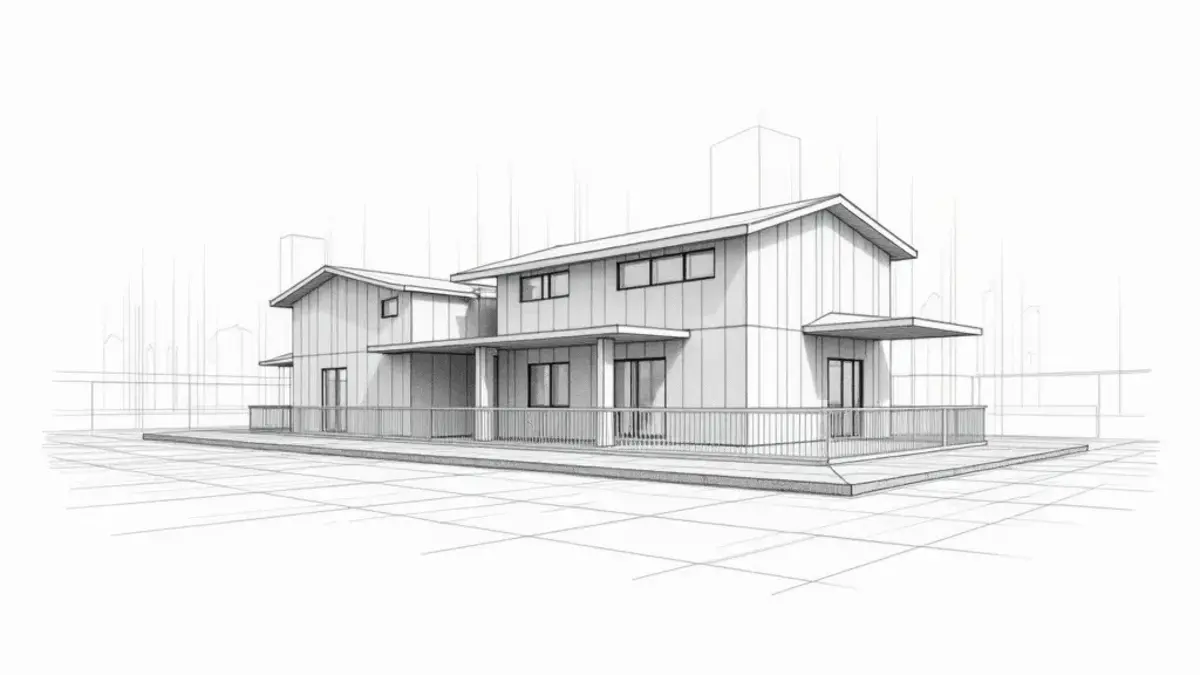
Imagine a seaside town, say Arcachon. It sells a plot of land to a developer, Mr X. The contract stipulates that Mr X must build a hotel "corresponding to the needs of the beach operation". Mr X applies for planning permission for a less luxurious hotel, with fewer rooms, and obtains it. The municipality does not object. Then, unhappy with the project, it seeks rescission of the sale (cancellation) for non-compliance with the clause. Mr X retorts: "You did not challenge the permission, so you accepted my project." The municipality takes the matter to court. On appeal, the court rules in favour of the municipality: the planning permission is an administrative act that the judicial court cannot interpret. And non-objection does not constitute a waiver of the contractual clause. Mr X appeals to the Court of Cassation. The Court of Cassation confirms: the judicial authority has no power to interpret an individual administrative act such as planning permission. It can only note its existence. The municipality can therefore seek rescission of the sale. A case that could have taken place in Périgueux, where a developer had promised social housing but built studios.
The reasoning of the court — analysed
The heart of the ruling is in one sentence: "The judicial authority has no power to interpret the administrative act constituted by the grant of planning permission." In law, planning permission is an individual administrative act (a decision of an administration, here the municipality, taken within the framework of its public authority prerogatives). Only the administrative court (tribunal administratif, cour administrative d'appel, Conseil d'État) can interpret it. The judicial court (tribunal de grande instance, cour d'appel, Cour de cassation) can only note its existence and its apparent content. Here, the municipality relied on a private law clause in the contract of sale. The planning permission could not be considered an implicit modification of this clause. Why? Because the grant of permission does not mean that the administration approves the project on its merits: it only checks its compliance with planning rules. Moreover, the municipality, as a party to the contract, did not waive its rights by not objecting. The Court of Cassation recalls that in the absence of a prejudicial issue (preliminary question that the judicial court must refer to the administrative court), the court may decide that the permission does not constitute a waiver. This is a confirmation of the separation of jurisdictional orders (principle established by the law of 16-24 August 1790).
What this changes for you — practically
This decision is crucial for owners, municipalities and developers. If you are a landlord selling a plot of land with an occupancy clause (for example, to build an office building), do not think that obtaining planning permission for a different project binds you permanently. You can still seek rescission of the sale if the developer does not comply with its commitments. Concrete example: in Périgueux, an owner sells a plot of land to a developer with a clause "build 20 social housing units". The developer obtains permission for 15 units. The owner can take legal action to rescind the sale, even if he did not challenge the permission. However, be careful: if you are the developer, you must be vigilant. Do not rely on the other party's silence. The absence of objection to the permission does not erase your contractual obligations. For buyers, always check that the permission corresponds exactly to the promised project. Otherwise, you risk losing your investment. In the event of a dispute, the time limit for bringing an action for rescission is 5 years from the date of signature of the contract (Article 1304 of the Civil Code, old version). The amounts at stake can be considerable: a plot of land in Arcachon can be worth €500,000, and rescission leads to restitution of the price and damages.
Four tips to avoid this type of dispute
- Draft a precise clause: instead of "corresponding to the needs of the beach operation", describe the surface area, number of floors, materials. Example: "construction of a 4-star hotel with 80 rooms, swimming pool and restaurant."
- Make the permission a condition precedent: in the contract of sale, provide that the planning permission must comply with the clause. If the permission granted is different, the contract is automatically rescinded.
- Do not remain silent: if the permission granted does not meet your expectations, challenge it before the administrative court within two months of its display. Your silence could be interpreted as agreement (even though case law relativises this).
- Consult a lawyer before signing: a professional will check the consistency between the contract and the permission, and can advise you on possible remedies.
Besoin d'un conseil personnalisé ? Contactez Maître Zakine — première consultation 30 min à 45€.
Further reading: related case law and developments
Before this decision, the judicial court sometimes hesitated to rule on the scope of a planning permission in a contractual dispute. The 1973 ruling clarified the rule. Since then, the Conseil d'État has confirmed on several occasions that the purpose of planning permission is not to check the performance of contractual obligations (CE, 1990, Commune de Saint-Tropez). However, a recent development: the judicial court may now, in certain cases, interpret an administrative act if it is "clear and unambiguous" (Cass. 3e civ., 2015). But the principle remains that interpretation of the permission is a matter for the administrative court. In practice, judicial courts stay proceedings (suspend the procedure) until the administrative court rules. Thus, this 1973 decision is still relevant: it protects parties against divergent interpretations and guarantees legal certainty.
Frequently asked questions
- What if the planning permission obtained by my buyer does not comply with the contractual clause? You can seek rescission of the sale in court. But it is better to challenge the permission before the administrative court within two months of its display.
- Can I rely on the planning permission to prove that I have fulfilled my obligations? No, because the permission does not check the performance of the contract. It only attests to compliance with planning rules.
- What is the time limit for bringing an action for rescission of sale? 5 years from the date of signature of the deed. After this period, you lose your right.
- If I do not challenge the permission, do I lose my rights? Not automatically, but it can be used against you as evidence of acceptance. Always challenge as a precaution.
- How much does a procedure for rescission of sale cost? Legal fees vary from €2,000 to €10,000 depending on complexity, plus any expert fees. But the stakes often justify the investment.
Are you in a similar situation? A first 30-minute consultation with Maître Zakine (€45) can save you months of proceedings — and often much more. Make an appointment →
📌 Does this apply to your situation? Maître Cécile Zakine, French real estate lawyer, practises throughout France.
servitude-droit-passage-avocat/" rel="dofollow">→ Avocat servitudes & foncier |
→ Browse all our legal articles
