Reference decision: cc • No. 04-11.752 • 2005-03-31 • View the decision →
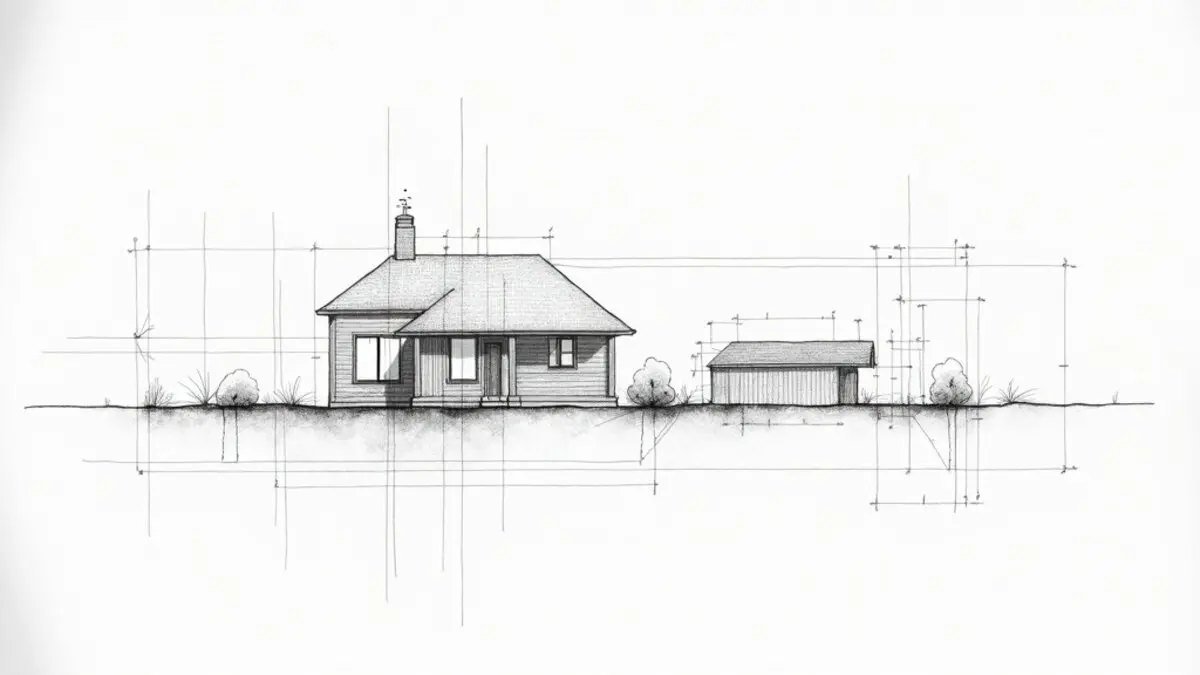
Imagine: you are about to buy the house of your dreams in Orthez. Everything is ready, the preliminary contract is signed, the loan is obtained. But at the last moment, you discover that the land is burdened with a right of view easement that the seller himself created a few months earlier. You wonder: can I demand a price reduction? Can I force the sale anyway? This is precisely the question the French Supreme Court ruled on in a judgment of 31 March 2005. And the answer is clear: when the suspensive condition relating to the absence of easements is not fulfilled, the purchaser has only two options: waive the condition and buy at the original price, or note the nullity of the promise. He cannot demand a reduction in price. A surprising decision, but one based on an unyielding contractual logic.
The Facts: A Story That Happens Every Day
In March 1999, a property owner in Orthez sells a building plot. The promise to sell contains a standard suspensive condition: obtaining a planning certificate (now an operational planning certificate) revealing no significant restrictions. But in the meantime, the seller, without informing the purchaser, creates a right of view easement in favour of the neighbouring property by a private deed dated 10 March 1999. The planning certificate, obtained on 5 October 1999, indicates that the building plot is not subject to restrictions... but the easement exists nonetheless.
The purchaser, who signed the promise on 2 October 1999, discovers the easement after signing. He sues the seller to obtain the forced completion of the sale with a price reduction, arguing that the property is diminished in value. The Court of Appeal rules against him, and the French Supreme Court confirms: the suspensive condition has failed, so the promise is void, unless the purchaser waives it. But he cannot impose a sale at a reduced price. The case goes up to the Supreme Court, which dismisses the appeal. Moral: an easement created between the promise and the fulfilment of the condition can scupper everything.
The Reasoning of the Court — Analysed
The judges' reasoning is based on Article 1176 of the Civil Code (old), which governs suspensive conditions. In essence: if the condition is not fulfilled, the agreement is void, unless the creditor (here the purchaser) waives it. The French Supreme Court clarifies: when the suspensive condition has failed, the purchaser has only two options: either he waives the condition and proceeds with the sale on the original terms (price unchanged), or he notes the voidness and loses all rights to the property. He cannot, however, demand forced performance with a price reduction, as this would amount to unilaterally modifying the contract.
The decision confirms settled case law: the suspensive condition is a clause that protects the purchaser, but not a mechanism for renegotiation. The judges rejected the purchaser's argument that the seller had breached his delivery obligation (Article 1603 of the Civil Code). For the Court, since the suspensive condition failed, the contract was never final. In other words, there is no sale to enforce. However, be careful: this reasoning assumes that the condition is clear and that the failure is not attributable to the seller. If the seller had deliberately prevented the fulfilment of the condition, the outcome could have been different (sanction on the grounds of bad faith).
What This Means for You — Practically
For a purchaser: if you sign a promise to sell with a suspensive condition "no easement", and an easement exists, you cannot demand a price reduction. You must either accept the easement and pay the agreed price, or abandon the purchase. Example: in Tarbes, you buy a plot for €200,000 with a suspensive condition of no easement. A right of way easement is discovered: you cannot ask for €180,000. You take it or leave it.
For a seller: this decision protects you if the condition is not fulfilled. But be careful: if you created the easement after the promise, you could be sued for breach of the duty of good faith (Article 1104 of the Civil Code). undefined, I have encountered cases where sellers omitted to declare easements, and the purchasers obtained damages, but not a price reduction.
For a notary or estate agent: draft precise suspensive conditions. Explicitly mention the consequences in case of failure. Including a clause for automatic price reduction in case of a minor easement could be a solution, but it must be negotiated from the outset.
Four Tips to Avoid This Type of Dispute
- Obtain an easement report before the promise: request a planning certificate, check the cadastre, and require a declaration from the seller about the existence of easements. This will prevent unpleasant surprises.
- Draft a tailor-made suspensive condition: instead of a vague clause "no easement", specify acceptable easements (e.g., an already known right of way) and the consequences if an undeclared easement appears (possibility to reduce the price or terminate).
- Negotiate a price reduction clause: if you fear a minor easement, provide in the promise that if an easement is discovered, the price will be reduced by a fixed amount or according to an expert appraisal.
- Keep all evidence: retain correspondence, planning certificates, and especially the date of creation of the easement. If the seller created the easement after the promise, you can invoke his bad faith.
Further Analysis: Related Case Law and Developments
This decision is part of a consistent line of authority. In a judgment of 12 January 1999 (No. 96-22.191), the French Supreme Court had already ruled that a failed suspensive condition renders the promise void, without the possibility of a price reduction. More recently, the Court confirmed this position in a judgment of 8 June 2017 (No. 16-19.282), specifying that the waiver of the condition must be express and unequivocal. The trend is therefore clear: the courts do not allow modification of the contract by judicial means when the suspensive condition is not fulfilled. This means that purchasers must be particularly vigilant when drafting suspensive conditions, as they cannot rely on the judge to adjust the price.
In Practice: What to Do
FAQ:
- Can I obtain a price reduction if an easement is discovered after the promise? No, unless the promise expressly provides for it. You can only accept the sale at the original price or renounce it.
- What if the seller concealed an easement? You can sue for fraud and claim damages, but not a reduction in the sale price.
- Is the suspensive condition automatic? No, it must be stipulated in the promise. Without a clause, you are obliged to buy even with easements.
- Can I waive the condition after discovering the easement? Yes, you can lift the condition and buy at the agreed price, with full knowledge of the facts.
Besoin d'un conseil personnalisé ? Contactez Maître Zakine — première consultation 30 min à 45€.
Are you in a similar situation? A 30-minute initial consultation with Maître Zakine (€45) can save you months of litigation — and often much more. Book an appointment →
📌 Does this apply to your situation? Maître Cécile Zakine, French real estate lawyer, practises throughout France.
→ Avocat servitudes & foncier |
→ Browse all our legal articles
