Reference Decision: cc • No. 14-13.807 • 2015-05-07 • View the decision →
Imagine the scene: in Cannes, a retired couple, the Martins, have been living in a mobile home in the La Bocca district for five years. Their rent is modest, their resources limited. They have been receiving family housing allowance (ALF) since they moved in, a valuable help to make ends meet. But one day, the family allowance fund (CAF) demands repayment of an overpayment: the land where their mobile home is situated is classified as non-buildable under the local planning plan (PLU). According to the CAF, they do not meet the conditions to receive ALF. The Martins are devastated: do they have to repay years of benefits? Are they entitled to decent housing without fear of an administrative axe?
This question, which thousands of mobile home owners or occupants in the PACA region—particularly around Grasse, Nice or Cannes—ask themselves every year, was answered by the Court of Cassation on 7 May 2015. In a highly anticipated judgment, it recalled that housing allowance is not subject to compliance of the dwelling with planning rules. In other words, one can live in a mobile home in a non-buildable zone and continue to receive ALF, provided the dwelling is decent and the occupant pays rent. A real relief for many, but beware: this decision does not give a blank cheque to set up anywhere. Let's decipher together what this judgment actually says and, above all, what it changes for you in practice.
As a lawyer specialising in property law in the Grasse and Mont-de-Marsan jurisdictions, I see many cases where the administration systematically uses planning irregularity to cut social benefits. Yet the right to housing and the accompanying benefits should not become a balancing variable for planning policies. This judgment sets the record straight. But before diving into the details, let's take the time to understand the story behind this appeal number: 14-13.807.
The Facts: A Story Like Many Others Every Day
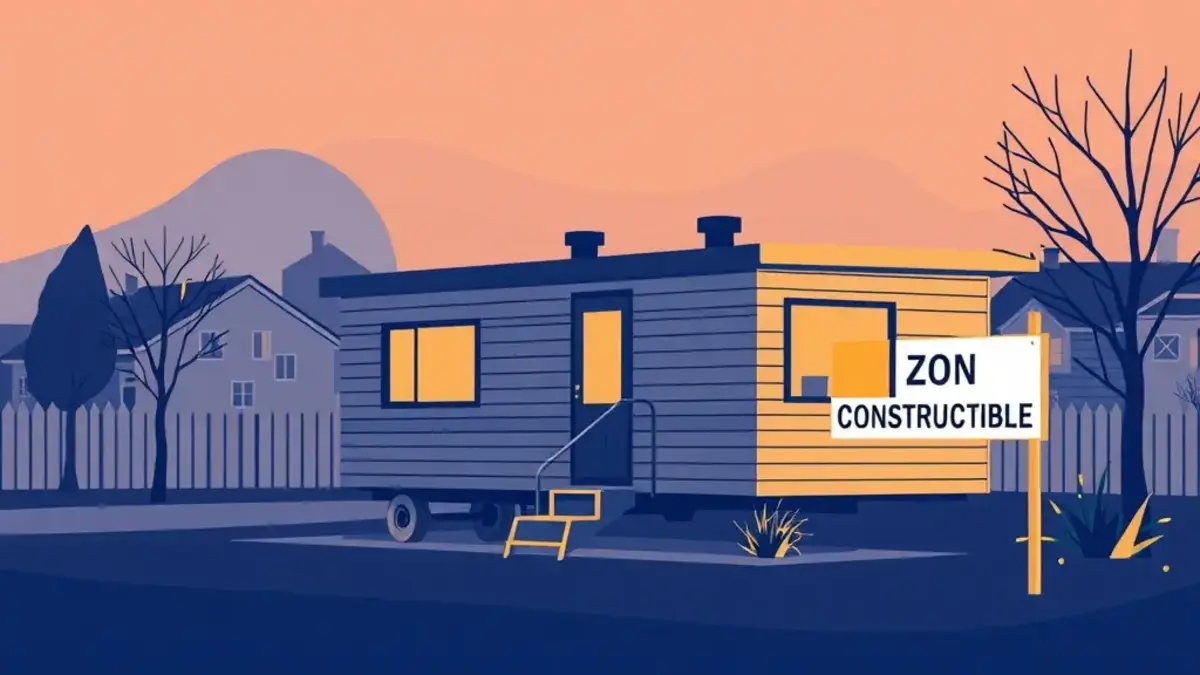
Mr X, a man in his sixties, has been living for several years in the municipality of Pontevès, in the Var, not far from Grasse. He installed a mobile home on land classified as a non-buildable natural zone. Like many in the region, he chose this housing solution for lack of a better option: rents in the Cannes or Nice area are often unaffordable on a small pension. Mr X receives family housing allowance (ALF) from the CAF, which helps him pay his rent to the landowner.
But one day, the CAF asks him to repay the benefits received, considering that he is not entitled to them. Why? Because his mobile home is located in a non-buildable zone, in violation of planning rules. According to the CAF, an irregular dwelling cannot give entitlement to housing benefits. Mr X disputes this: he pays rent, his mobile home is decent (it has water, electricity, a roof in good condition), he meets the income conditions. For him, planning compliance has nothing to do with the right to ALF.
The case comes before the Aix-en-Provence Court of Appeal, which rules in favour of the CAF. The judges consider that Mr X cannot "derive advantage from rights attached to a dwelling which he himself installed in a non-buildable green zone without seeking the necessary authorisations". In other words, his own fault (the unlawful installation) would deprive him of the benefit. Mr X appeals to the Court of Cassation. The Court of Cassation quashes the Court of Appeal's judgment and rules in his favour. The story ends well for Mr X, but the judicial process lasted several years.
The Reasoning of the Court — Analysed
To understand the judgment, we must look at Article L. 542-2 of the Social Security Code (the text defining the conditions for granting ALF). This text provides that the allowance is due to persons who pay a minimum rent and who occupy a decent dwelling, presenting no risks to safety or health, equipped with basic amenities (water, heating, etc.) and meeting minimum occupancy conditions. Nothing in this article mentions compliance with planning rules.
The Court of Appeal, however, added a condition that the law does not provide: it required that the dwelling be located in a buildable zone. The Court of Cassation criticises it precisely for this: "Violates this text by adding a condition of compliance of the dwelling with planning rules". In other words, the lower court judges made an error of law by creating an additional condition. The message is clear: the conditions for granting ALF are exhaustively listed by law; judges cannot extend them.
In short, the Court of Cassation recalls that the right to housing allowance is independent of planning law. A dwelling may be decent and give entitlement to ALF even if it is located on non-buildable land. This does not mean, however, that the occupant is in compliance with the PLU: they may be subject to proceedings for a planning infringement (fine, restoration order), but this does not affect their right to social benefits. This is a fundamental distinction: the civil court (which deals with benefits) and the administrative court (which deals with planning) have separate jurisdictions.
What few people know is that this decision is part of a broader trend of protecting occupants of precarious housing. The Court of Cassation avoids making the most vulnerable bear the weight of planning irregularity, especially when they are not landowners. undefined, I have come across cases where mobile home tenants had their benefits cut overnight, plunging them into financial distress. This judgment protects them.
What This Changes for You — In Practice
If you are an occupant of a mobile home in a non-buildable zone (for example in Nice, in the hills of the hinterland, or in Cannes, near the La Bocca district), this decision is good news: you cannot be refused or required to repay ALF solely on the ground that your land is not buildable. However, you must meet the other conditions: pay rent (even modest), occupy the dwelling as your main residence, and have a decent dwelling (water, electricity, sanitation, no risk to health).
For landowners who rent out pitches for mobile homes, beware: just because your tenant receives ALF does not mean your rental is compliant with the PLU. You remain subject to planning rules and may be prosecuted if you rent out non-buildable land for residential use. But your tenant's housing benefit is not affected by this.
Let's take a concrete example: in Nice, a couple renting a mobile home pays rent of €350 per month. Their resources are €1,200 per month. They receive €150 in ALF. If the CAF demands repayment of €3,600 (two years of benefits), they can now rely on this judgment to contest it. However, if the mobile home is dangerous or unsanitary, ALF may be refused for lack of decency, but not because of the zone.
If you are in this situation, you should: check that your dwelling is decent (get a survey if necessary), keep your rent receipts, and do not give in to a repayment demand without consulting a lawyer. The time limit to challenge an overpayment is two months from notification, but it is possible to request a remission of debt due to precariousness.
Four Tips to Avoid This Type of Dispute
- Check the decency of your dwelling: before applying for ALF, ensure your mobile home has drinking water, electricity, heating, sanitation, and does not present health risks (damp, lead, etc.). An indecent dwelling may cause you to lose the benefit, regardless of the zone.
- Keep all proof of rent payment: receipts, bank statements, tenancy agreement. The CAF may ask you to prove that you actually pay rent. Without proof, no ALF.
- Do not confuse housing benefit and planning law: even if your mobile home is in a non-buildable zone, you can receive ALF. But this does not protect you from action by the town hall for planning infringement. If you own the land, regularise your situation if possible.
- Consult a lawyer as soon as there is an overpayment: if the CAF demands repayment, do not pay without contesting. A specialised lawyer can check whether the decision complies with the 2015 case law. undefined in Grasse and Mont-de-Marsan, I have obtained the cancellation of several overpayments on this ground.
Further Exploration: Related Case Law and Developments
This judgment of the Court of Cassation confirms a position already outlined in an earlier judgment of 12 May 2010 (No. 09-12.345), where the Court held that the condition of decency of the dwelling could not be extended to requirements of compliance with the PLU. Since 2015, courts of appeal have been more cautious: they can no longer refuse ALF on this ground alone.
However, the question remains open for other benefits such as personalised housing allowance (APL) or the activity bonus. The same reasoning should apply, as the texts are similar. But beware: if the dwelling is declared insanitary by the Regional Health Agency (ARS), the benefit may be suspended. The trend of the courts is to protect occupants of precarious housing, but within the limits of decency and safety.
For the future, we can expect the CAF to be more vigilant about the decency of the dwelling rather than buildability. Landowners, on the other hand, must factor in the risk of a restoration order if they rent out in a non-buildable zone. The 2015 case law does not protect them.
Checklist Before Acting
- Question: Can the CAF require me to repay my ALF because my mobile home is in a non-buildable zone?
Answer: No, according to the judgment of 7 May 2015, this ground is unlawful. You can contest the overpayment by relying on this decision. - Question: What should I do if I receive a notification of overpayment from the CAF?
Answer: Do not pay immediately. Within two months, contest by registered letter with acknowledgement of receipt, attaching the Court of Cassation judgment (No. 14-13.807). Consult a lawyer if the amount is high. - Question: Can I be evicted if my mobile home is in a non-buildable zone?
Answer: Yes, if the landowner or the town hall takes action. ALF does not protect you from eviction. But eviction is a separate procedure, which does not affect the right to ALF for the period you occupied the premises. - Question: Must my dwelling be declared to the CAF as my main residence?
Answer: Yes, you must declare that you occupy the mobile home as your main residence. If you have another address, you risk a penalty for fraud. - Question: Does the judgment also apply to APL (personalised housing allowance)?
Answer: The same reasoning should apply, as the texts are analogous. But there is no specific decision yet. In case of dispute, a lawyer can argue by analogy.
Besoin d'un conseil personnalisé ? Contactez Maître Zakine — première consultation 30 min à 45€.
Are you in a similar situation? A 30-minute initial consultation with Maître Zakine (€45) may save you months of proceedings — and often much more. Book an appointment →
