Reference decision: cc • No. 75-12.064 • 1977-05-03 • View decision →
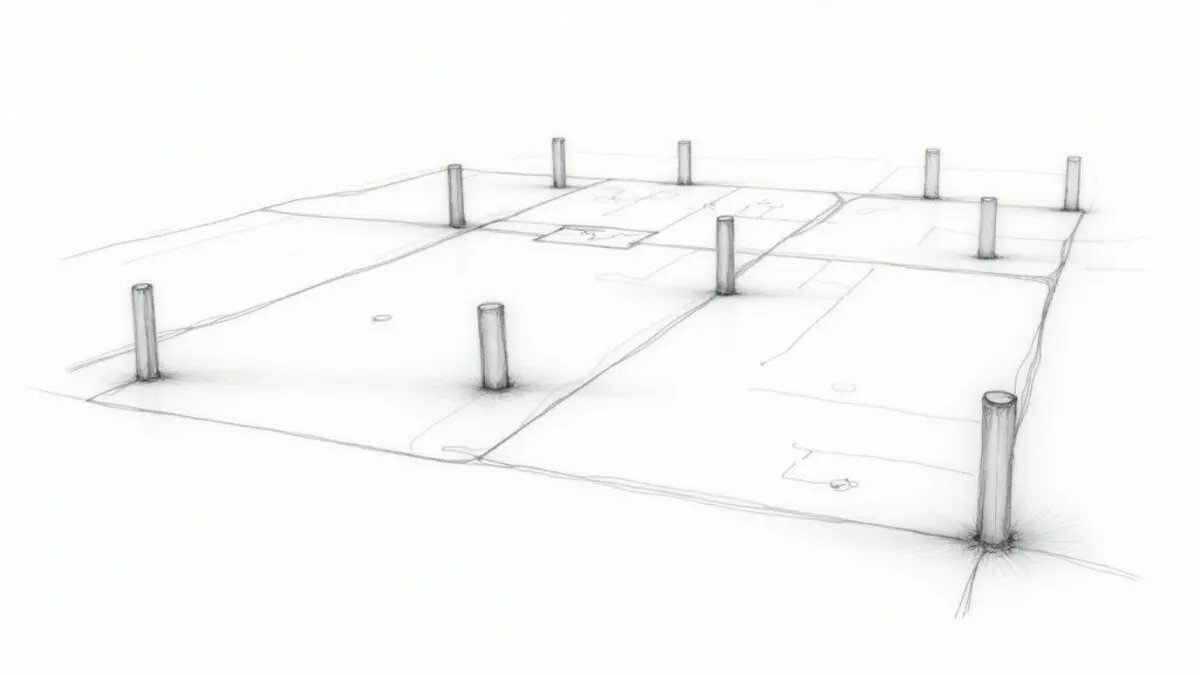
Imagine: you own a plot of land in Chambéry, in the Hauts-de-Chambéry district. One morning, your neighbour announces that he wants to carry out a boundary survey (official demarcation) of your two plots. You agree, but ask him first to prove that he is indeed the owner. He refuses and takes the matter to court. Who is right? The Court of Cassation ruled in 1977, and its answer is still valid today. Let us decipher this decision, which concerns every landowner.
The facts: a story that happens every day
Mr X owns a plot in Albertville, Savoie. His neighbour, Mr Y, claims that their lands are poorly demarcated and brings an action for a boundary survey (judicial action to fix the boundaries between two properties). But Mr X contests: according to him, Mr Y has not proved that he is indeed the owner of the plot he claims. At first instance, the court rules in favour of Mr X, holding that Mr Y must first establish his right of ownership. Mr Y appeals. The Court of Appeal of Chambéry, however, sets aside the judgment and orders the boundary survey without requiring proof of ownership. Mr X then appeals to the Court of Cassation. Before the Court of Cassation, Mr Y tries to rely on written submissions he had filed in the appeal. But the Court of Cassation dismisses this argument: these submissions are "foreign" to Mr X, who is not a party to that act. Above all, the Supreme Court sets aside the appeal judgment: "failing proof of his right of ownership, the action for a boundary survey cannot succeed." The principle is clear: before asking a judge to fix boundaries, one must demonstrate that one owns the land in question.
The reasoning of the court — dissected
The Court of Cassation relies on Article 544 of the Civil Code: "Ownership is the right to enjoy and dispose of things in the most absolute manner, provided that one does not use them in a way prohibited by laws or regulations." In plain terms: to bring an action for a boundary survey, one must be the owner. This is a prerequisite (condition sine qua non). The Court of Appeal erred in ordering the boundary survey without verifying this point. What few people know: the boundary survey is not a means of becoming an owner; it only serves to clarify the boundaries of an already established property. The 1977 decision does not create new law; it confirms a consistent line of authority. But it has enormous practical significance: it prevents neighbours from imposing a boundary survey without justifying their title (deed of sale, gift, inheritance). undefined, I have come across cases where a person tried to claim land through a boundary survey without ever having been the owner. Thanks to this judgment, the judge must require proof.
What this means for you — practically
If you are a landowner in Chambéry, Albertville or elsewhere, this decision protects you. No one can impose a boundary survey on you without proving they are the owner. If you are a buyer of a plot, be careful: before initiating a boundary survey, gather your title deeds. A notary can help you obtain them. Concrete example: in Albertville, a 500 m² plot is worth about €50,000. Initiating a boundary survey without proof risks wasting time and money (lawyer's fees, expert fees: €2,000 to €5,000). For tenants: you are not concerned, as only owners can request a boundary survey. But if your landlord does so, you must facilitate access. If you are a co-owner, the boundary survey of common parts requires the agreement of all co-owners. In practice, if someone sues you for a boundary survey, you must require them to produce their title deed. The judge must verify. Timeframe: generally, the judge rules within 6 months. If proof is lacking, the action is inadmissible.
Four tips to avoid this type of dispute
- Keep all your title deeds: deed of sale, gift, inheritance. Have them digitised and keep a copy with your notary. Without a title, no boundary survey is possible.
- Before initiating an amicable boundary survey (agreement between neighbours), ask your neighbour to show you their title. If they refuse, beware. An amicable boundary survey costs about €1,500 (surveyor), but a judicial boundary survey can reach €5,000.
- If you are sued for a boundary survey, do not remain passive. Consult a lawyer specialising in property law. You can raise the inadmissibility of the claim if the other party does not prove their ownership.
- Use a chartered surveyor to produce a precise boundary plan. This avoids future disputes. In Chambéry, approved surveyors can intervene quickly.
Further reading: related case law and developments
The 1977 decision has been confirmed on several occasions. For example, the Court of Cassation (3rd Civil Chamber, 13 February 2002, No. 00-17.123) held that "the boundary survey is a real action which requires the claimant to prove a right of ownership." Thus, the trend is constant: no boundary survey without ownership. However, a recent development concerns adverse possession (usucapion): if a neighbour occupies your land for more than 30 years, they may become owner without a title. In that case, they can request a boundary survey based on that possession. But beware, proving possession is difficult. In practice, this decision remains an essential protection against abusive actions.
Summary and next steps
FAQ:
- Can I request a boundary survey without a title deed? No. The judge will require proof of your right of ownership (notarial deed, certificate of ownership). Without it, your claim will be dismissed.
- What if my neighbour demands a boundary survey without proof? Ask them in writing to produce their title. If they refuse, inform them that you will apply to the judge to have their claim declared inadmissible.
- What is the cost of a judicial boundary survey? Expect €2,000 to €5,000 in lawyer's fees and expert costs. An amicable boundary survey costs about €1,500.
- Is a boundary survey mandatory? No, but it is strongly recommended to avoid disputes. In the event of a sale, the notary may require it.
- Can I challenge a boundary survey already carried out? Yes, if you discover an error. You must act within 5 years of the boundary survey.
Are you in a similar situation? A 30-minute initial consultation with Maître Zakine (€45) can save you months of litigation — and often much more. Book an appointment →
📌 Does this apply to your situation? Maître Cécile Zakine, French real estate lawyer, practises throughout France.
servitude-droit-passage-avocat/" rel="dofollow">→ Avocat servitudes & foncier |
→ Browse all our legal articles
