Reference decision: cc • N° 96-11.370 • 1997-12-03 • View decision →
You have just bought a plot of land in an industrial estate at Castelsarrasin. The seller gives you a thick set of specifications, you sign without reading too much. A few months later, a syndicate association demands a subscription from you for the maintenance of a railway line which does not even serve your plot. Are you really obliged to pay? This is the burning question which the Court of Cassation decided in 1997, in a judgment which remains a reference for all owners of plots subject to collective specifications.
For the trap is classic: one thinks one is free to choose, but the specifications create obligations which bind all successive purchasers, even those who were not clearly informed. The decision of 3 December 1996 (appeal no. 96-11.370) came to remind a fundamental principle: membership of a syndicate association can be automatic, upon purchase, without waiting for an actual connection. And this changes everything for owners, developers and managers of business parks.
So, what exactly does this judgment say? How do you know if you are affected? And above all, how can you avoid finding yourself in a situation similar to that of the SCI Gaëlle, which had to pay despite its lack of connection? I will explain everything to you, step by step, with concrete examples.
The facts: a story like many that happen every day
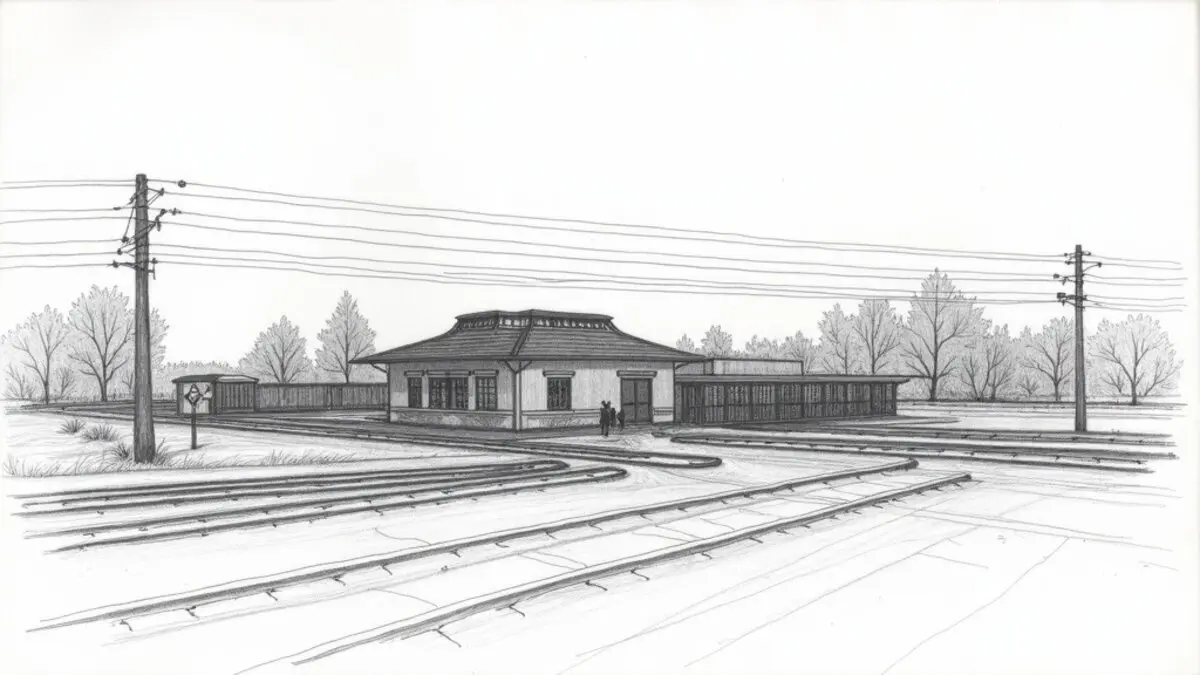
Imagine an industrial estate in full expansion, at Moissac, in the Tarn-et-Garonne. In the 1970s, a developer, the company Le Moulnot, sold land to industrialists. The specifications provided for the creation of a syndicate association of branch lines (an association of owners responsible for managing a network of railway lines connected to the SNCF). All purchasers had to join automatically, by the mere fact of buying. In 1989, the SCI Gaëlle bought part of a plot from Le Moulnot. The deed of sale reminded of this obligation. But the SCI did not request the connection of its land to the railway siding. Nevertheless, the syndicate association demanded its share of the maintenance costs. The SCI refused: 'My land is not connected, I do not use the railway line, why should I pay?'
The association sued the SCI before the tribunal d'instance of Toul (Meurthe-et-Moselle), which dismissed the claim in 1995. The judges considered that the articles of association of the association tied the obligation to join to the status of owner of a connected plot (i.e., actually connected). However, the SCI had no connection, and had not requested one. Therefore, no obligation. The association appealed to the Court of Cassation.
The Court of Cassation quashed (annulled) the judgment. It held that the specifications provided that all industrial owners, present or future, of the sold land would become members of the syndicate associations by the fact of their acquisition. And this provision was reminded in the SCI's deed of acquisition. It did not matter therefore that the SCI had not requested the connection: the obligation to join arose upon purchase. The lower court judges should have taken this into account.
The reasoning of the court — dissected
The central legal question is this: can a contractual obligation to join an association depend on a subsequent event (the request for connection) or does it arise automatically upon signing the deed? The Court of Cassation answers clearly: the obligation is automatic if the specifications so provide. It relies on the principle of binding force of contracts (former article 1134 of the Civil Code, now 1103): 'Contracts lawfully formed take the place of law for those who have made them.' The specifications are a collective contract which binds all successive owners, even if they have not individually signed, provided that the deed of acquisition refers to them.
Concretely, the Court criticises the tribunal d'instance of Toul for having misinterpreted the specifications. It emphasises that the tribunal itself had noted that the specifications provided for automatic membership, but it then disregarded this clause by relying on the articles of association of the association and the lack of connection. However, the specifications take precedence over the articles of association, because they constitute the law of the place. In property law, this is referred to as a conventional easement (a burden imposed on a piece of land for the use of another): the obligation to join the syndicate association is an easement which encumbers the land, regardless of its owner.
This decision is neither a revolution nor a reversal: it confirms settled case-law on the binding force of specifications in housing estates and business parks. It reminds that judges must apply the letter of the contract, without adding conditions that the text does not provide.
What this changes for you — concretely
If you are the owner of a plot in an industrial estate or a housing estate subject to specifications, this decision concerns you directly. Here are the implications by profile:
For the landlord or occupier owner: you must pay the subscriptions to the syndicate association from the acquisition, even if you do not use the common facilities (railway line, green spaces, roads...). For example, at Moissac, an owner of a warehouse in the zone des Barthes will have to contribute to the maintenance of the railway line, even if he only receives lorries. Refusing means risking legal action and additional costs (procedural costs, late payment interest).
For the purchaser: before buying, ask to see the specifications and read them carefully. Do not rely on the seller's words: 'You will not be affected, your land is not connected.' As the SCI Gaëlle learned, this statement may be inaccurate. Also check the articles of association of the syndicate association: they must specify the obligations and the amount of subscriptions.
For the seller or developer: you must inform the purchaser of the existence of the specifications and the syndicate association, and mention the obligation to join in the deed of sale. If you omit this information, you could incur liability for failure to inform (article 1112-1 of the Civil Code). In practice, a developer who sells plots in an industrial estate at Castelsarrasin must attach the specifications to the preliminary contract and remind of them in the notarised deed.
Numerical example: suppose the annual subscription for the maintenance of the railway siding is €2,000 per plot, and the association claims three years of arrears, i.e., €6,000, plus recovery costs (often 10% of the amount) and statutory interest. The total could reach €7,000, not including legal fees (€1,500 to €3,000) if the matter goes to court. Better to anticipate and pay on time, or negotiate a payment plan.
Four tips to avoid this type of dispute
- Read the specifications before signing. Do not settle for a summary: ask for the full document. Identify the clauses on syndicate associations, easements and financial obligations. If a point seems unclear, ask the notary or a lawyer to clarify it.
- Check the articles of association of the syndicate association. They must be consistent with the specifications. If they impose an additional condition (such as actual connection), but the specifications provide for automatic membership, the specifications prevail. In case of doubt, ask the association for a certificate.
- Keep all documents. The deed of acquisition, the specifications, the articles of association, the letters from the association. In case of dispute, these pieces of evidence are essential. For example, the SCI Gaëlle could have won if it had proved that its deed of sale did not mention the obligation to join – but it did.
- Do not refuse to pay without legal advice. If you believe the subscription is not due, do not withhold it without consulting a lawyer. An unjustified refusal exposes you to additional costs (interest, damages). It is better to pay under protest and bring an action for recovery of undue payment (claim for reimbursement) if you are right.
Further exploration: related case law and developments
This decision is part of a line of judgments which strengthen the binding force of specifications. For example, the Court of Cassation ruled in 2004 (Civ. 3e, 10 March 2004, no. 02-16.997) that the clauses of a housing estate's specifications bind the co-owners, even if the housing estate has not been completed or the common facilities have not been built. In the same vein, the 1997 judgment reminds that the obligation to join a syndicate association does not depend on the actual use of the facilities.
Since then, the ALUR law of 2014 has modified the rules for housing estates, but the principle remains valid for industrial estates and authorised syndicate associations (ASA). The courts continue to apply this case law: in 2020, the Versailles Court of Appeal ordered an owner to pay subscriptions to a free urban land association (AFUL) on the basis of the specifications, even though he did not use the green spaces (CA Versailles, 12 March 2020, no. 18/07509).
For the future, the trend is towards securing property transactions: notaries are increasingly vigilant in mentioning obligations in deeds. But disputes remain frequent, because many purchasers discover these charges after the sale. Hence the importance of finding out in advance.
Key points to remember
FAQ:
- Can I refuse to join a syndicate association if my land is not connected? No, if the specifications provide for automatic membership upon acquisition. Actual connection is not necessary.
- What should I do if the association demands sums for years prior to my purchase? Check the deed of sale: in principle, the seller must pay the charges up to the date of sale. If the association claims arrears from you, ask it to pursue the former owner.
- What is the time limit to challenge a subscription? The limitation period is 5 years (standard period). After this period, you can no longer claim reimbursement.
- Can I sell my land if I do not pay the subscriptions? Yes, but the purchaser will be informed of the debts via the land charges register. The association may also register a legal mortgage to secure its claim, which complicates the sale.
- Can a tenant be obliged to pay the subscriptions? No, the obligation lies with the owner. However, the lease may provide for reimbursement by the tenant (e.g., service charges). Check your contract.
Are you in a similar situation? A first 30-minute consultation with Maître Zakine (€45) can save you months of litigation — and often much more. Book an appointment →
📌 Does this apply to your situation? Maître Cécile Zakine, French real estate lawyer, practises throughout France.
→ Avocat copropriété & ASL |
→ Browse all our legal articles
