Reference decision: cc • No. 13-20.895 • 2014-12-16 • View the decision →
Imagine: you own a villa in Juan-les-Pins, and a buyer gives you a cheque for €240,000 as a deposit. But the cheque is neither signed, nor dated, nor does it mention the place of issue. What happens if the sale falls through? You think you can cash the cheque? Not so sure. A decision of the Court of Cassation dated 16 December 2014 (No. 13-20.895) reminds us of the strict rules governing payment by cheque, even in the context of a promise to sell real estate.
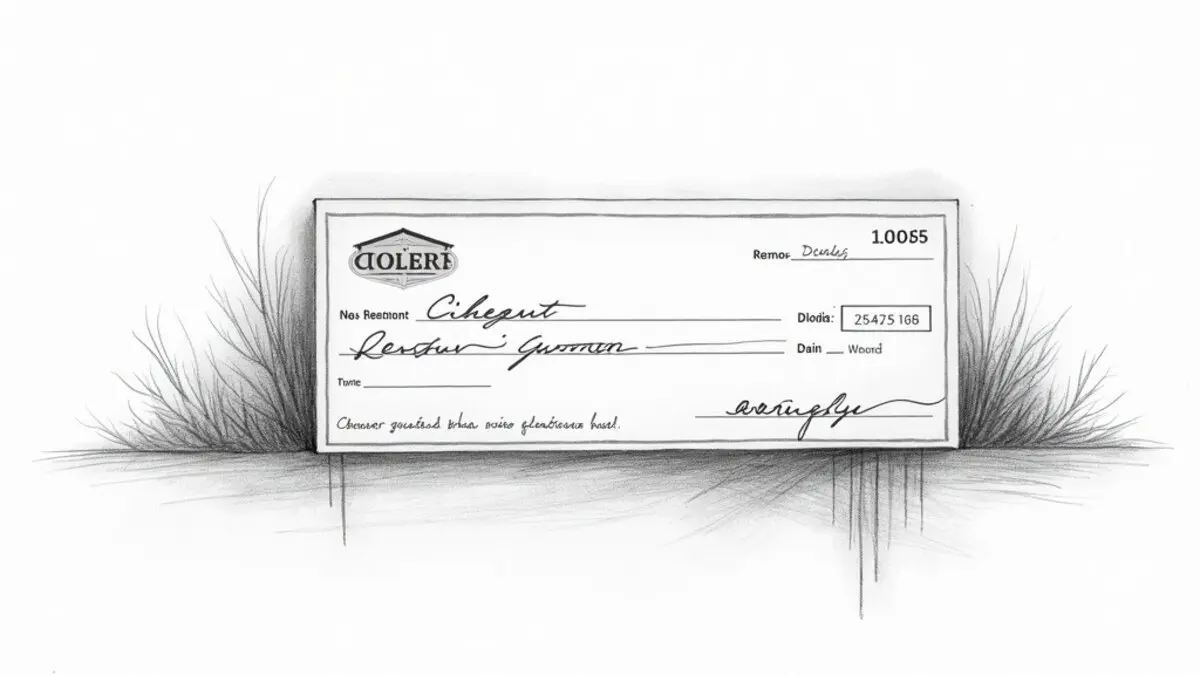
This case pits a seller, Mr. Y, against a buyer, Mr. X. The former received a cheque for 1,600,000 francs (approximately €244,000) as a deposit on the purchase of a property in Vallauris. The cheque was dated 3 May 2004, but it did not bear the place of issue or the drawer's signature. The sale ultimately did not go through, and Mr. Y sought payment of the cheque in court. Dismissed on appeal, he appealed to the Court of Cassation.
The central question: can a cheque lacking the mandatory details (date, place, signature) be enforced for payment? The answer is no. But the Court of Cassation goes further: even if the absence of these details is due to the drawer's intentional fault (here, Mr. X allegedly deliberately omitted them), that does not change anything. The cheque only counts as prima facie written evidence of the debt, not as an enforceable instrument. In other words, the beneficiary can prove the existence of the debt by other means, but cannot demand payment on the sole basis of the cheque.
The facts: a story like many that happen every day
Mr. X, a buyer interested in a property in Vallauris, gives Mr. Y, the owner, a cheque for 1,600,000 francs as a deposit, pending the drafting of a preliminary sale agreement. The cheque is dated 3 May 2004, but it does not include the place of issue (the town where it was drawn) or the drawer's signature. However, Article L. 131-2 of the Monetary and Financial Code requires, for a cheque to be valid, four mandatory details: the term "cheque" in the text, the order to pay a specified sum, the name of the drawer (the person issuing the cheque), and the place and date of its signature. Without these details, the cheque is considered a mere piece of paper, devoid of enforceability.
The sale does not go through. Mr. Y, who considers himself a creditor of the deposit, sues Mr. X for payment. He produces the cheque, as well as a draft preliminary sale agreement and a letter dated 24 May 2007 in which Mr. X confirms that the sale is not proceeding. But the cheque is disputed: Mr. X argues that it is worthless, lacking signature and place. The lower courts (the Court of Appeal) rule in favour of Mr. X: the cheque cannot serve as a basis for a claim for payment. Mr. Y appeals to the Court of Cassation, arguing that Mr. X committed a fault by deliberately omitting to fill in these details, and that this fault should entitle him to compensation.
The reasoning of the court — dissected
The Court of Cassation dismisses the appeal. It considers that the Court of Appeal correctly applied Article L. 131-2 of the Monetary and Financial Code (which lists the mandatory details of a cheque). It specifies that "the cheque only counts as prima facie evidence of the debt claimed by the beneficiary against the drawer." In other words, the cheque can be used to prove that a debt exists, but it cannot be used to demand payment without further evidence.
The Court dismisses the argument of fault: even if Mr. X deliberately omitted to sign and date the cheque, that does not change the invalidity of the instrument. The drawer's fault cannot make up for the lack of mandatory details. In short, the nullity of the cheque is an objective sanction, independent of intention. What few people know is that Article 1240 of the Civil Code (which allows claiming damages for fault) could have been invoked, but not to demand payment of the cheque itself. Here, Mr. Y would have had to prove a distinct loss caused by Mr. X's fault, such as the loss of a chance to sell to another buyer. But he did not do so.
This decision confirms previous case law: the Court of Cassation is very strict on the formal validity of cheques. It reminds that the cheque is a payment instrument, not a mere scrap of paper. If the mandatory details are missing, the beneficiary loses the right to demand payment in court, unless they have other evidence (a signed contract, email exchanges, testimonies, etc.).
What this means for you — concretely
For landlord owners in the Grasse area: if you receive a cheque for a deposit or security deposit, immediately check that it is signed, dated, and mentions the place of issue. A cheque without a signature is like a banknote with no value: you cannot present it to the bank, nor enforce payment in court.
For buyers: be cautious. A dishonest seller might try to use an incomplete cheque to claim a sum you do not owe. But rest assured: without the details, they will not succeed, unless they can otherwise prove the existence of the debt.
For real estate professionals (agents, notaries): this decision directly concerns you. When entering into a promise to sell, require that the reservation or deposit cheque be fully completed. In Vallauris, I saw a case where an agent cashed a cheque for €10,000 without checking the signature: the drawer contested, and the court ruled in favour of the buyer, ordering the agent to reimburse.
If you are in this situation (you hold an incomplete cheque), you must gather other evidence: a signed contract, an exchange of letters, a bank transfer... The cheque alone will not be enough. However, note that prima facie written evidence can be supplemented by testimonies or presumptions, but the burden of proof lies with you.
Four tips to avoid this type of dispute
- Check the mandatory details before cashing: signature, date, place, amount in figures and words. If any element is missing, refuse the cheque and ask for a new one.
- Require a separate written contract: a preliminary sale agreement or a unilateral promise to purchase signed by both parties, mentioning the deposit paid. This constitutes solid evidence.
- Prefer bank transfers: for large deposits (over €10,000), a transfer is safer as it leaves an irrefutable trace.
- Keep all documents: letters, emails, bank statements. In case of dispute, you can demonstrate the parties' intention.
Further reading: related case law and developments
This decision is in line with a consistent trend of the Court of Cassation. For example, in a judgment of 10 July 2007 (No. 06-15.619), it had already ruled that a cheque without a signature cannot be considered a valid payment. Similarly, a judgment of 30 November 2010 (No. 09-70.826) reminded that the absence of date or place renders the cheque void as an enforceable instrument.
The courts' tendency is therefore very protective of the drawer: one cannot be required to pay an incomplete cheque, even if one deliberately omitted the details. This may seem unfair to the beneficiary, but the law prioritises legal certainty: a cheque must be a reliable instrument, not a source of disputes.
For the future, it is likely that the case law will remain unchanged, unless the legislator modifies Article L. 131-2. In the meantime, it is better to be vigilant.
Checklist before acting
- Question: I have received a cheque without a signature, what should I do?
Answer: Do not cash it. Ask for a new signed and dated cheque. If the person refuses, keep the cheque as prima facie evidence and gather other documents (contract, emails). - Question: Can I sue the drawer of an incomplete cheque?
Answer: Yes, but not on the basis of the cheque. You can invoke Article 1240 of the Civil Code (fault) if you prove a loss, or rely on other evidence of the debt. - Question: What are the time limits for taking action?
Answer: The action for payment is time-barred after 5 years (general limitation period). But for an unpaid cheque, the period is shorter (1 year from presentation). Act quickly. - Question: Can a cheque without a signature be used as evidence in court?
Answer: Yes, as prima facie written evidence. It can be supplemented by other elements (testimonies, presumptions). - Question: What if I am the drawer and the beneficiary demands payment of an incomplete cheque?
Answer: You are entitled to refuse. Invoke the invalidity of the cheque. If sued, contest the claim in court.
Are you in a similar situation? A first 30-minute consultation with Maître Zakine (€45) can save you months of proceedings — and often much more. Book an appointment →
📌 Does this apply to your situation? Maître Cécile Zakine, French real estate lawyer, practises throughout France.
→ Prendre rendez-vous pour une consultation |
→ Browse all our legal articles
