Reference Decision: cc • No. 84-94.829 • 1985-02-26 • View the decision →
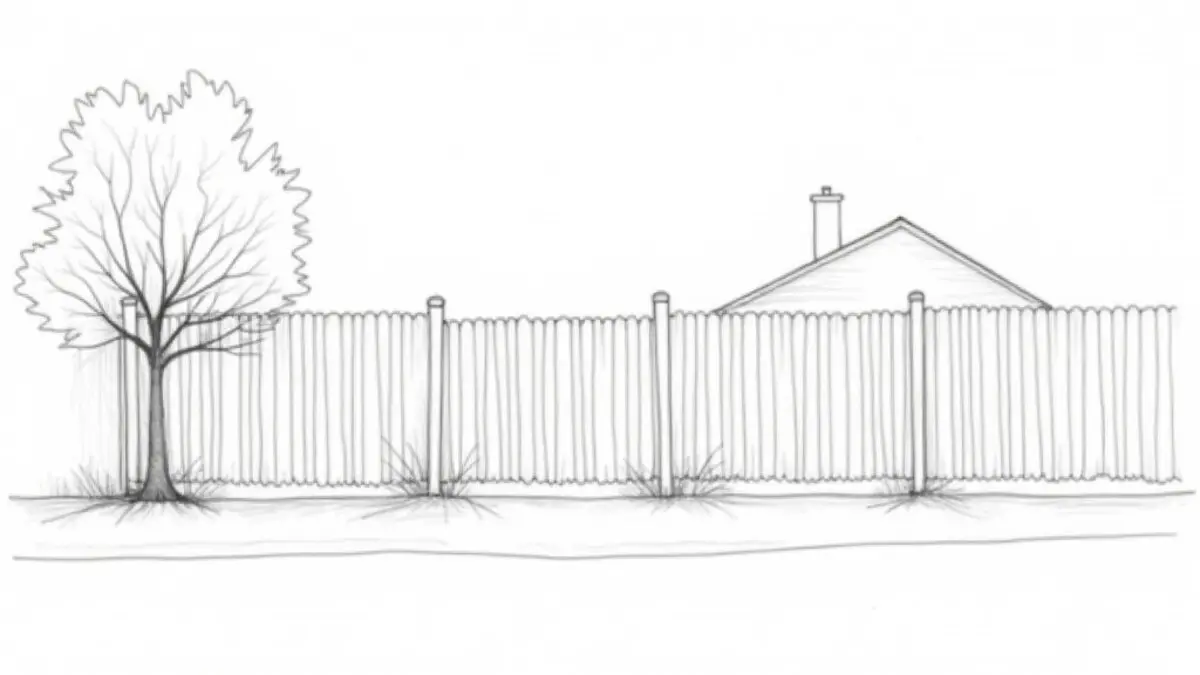
You live in Albert, and your concrete block fence, built twenty years ago, is starting to sag. You decide to raise it by fifty centimetres to gain more privacy. A disgruntled neighbour reports you to the town hall. And then comes the cold shower: an official tells you that you should have applied for a building permit. You risk a fine, even demolition. Is that really possible?
This question is asked by hundreds of property owners each year. Is a permit required to modify an existing fence? The answer, long unclear, was clarified by the French Supreme Court (Cour de cassation) in a judgment of 26 February 1985. And good news: in most cases, you have nothing to fear.
In this article, we will analyse this decision, understand what it changes for you, and give you practical advice to avoid any dispute. Whether you are a property owner in Corbie, a tenant in Amiens, or a real estate professional, these rules apply to you.
The Facts: A Story Like Many Others
Mr X, owner of a commercial premises in Albert, decides to modify the fence surrounding his property. He raises it by a few dozen centimetres, without touching the base or the pillars. For him, it is a simple repair, a facelift. But the town hall sees things differently: it initiates criminal proceedings for construction without a permit.
The case goes before the criminal court, then the court of appeal, and finally the French Supreme Court. The prosecution argues that any modification, even minor, of an existing fence requires a building permit, because the fence is a construction within the meaning of the Town Planning Code (Code de l'urbanisme). Mr X, on the other hand, argues that the law only refers to the "construction" (édification) of a new fence, not its modification.
The debate is technical, but it has immense practical consequences. Imagine: if the court ruled in favour of the prosecution, every time you replace a post, change a wire mesh panel, or refresh a low wall, you would have to go through the permit process. An administrative nightmare.
The French Supreme Court decided in favour of Mr X. It quashed the judgment of the court of appeal that had convicted him, by restating the applicable law. A victory for common sense.
The Court's Reasoning — Analysed
The judges of the French Supreme Court relied on Articles L. 441-1 to L. 441-4 of the Town Planning Code (now codified in Articles R. 421-12 et seq.). These provisions state that "only the construction of fences not necessary for agricultural or forestry activity is subject to administrative authorisation." In other words, if you build a fence where there was none, you must apply for a permit (or a prior declaration depending on the area). But if you modify an existing fence, the text does not require it.
The Court also specifies that modifications made to existing fences can only give rise to prosecution if they breach the obligations imposed by the town planning scheme (POS, now PLU). For example, if your PLU prohibits fences higher than 1.50 metres, and you exceed that height, you are in breach. But it is the planning rule that is violated, not the obligation to obtain a permit.
The reasoning is logical: the law clearly distinguishes between "to construct" (créer du neuf) and "to modify" (changer l'existant). The legislator did not intend to impose a permit for every small change. That would have paralysed the routine maintenance of properties.
This decision is a confirmation of earlier case law. It has not been overturned since 1985, even after the reform of planning permissions in 2007. The judges remain committed to this fundamental distinction.
What This Changes for You — Practically
If you are a landlord in Corbie, you can breathe a sigh of relief: replacing a gate, raising a low wall, or changing a wire fence does not expose you to criminal prosecution, provided you comply with local rules. However, if you build a fence on land that never had one, you must file a prior declaration (processing time: 1 month). Non-compliance can result in a fine of between €1,200 and €300,000 depending on the value of the property, and an obligation to demolish.
For tenants, be careful: if you modify the fence without the owner's consent, you risk a civil dispute for breach of the lease. The owner may require reinstatement.
Buyers should check, before purchasing, whether existing fences comply with the PLU. If a seller raised a fence without authorisation when the PLU prohibited it, you could inherit a dispute with the town hall.
Let's take a concrete example: in Amiens, the PLU allows fences of up to 2 metres in urban zones. You buy a house whose boundary wall is 2.20 metres. The seller raised it 10 years ago without a permit. The town hall may order you to lower it. Cost of works: about €1,500, not including legal fees if you contest.
Four Tips to Avoid This Type of Dispute
- Check the PLU of your municipality before any work. Visit your town hall website or the planning department. Check the maximum permitted height, required materials, and whether a prior declaration is needed for new fences. In Albert, for example, some historic areas require stone fences.
- Keep evidence of the existing state. Before modifying a fence, take dated photographs. If a neighbour challenges you, you can prove that you only modified an existing fence, not built a new one.
- For a new fence, file a prior declaration. Even if it is small, it is better to secure your project. The Cerfa form 13703*07 is simple to fill out. Processing time: 1 month (2 months in a protected area). No response means tacit approval.
- If a dispute arises, don't panic. If the town hall prosecutes you for modification without a permit, invoke the 1985 judgment. Show that you only modified an existing fence. If the PLU is complied with, you are protected.
Further Analysis: Related Case Law and Developments
Before 1985, some courts of appeal considered that any modification, even minor, required a building permit. The judgment of 26 February 1985 ended this uncertainty. Since then, the French Supreme Court has confirmed this position several times. For example, in a judgment of 14 November 1995 (No. 93-85.647), it held that replacing a gate with another of the same dimensions is not subject to authorisation.
In 2007, the reform of planning permissions incorporated these principles into the current Town Planning Code (Articles R. 421-12 et seq.). Now, the law provides that new fences are subject to a prior declaration, except for certain exceptions (agricultural, forestry fences, or in areas not covered by a PLU).
The trend of the courts is clear: they protect property owners against abusive prosecutions, while sanctioning flagrant violations of the PLU. If you comply with local rules, you are safe.
Key Points to Remember
- Modifying an existing fence is not an offence. You do not need a building permit to raise, replace, or repair an existing fence.
- But you must comply with the PLU. If your modification exceeds the permitted height or uses prohibited materials, you may be prosecuted for violation of planning rules.
- Building a new fence requires a prior declaration. Forgetting this formality can be costly: fine and demolition.
- If inspected, prove the fence existed before your work. Photographs, witness statements, previous invoices are your best allies.
- If you are prosecuted, consult a specialist lawyer. The 1985 judgment is solid case law that can protect you.
Are you in a similar situation? A first 30-minute consultation with Maître Zakine (€45) can save you months of proceedings — and often much more. Book an appointment →
📌 Does this apply to your situation? Maître Cécile Zakine, French real estate lawyer, practises throughout France.
servitude-droit-passage-avocat/" rel="dofollow">→ Avocat servitudes & foncier |
→ Browse all our legal articles
