Reference Decision: cc • No. 72-10.314 • 1973-05-09 • View decision →
Imagine you are on a train bound for Nîmes, comfortably seated, when suddenly a violent jolt throws you forward. The train has hit a lorry at a level crossing. You are injured. From whom can you claim compensation? From the SNCF, which is obliged to carry you safely? Or from the lorry driver, who may have forced the crossing? This seemingly simple question has given rise to complex litigation. And if the SNCF compensates you, can it then seek recourse against the lorry driver? The Court of Cassation decided this in 1973, in a judgment that is still authoritative. Let us analyse it.
The Facts: An Everyday Story
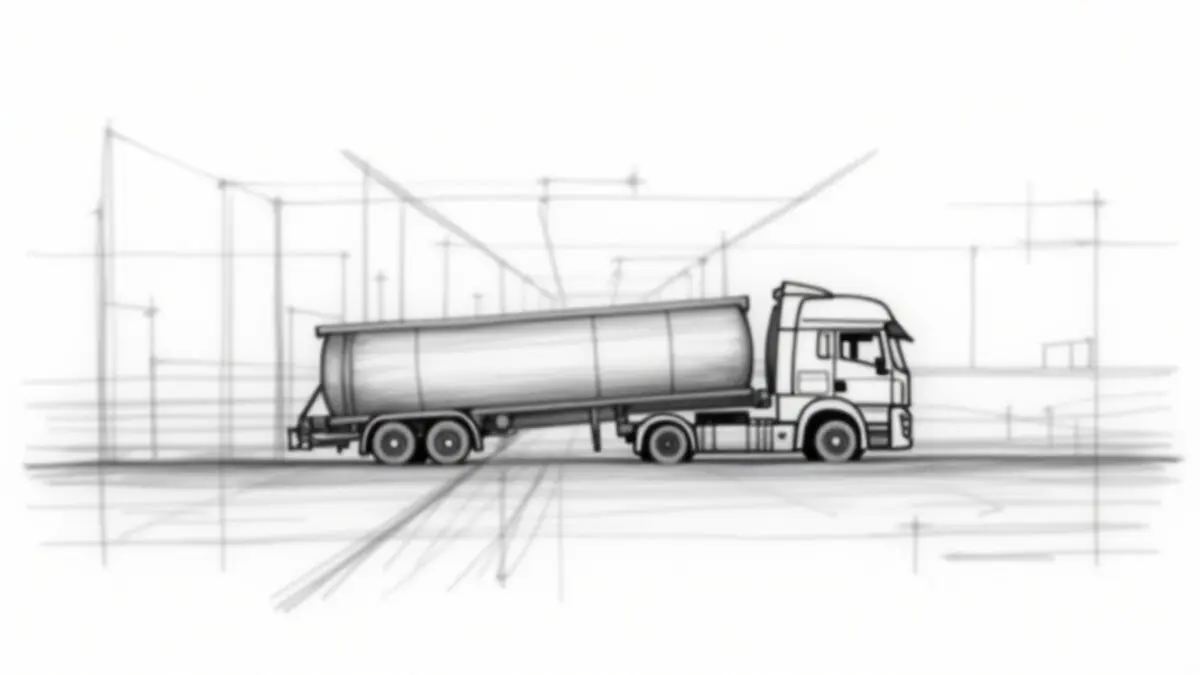
An ordinary day in Vauvert, in the Gard. A passenger train of the SNCF is running. At a level crossing, a lorry driven by Mr Y, an employee of company Z, the owner of the lorry, enters the crossing when the barriers are down or the audible warning is sounding. The collision is inevitable. Several passengers are injured, including Mr X, a resident of Nîmes. Mr X decides to sue the SNCF in court on the basis of the duty of safety (the contract of carriage requires the SNCF to bring the passenger safely to his destination). The SNCF, for its part, brings a third-party claim against the owner of the lorry and its driver, alleging that they are the true wrongdoers. The passenger also makes a direct claim against the lorry driver and his employer. Before the Court of Appeal, the debate focuses on liability. The owner of the lorry argues that the SNCF had committed a fault (for example, an insufficient audible warning) and that, in any event, his fault was not unforeseeable or unavoidable for the SNCF, which would have allowed the SNCF to be partially exonerated. The Court of Appeal does not follow this argument. It orders the owner of the lorry and its driver to compensate the passenger in full, without examining whether the lorry driver's fault was unforeseeable for the SNCF. Why? Because the passenger had not sued the SNCF on the basis of liability for things (Article 1384, paragraph 1 of the Civil Code, now Article 1242), but only on the contract of carriage. The Court of Appeal therefore did not have to rule on the SNCF's liability. It could directly order the lorry driver and his employer as the sole wrongdoers. The owner of the lorry appeals to the Court of Cassation. He argues a failure to answer his submissions (he had argued that the audible warning device was not working properly). The Court of Cassation dismisses the appeal: the judgment did answer this point by noting that passengers had heard an audible warning.
The Reasoning of the Court — Analysed
The Court of Cassation had to answer a procedural and substantive question: could the Court of Appeal, seised only by the passenger against the SNCF on the basis of the duty of safety (Article 1147 of the Civil Code, now Article 1231-1), on the SNCF's third-party claim and the passenger's claim against the lorry driver, declare the latter solely liable without examining whether his fault was unforeseeable or unavoidable for the SNCF? Yes, answers the Court. The reasoning is as follows: the passenger did not invoke Article 1384, paragraph 1 (liability for things, now Article 1242, paragraph 1) against the SNCF. He chose the contractual basis. Therefore, the Court of Appeal did not have to verify whether the SNCF could exonerate itself by proving that the lorry driver's fault was unforeseeable and irresistible (which would have been a ground for exoneration for the SNCF if it had been sued on the basis of liability for things). The Court of Appeal was thus able, without violating the principle of adversarial proceedings, to order the lorry driver and his employer as the sole wrongdoers liable for the damage, on the basis of fault (Article 1382 of the Civil Code, now Article 1240). In essence, since the SNCF was not sued on a tortious basis, the question of its exoneration did not arise. The lorry driver could not require the court to examine whether his fault was unforeseeable for the SNCF, because the SNCF was not in issue on that point. The decision confirms that the carrier's duty of safety is an obligation of result, but that the carrier may seek recourse against the wrongdoer third party. It also clarifies that the third party cannot raise a fault of the carrier against the passenger to reduce his own liability, if the passenger has not brought the carrier into the proceedings on that basis. This is an important clarification for victims: they can choose the party with the deepest pockets (often the SNCF) and leave that party to seek recourse against the true wrongdoer.
What This Means for You — Concretely
If you are the owner or driver of a vehicle involved in an accident with a train, this decision concerns you. Concrete example: imagine you are a haulier based in Vauvert. Your lorry hits a train at a level crossing. An injured passenger sues you directly, or sues the SNCF which brings a third-party claim against you. You will not be able to exonerate yourself by invoking a fault of the SNCF (for example, a defective signal) if the passenger has not himself invoked that fault against the SNCF. The court may order you to pay alone, without verifying whether your fault was foreseeable for the SNCF. On the other hand, if the passenger sues both the SNCF and you, the judge will have to apportion liability. For passengers: you have an interest in suing the carrier (SNCF) on a contractual basis, because it is an obligation of result. The SNCF will compensate you, then seek recourse against the lorry driver. You will thus be compensated quickly, without having to prove any fault of the SNCF. For lorry owners and their insurers: be vigilant. Even if the SNCF has committed a fault, if the passenger does not invoke it, you will be solely liable. Therefore, always check whether the passenger has sued the SNCF on a tortious basis. If not, you may need to bring a third-party claim against the SNCF on another basis. In practice, in the Nîmes area, this type of accident is common at unmanned level crossings. A quantified example: an injured passenger with damages of €50,000. If the passenger sues only the SNCF, the SNCF pays, then seeks recourse against you. You will have to reimburse €50,000 to the SNCF, without being able to reduce this sum even if the SNCF was negligent. Your insurer will have to cover this sum, unless there is an exclusion clause.
Four Tips to Avoid This Type of Litigation
- Strictly observe level crossing signals: never force a level crossing, even if you are in a hurry. An accident with a train has disastrous legal and financial consequences.
- Check your insurance: ensure that your insurance policy covers damage caused to third parties in the event of an accident with a train. Some policies exclude damage caused by heavy vehicles in particular circumstances.
- If you are a victim of an accident on a train: have your injuries recorded, gather witness statements and contact a lawyer. You have an interest in suing the SNCF on the basis of the contract of carriage, as it is an obligation of result.
- If you are implicated as the driver or owner of the vehicle: do not neglect your defence. Check whether the passenger has also sued the SNCF on a tortious basis. If not, you could be solely liable, even if the SNCF was at fault.
Further Reading: Related Case Law and Developments
This 1973 decision is part of a line of cases that limit the possibility for a wrongdoer third party to invoke a fault of the victim or another wrongdoer to reduce his share. It confirms that the carrier's duty of safety is an obligation of result (Civ. 1st, 12 November 1957). Subsequently, the Court of Cassation clarified that the carrier may exonerate itself by proving force majeure or the victim's fault (Civ. 1st, 21 November 1978). But in our decision, the question of force majeure did not arise because the carrier was not sued on a tortious basis. More recently, case law has maintained this distinction: the victim may choose his legal basis. If he sues on the contract, the third party cannot raise a fault of the carrier to exonerate himself, unless that fault constitutes force majeure. In practice, the courts are strict on proof of force majeure (unforeseeability and irresistibility). A simple lack of maintenance of the level crossing by the SNCF is not force majeure. Thus, the trend is towards full liability of the driver who does not obey signals, especially if the SNCF is not sued on the basis of liability for things.
Key Points to Remember
- Question: Can I sue only the SNCF if I am injured on a train that hits a lorry?
Answer: Yes. You can sue on the basis of the contract of carriage. The SNCF has a duty of safety as an obligation of result. It will have to compensate you, then seek recourse against the lorry driver. - Question: Can the lorry driver invoke a fault of the SNCF to reduce his liability?
Answer: Not if you have not sued the SNCF on a tortious basis. The lorry driver cannot require the judge to examine the SNCF's fault if it is not in issue on that point. - Question: What should I do if I am the lorry owner and I receive a claim?
Answer: Immediately consult a lawyer. Check whether the SNCF has been sued on another basis. If the passenger only sues the SNCF on the contract, you could be ordered to pay alone as indemnifier. - Question: Is this decision still applicable today?
Answer: Yes, the principles established in 1973 are still valid, even though the articles of the Civil Code have been renumbered. The Court of Cassation regularly applies them. - Question: Is there a time limit to sue?
Answer: Yes, the limitation period is 5 years for contractual claims (Article 2224 of the Civil Code) and 10 years for tortious claims (Article 2226). However, in transport matters, special time limits may apply. Consult a lawyer quickly.
Besoin d'un conseil personnalisé ? Contactez Maître Zakine — première consultation 30 min à 45€.
Are you in a similar situation? A first 30-minute consultation with Maître Zakine (€45) may save you months of litigation — and often much more. Book an appointment →
📌 Does this apply to your situation? Maître Cécile Zakine, French real estate lawyer, practises throughout France.
servitude-droit-passage-avocat/" rel="dofollow">→ Avocat servitudes & foncier |
→ Browse all our legal articles
