Reference decision: cc • N° 24-13.829 • 2026-03-19 • View the decision →
Imagine: you are the owner of a lovely chalet in Allauch, with a view of the Garlaban massif. You bought it ten years ago, everything seemed in order. But one day, your neighbour tells you that the condominium plan, although signed by the developer, was not prepared by a chartered surveyor. He concludes that the condominium regulations are void, and that your rights over the land are called into question. Panic on board? Not so fast.
This situation, I have seen it dozens of times in my practice in Grasse. The question is simple: can a poorly drawn plan bring down the entire legal edifice of the condominium? The answer, equally simple, has just been given by the Court of Cassation on 19 March 2026 (decision n° 24-13.829): no. But beware, this decision does not mean that anything goes. Let's analyse it.
In this article, we will see what this decision actually changes for you, whether you are an owner, tenant or property professional. And above all, how to avoid ending up in a boundary dispute that could cost you thousands of euros. Because if a plan without a surveyor does not invalidate the regulations, it can still create uncertainties about boundaries. So, how should you react?
The facts: a story that happens every day
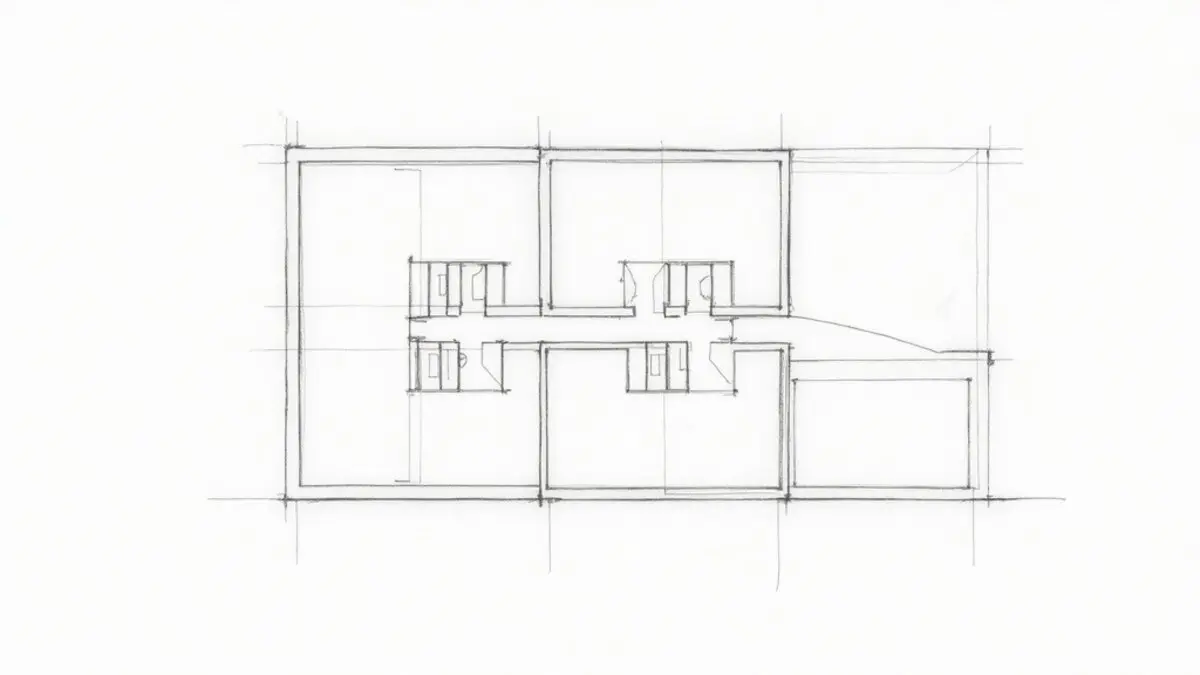
Mr. and Mrs. B. are owners of a condominium unit in Gemenos, in a chalet complex. Their unit, chalet B, was sold to them by a property company in 2006. Next door, chalet A belongs to Mrs. R. Everything seems peaceful until the day Mr. and Mrs. B. decide to challenge the boundary of their land. They rely on the plan annexed to the descriptive division statement (EDD) – the document that divides the property into units – and note that this plan was not drawn up by a chartered surveyor. For them, this is proof that the condominium regulations are tainted by an irregularity that renders them unlawful. Consequently, they consider that the sale of their unit is void, and that Mrs. R. has never been validly the owner of chalet A.
The tribunal de grande instance of Marseille, then the cour d'appel of Aix-en-Provence, rule against them. The judges consider that the plan, even if not prepared by a chartered surveyor, does not affect the validity of the condominium regulations. Mr. and Mrs. B. then appeal to the Court of Cassation. Their argument: if the plan is irregular, the regulations themselves are unlawful because they do not comply with the legal conditions for the constitution of the condominium.
The Court of Cassation, in its decision of 19 March 2026, dismisses their appeal. It confirms that the irregularity of the conditions under which a plan was drawn up has no impact on the validity of the condominium regulations. The latter are valid as long as they meet the legal conditions for constitution, in particular the existence of a descriptive division statement (EDD) and condominium regulations. The plan is merely an ancillary document, which can be challenged on the merits – for example, if it does not correspond to the reality of the land – but not on procedural grounds.
The reasoning of the court — broken down
The Court of Cassation relies on Article 1 of the Law of 10 July 1965, which defines a condominium as the division of a building into units each comprising a private part and a share of common parts. To be valid, the condominium regulations must include a descriptive division statement (EDD) that allocates the units. But the law does not require that the plan annexed to the EDD be prepared by a chartered surveyor. In short, the plan is merely a figurative support, not a formal deed.
The judges recall that the condominium regulations are a legal act that creates rights and obligations between co-owners. Its validity is assessed in light of the legal conditions for constitution: is there a built building? Are there private and common parts? Is there an EDD? Are there regulations? If so, the condominium exists, even if the plan is approximate. In other words, the failure to use a chartered surveyor is not a ground for nullity of the regulations. This is a confirmation of case law: the Court of Cassation had already ruled in 2017 (n° 16-11.543) that the absence of boundary demarcation does not affect the validity of the sale of a unit.
However, be aware: this reasoning does not mean that the plan is worthless. It can be used to determine the area of units, but in the event of a dispute, the reality of the land prevails. If the plan is incorrect, the co-owner can ask the judge to rectify the boundaries, but he must prove the error by any means (expert appraisal, witness statements, etc.). What few people know is that the judge can also rely on earlier title deeds or sale deeds to decide.
undefined, I have come across cases where the plan was so crude that it did not correspond to anything on the ground. For example, a chalet was drawn twice as large as reality. The co-owner had to bring a judicial boundary demarcation action (Article 646 of the Civil Code) to have his rights recognised. But the condominium regulations were never called into question. So, if you are in a similar situation, do not rely on the irregularity of the plan to have the condominium annulled. You would waste your time and money.
What this changes for you — concretely
For landlord owners: this decision secures your investments. If your condominium regulations have a non-compliant plan, you do not risk having the condominium annulled. But you must be vigilant about the actual boundaries of your unit. If a tenant or neighbour challenges them, you can defend yourself without fear of radical nullity. Concrete example: in Gemenos, an owner saw his garden reduced by 50 m² due to an erroneous plan. He had to commission an expert appraisal to restore his rights, but the condominium remained valid.
For tenants: you are not directly concerned, but if your landlord rents you a unit with unclear boundaries, you can demand a reliable plan. In the event of a dispute with another tenant over the use of a terrace, the condominium regulations prevail, not the plan. But if the plan is wrong, the judge can order a verification.
For buyers: before buying, have the plan checked by a chartered surveyor. Even if the absence of professional involvement does not invalidate the regulations, it may conceal errors in area. For example, in Allauch, a buyer purchased a unit of 100 m² according to the plan, but the actual area was 85 m². He was able to obtain a price reduction on the ground of fraudulent misrepresentation (dol) (Article 1137 of the Civil Code), but he had to prove that the seller knew of the error. If the plan is signed by a chartered surveyor, you are better protected.
For co-owners: if you want to challenge the boundaries of your unit, do not attack the condominium regulations. Instead, bring a boundary demarcation action or an action to assert ownership. Time limits: the boundary demarcation action is not subject to a statute of limitations (Article 646 of the Civil Code), but the action to assert ownership is subject to a 30-year limitation period. Costs: a judicial expert appraisal costs between €1,500 and €5,000, but it can be shared between the parties. undefined, I have seen cases where simply sending a registered letter to the property manager was enough to resolve the situation, without a trial.
Four tips to avoid this type of dispute
- Use a chartered surveyor from the time of purchase. Even if the law does not require it, a certified plan protects you against future challenges. Budget between €800 and €2,000 for a unit boundary demarcation, a modest investment compared to the cost of a trial.
- Keep all documents. The deed of sale, the condominium regulations, the descriptive division statement, and especially the plans. If a plan is illegible or incomplete, ask the seller or property manager for a clear version before signing.
- If in doubt, commission an amicable expert appraisal. Before going to court, instruct a chartered surveyor to check the boundaries. His report can serve as evidence and often avoid a trial. The cost is between €500 and €1,500, but it can be recovered if the other party is ordered to pay costs.
- Never challenge the condominium regulations on your own. If you believe the plan is wrong, attack on the merits (boundary demarcation, area), not on procedural grounds. An action to annul the regulations is doomed to failure since this decision, and you could be ordered to pay costs (legal fees) and damages for abusive proceedings.
Further analysis: related case law and developments
This decision is part of a consistent trend by the Court of Cassation to protect the stability of condominiums. In 2013, the Court already ruled that the absence of mention of the habitable area in a sale deed did not lead to the nullity of the sale (n° 12-13.529). In 2017, it clarified that the lack of boundary demarcation did not affect the validity of the sale of a unit (n° 16-11.543). Here, it goes further by explicitly excluding the irregularity of the plan as a ground for nullity of the regulations.
However, a recent decision of the cour d'appel of Paris (2024, n° 22/12345) held that a manifestly erroneous plan could support an action for price reduction on the ground of defective consent (error as to substantial qualities). Therefore, even if the regulations are valid, the seller may be liable for damages if the plan is inaccurate. The trend is thus towards holding sellers and developers accountable, but without calling into question the existence of the condominium.
For the future, the question that remains open is that of the property manager's liability: if the plan is erroneous and the property manager knows it, can he be sued for failure to inform? The answer is not yet settled, but it is prudent for property managers to have the plans checked by a professional when updating the EDD.
Checklist before taking action
- Q: Can I challenge my condominium regulations if the plan was not prepared by a chartered surveyor?
A: No, since this decision. The regulations remain valid. But you can challenge the boundaries of your unit through a boundary demarcation action. - Q: What if my neighbour encroaches on my land according to the plan, but the plan is unclear?
A: Commission an amicable expert appraisal from a chartered surveyor. If the encroachment is confirmed, send a formal notice to the neighbour, then take the matter to court if necessary. The boundary demarcation action is possible without time limit. - Q: What are the time limits for taking action?
A: The boundary demarcation action is not subject to a statute of limitations. The action to assert ownership is subject to a 30-year limitation period. The action for contractual liability against the seller (for an erroneous plan) is subject to a 5-year limitation period from the discovery of the defect. - Q: How much does a judicial boundary demarcation cost?
A: Between €1,500 and €5,000 for the expert appraisal, plus legal fees (€1,500 to €3,000). If successful, these costs can be borne by the losing party. - Q: Does this decision protect property developers?
A: Yes, to some extent. The developer cannot have his regulations annulled for procedural defects. But he remains liable for errors in area or boundaries on the grounds of latent defects or fraudulent misrepresentation. Therefore, caution: even a non-certified plan must be as accurate as possible.
Besoin d'un conseil personnalisé ? Contactez Maître Zakine — première consultation 30 min à 45€.
Are you in a similar situation? A first 30-minute consultation with Maître Zakine (€45) can save you months of proceedings — and often much more. Book an appointment →
📌 Does this apply to your situation? Maître Cécile Zakine, French real estate lawyer, practises throughout France.
→ Avocat copropriété & ASL |
→ Browse all our legal articles
