Reference Decision: CC • No. 18-16.117 • 2020-03-26 • View the decision →
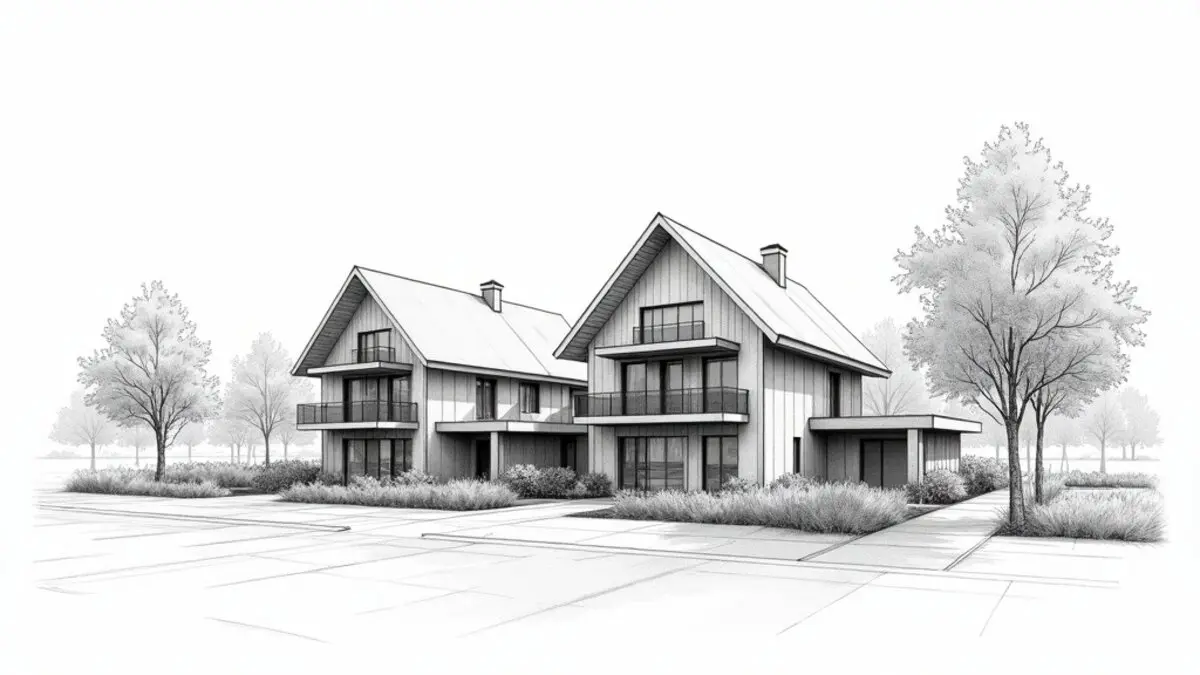
Picture the scene: in Chamalières, the chic suburb of Clermont-Ferrand, two adjoining buildings share a heated access ramp and a common garage entrance. The owners, real estate companies, get on well until one of them decides to sell its lots. The buyer challenges the condominium status, arguing that the ramp is located on the other owner's land. The question is simple, but its consequences are explosive: is this development a condominium or not?
This question is asked every year by hundreds of owners and management companies. Must common parts (i.e., shared spaces or facilities) necessarily be spread over several plots for the Law of 10 July 1965 to apply? Or is it enough that they are designed for common use, even if they are physically on the property of only one owner? The answer from the French Supreme Court, handed down on 26 March 2020, is a real wake-up call.
In this judgment, the High Court quashes the decision of the Court of Appeal, which had upheld the condominium status. It now requires the finding of “the existence of land and services common to both property developments”. In other words, no condominium without a real sharing of land or facilities. A clarification that could change everything for thousands of residences.
The Facts: An Everyday Story
Mr X, an owner in Chamalières, had acquired lots in a development consisting of two buildings erected on two separate plots. To access his garage, he used a heated ramp and a common entrance, both located on the land of the other owner company. So far, everything worked: maintenance charges were shared among the co-owners, and the management company ran the whole development.
But in 2015, Mr X decided to sell his lots. The prospective buyer, advised by a lawyer, raised a difficulty: if the ramp is on someone else's land, how can Mr X justify paying condominium charges? The notary refused to draft the deed. Mr X then sued the other company before the Tribunal de Grande Instance of Clermont-Ferrand to have the existence of a condominium recognised.
First twist: the court ruled in his favour. It held that the ramp and entrance, although located on a single plot, were common parts because they served both buildings. The other company appealed. The Riom Court of Appeal upheld the judgment in 2018, ruling that common use was sufficient to create a condominium. But the dissatisfied company appealed to the Supreme Court.
Second twist: the Supreme Court censured the Court of Appeal. It recalled that Article 1, paragraph 2, of the 1965 Law (in its version prior to 2018) requires the building to comprise “common parts” and “private parts”, which presupposes a division of land and services. However, in this case, the ramp and entrance were on the property of a single company. Without finding that the two plots were burdened with easements or that there were shared spaces divided among the co-owners, the Court of Appeal violated the law.
The Reasoning of the Court — Dissected
To understand the judgment, we must go back to the basic text: Article 1, paragraph 2, of Law No. 65-557 of 10 July 1965 (the condominium statute) provides that the law applies to “any building or group of buildings used wholly or partly for residential purposes […] whose ownership is divided into lots among several persons”. Each lot comprises a private part (your flat) and a share of the common parts (the stairs, the roof, the land).
The difficulty is that the law does not precisely define what a “common part” is. Case law had to clarify. The Riom Court of Appeal adopted a “functional” approach: anything designed for everyone's use is common, even if located on a single plot. In short, the land base does not matter, only the use matters.
The Supreme Court, however, favours a “structural” approach. It requires the objective existence of “common land and services”. This means that there must be a sharing of land (e.g., undivided land) or easements (right of way, etc.) between the different plots. In other words, common use is not enough: the ownership of the facilities must itself be divided or encumbered with real rights.
undefined, I have seen cases where developers built two buildings on neighbouring plots with a shared swimming pool and car park. Without a condominium deed or easement, the owners found themselves in a legal dead end. This judgment confirms that one must be extremely vigilant when purchasing.
But what exactly does this change? The Supreme Court does not condemn de facto condominiums: it simply requires that the lower courts verify the existence of a “common organisation” based on shared real rights, not merely on intention or use.
What This Means for You — In Practice
If you own a lot in a development where the allegedly common parts are located on the land of a single neighbour, this decision directly concerns you.
For the landlord owner: if you rent a flat in a residence where the car park or garden is on someone else's land, you might not be obliged to pay the related charges. Example: in Clermont-Ferrand, an owner paying €1,200 per year in condominium charges for a 6-lot building, while the access ramp is on the neighbour's land, could challenge the status and claim reimbursement for the last three years (i.e., €3,600). However, note that the five-year limitation period applies (Article 2224 of the Civil Code).
For the tenant: your lease mentions recoverable charges. If the condominium is challenged, the owner may be unable to provide a justified statement of charges. In practice, you could demand a new lease or a rent review. But rest assured, courts generally protect tenants in good faith.
For the buyer: before buying, check the condominium regulations and the cadastral plan. If the common parts are exclusively on a neighbouring plot, ask for a notarial certificate confirming the existence of an easement or undivided ownership. If in doubt, consult a lawyer lawyer. The cost of a consultation (€45 with Maître Zakine) is negligible compared to the risks of litigation.
For the co-owner: if your management company demands charges for facilities located on the neighbour's property, you can challenge this at the general meeting. Demand that the managing agent provide a divisional description (a document allocating the common parts). If they cannot, it is a warning sign.
Four Tips to Avoid This Type of Dispute
- Check the title deed: upon any acquisition, have the condominium regulations analysed by a notary. Ensure that the common parts are properly allocated among all lots and that they are located on plots belonging to all co-owners or burdened with easements.
- Require an up-to-date divisional description: this document, mandatory in every condominium, describes each lot and its share of common parts. If it is missing or inaccurate, refuse to sign. You can request its update at a general meeting.
- If in doubt, have a boundary survey carried out: in Chamalières, an owner discovered that his garage encroached by 2 m² on the neighbouring land. The survey revealed that the access ramp was partly on another's plot. This allowed the situation to be regularised before any litigation.
- Consult a lawyer before buying: an initial 30-minute consultation (€45) can identify risks. Do not rely solely on the seller's or estate agent's assurances. Property law is full of pitfalls.
Besoin d'un conseil personnalisé ? Contactez Maître Zakine — première consultation 30 min à 45€.
Further Reading: Related Case Law and Developments
This judgment is part of a recent trend by the Supreme Court to require a real basis (i.e., based on property rights or easements) for the application of the condominium regime. In a judgment of 13 December 2018 (No. 17-26.219), the Court had already ruled that parking spaces located on land belonging to a third party could not be common parts.
Conversely, the ELAN Law of 23 November 2018 relaxed the conditions for creating a condominium: since 2019, it is possible to create a “horizontal” condominium (individual houses with common facilities) without the land being undivided. However, this law only applies to new constructions. For older developments, the case law remains strict.
What few people know is that if the condominium regime is not applicable, the parties may find themselves in “forced co-ownership” (Article 815 of the Civil Code), with very restrictive management rules (unanimity for disposal acts). It is therefore better to regularise by a contractual easement or a voluntary condominium.
Frequently Asked Questions
Can I refuse to pay charges if the condominium is invalid?
Yes, if you prove that the common facilities are not on shared land. But be careful: the management company may claim charges on the basis of unjust enrichment (Article 1303 of the Civil Code). Consult a lawyer before stopping your payments.
What if my building has no condominium regulations?
You must call a general meeting to adopt regulations and a divisional description. If the owners refuse, apply to the Tribunal Judiciaire of Clermont-Ferrand to have a provisional administrator appointed.
What are the time limits for legal action?
The action to nullify the condominium is time-barred after five years from the publication of the regulations (Article 42 of the 1965 Law). For an action to recover charges, the limitation period is five years from each due date (Article 2224 of the Civil Code).
How much does it cost to challenge the condominium status?
Lawyer's fees range from €1,500 to €5,000 depending on complexity. Judicial expert fees (if ordered) can reach €3,000. A preliminary consultation with Maître Zakine (€45) allows you to assess the viability of your case.
Can an owner force the exit from the condominium?
No, exiting requires the consent of all co-owners or a court decision due to division of the building (Article 1 of the Law). If a single owner refuses, you are stuck. Hence the importance of clear drafting from the outset.
Are you in a similar situation? An initial 30-minute consultation with Maître Zakine (€45) can save you months of proceedings — and often much more. Book an appointment →
📌 Does this apply to your situation? Maître Cécile Zakine, French real estate lawyer, practises throughout France.
→ Avocat copropriété & ASL |
→ Browse all our legal articles
