Key decision: cc • No. 64-91.163 • 1964-12-08 • View the decision →
Imagine: you return home in Angers and find that your neighbour has torn down the boundary fence between your two gardens. He claims to have a right of way over your land and believes that the fence unjustly prevents him from accessing it. What should you do? The temptation to retaliate, to rebuild, or even to destroy in turn is great. Yet the law is clear: even if you believe you hold a right, deliberately destroying a fence constitutes an offence.
This question is asked by hundreds of property owners every year. In Angers as elsewhere, neighbour disputes over property boundaries and easements of way (the right to pass over another's land) are common. But how far can you go to assert a right without risking criminal conviction?
The decision of the Court of Cassation of 8 December 1964 (No. 64-91.163) provides an unambiguous answer: the criminal intent (the intention to commit a prohibited act) exists as soon as the destruction is voluntary and conscious, regardless of whether the perpetrator believes they hold a right. In short, if you knock down a fence knowing it belongs to another, you commit an offence, even if you think you have good reason. Let us analyse this landmark decision.
The facts: a story that happens every day
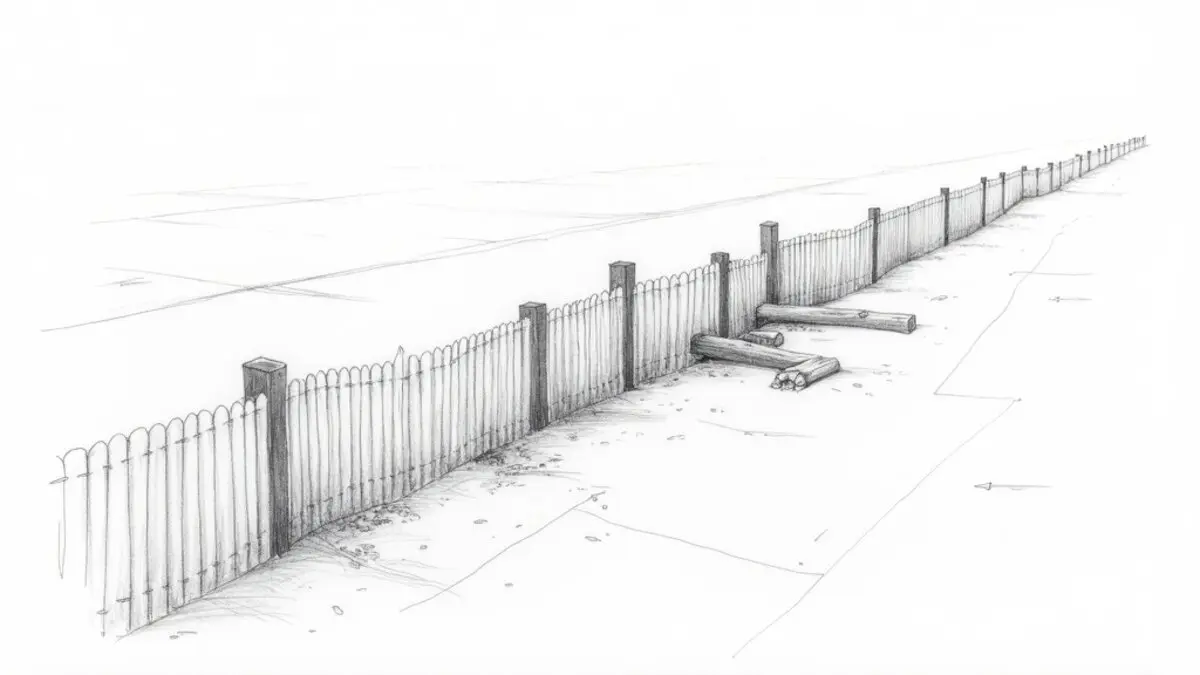
The case concerns Mr. Paul, a property owner who destroyed a fence belonging to his neighbour in Angers. The reason? Mr. Paul believed that the fence obstructed a right of way he claimed to hold. Tired of having to go around the land, he took a sledgehammer and smashed the barrier. The neighbour filed a complaint.
Brought before the criminal court (which tries offences), Mr. Paul was found guilty of "breaking a fence" – an offence provided for by Article 445 of the former Penal Code (now codified in Article 322-1 of the Penal Code). He was sentenced to a fine and damages. Dissatisfied, he appealed. Before the Paris Court of Appeal, he argued his good faith: "I believed I had the right to pass, so I did not act with the intention of committing an offence."
The Court of Appeal rejected his argument. In its view, the fact that he had voluntarily destroyed a fence he knew belonged to another constituted an intentional act. It did not matter that Mr. Paul thought he was authorised by a right of way: he did not have the power to decide on the destruction alone. He should have taken the matter to court to have his right recognised, and then, if the fence was an obstruction, sought a judicial order for its removal.
Mr. Paul appealed to the Court of Cassation. He argued that criminal intent cannot exist if the perpetrator acts in good faith, believing they are exercising a right. But the Court of Cassation upheld the judgment: in cases of destruction of a fence, the guilty intent arises from the mere conscious will to destroy property known not to belong to oneself. The appeal was dismissed.
The reasoning of the court — explained
The Court of Cassation relies on a fundamental principle: the offence of breaking a fence is an intentional offence. This means that to be punished, the perpetrator must have acted voluntarily and knowingly. In this case, Mr. Paul knowingly destroyed a fence belonging to his neighbour. He knew the fence was not his. It did not matter that he believed he had a right of way: the voluntary destruction of another's property remains a wrongful act.
The judges distinguish two things: the underlying right (the right of way) and the manner of asserting it. Having a right does not allow you to take the law into your own hands. If you believe a fence encroaches on your rights, you must go to court, not take a sledgehammer. The Court recalls that "the guilty intent consists of a conscious will arising from the fact that one knows one has no decision-making power over the fences or boundary markers."
This approach has been consistent since 1964. It has been reaffirmed in many subsequent decisions. It follows the line of case law protecting private property against acts of trespass. The legal basis today is Article 322-1 of the Penal Code, which punishes the destruction of property belonging to another with up to two years' imprisonment and a fine of €30,000. But the 1964 decision established the principle that a mistaken belief in a right does not negate criminal intent.
Why such severity? Because allowing everyone to decide unilaterally what they are owed would open the door to anarchy. Imagine for a moment: if every neighbour could destroy a fence by invoking a right of way, it would be the law of the jungle. The courts must decide. In the meantime, property must remain intact.
What this means for you — in practice
For a property owner in Angers or elsewhere, this decision means you cannot destroy a fence, even if you believe it encroaches on your land or blocks a right of way. If you do, you risk criminal conviction: a fine, damages, and sometimes a suspended prison sentence. In addition, you will have to pay for the fence to be rebuilt.
Take a concrete example. In Chemillé-en-Anjou, a property owner, Mr. Martin, has an easement of way (right to pass over the land of his neighbour, Mrs. Dupont) to access his plot. Mrs. Dupont puts up a fence that blocks the passage. Mr. Martin, exasperated, cuts the fence wires. Mrs. Dupont files a complaint. Result: Mr. Martin is prosecuted for destruction of another's property. Even if he wins his case on the easement, he will have to pay a fine and repair the fence. The total cost? Between €500 and €3,000 in fines, plus damages (often the cost of the fence, i.e., €1,000 to €5,000), plus legal fees (€1,500 to €5,000). In short, a hefty bill for an action that could have been avoided by going to the judicial court.
For a buyer, this decision is a protection. If you buy a house in Angers and the neighbour destroys your fence claiming a right of way, you can file a complaint and obtain compensation. The 1964 case law guarantees that the neighbour cannot defend themselves by saying "I thought I had the right."
For a tenant, beware: if you destroy a boundary fence (separating your garden from the neighbour's), you incur liability, and the landlord may take action against you. It is better to report any dispute to the landlord and the management company.
Finally, for a co-owner, destruction of common parts (such as a fence around the building) is an offence. Even if you think the fence blocks your view, do not touch it. Go through the general meeting.
Four tips to avoid this type of dispute
- Never destroy a fence without a court order — even if you are convinced you have a right, wait for a judgment. Unilateral action exposes you to criminal prosecution.
- Check the title deeds and easements — before buying a property, consult the land registry and the notarial deed to know the exact boundaries and any rights of way. In Angers, the land registry office can help.
- In case of dispute, apply to the judicial court — if you believe a fence blocks your right of way, bring a court action to have your right recognised and, if necessary, to request the removal of the fence. The court can order its removal without you having to take the law into your own hands.
- Consider mediation — before going to court, try conciliation. In Chemillé-en-Anjou, judicial conciliators can help you reach an agreement. This avoids costs and tensions.
Further reading: related case law and developments
The 1964 decision has been confirmed by several subsequent rulings. For example, the Court of Cassation held in 1985 (No. 83-93.587) that demolishing a party wall to extend one's house constitutes an intentional offence, even if the perpetrator believed the wall was partly on their land. Similarly, in 2001 (No. 00-86.132), the Court convicted a property owner who had pulled up boundary markers, believing they were incorrectly placed.
The trend is consistent: the courts severely penalise infringements of another's property, even in cases of good faith. Since the reform of the Penal Code in 1994, penalties have been increased. Article 322-1 provides for up to 2 years' imprisonment and a fine of €30,000. If the destruction is committed with an aggravating circumstance (such as at night or in a group), the penalties can rise to 5 years and €75,000.
For the future, there is no indication of any relaxation. On the contrary, the protection of property is a constitutional principle. If you are unsure of your rights, consult a lawyer before acting. A simple consultation can save you months of proceedings.
Checklist before taking action
- Have I checked my title deed and the land registry? — If not, do so. Property boundaries are often a source of misunderstanding.
- Have I tried talking to my neighbour? — Dialogue can resolve many conflicts. Suggest a meeting on site.
- Have I considered mediation or conciliation? — In Angers, the local court offers free conciliators. This can avoid a lengthy and costly court procedure.
- As a last resort, have I consulted a solicitor specialising in property law? — Before taking any legal action or destroying anything, seek advice. A first 30-minute consultation (€45) can guide you.
- If I am a victim of destruction, have I filed a complaint promptly? — The complaint must be filed within 6 years of the offence. Keep photos and witness statements.
Are you in a similar situation? A first 30-minute consultation with Maître Zakine (€45) can save you months of proceedings — and often much more. Book an appointment →
📌 Does this apply to your situation? Maître Cécile Zakine, French real estate lawyer, practises throughout France.
servitude-droit-passage-avocat/" rel="dofollow">→ Avocat servitudes & foncier |
→ Browse all our legal articles
