Referenced decision: cc • No. 63-20.182 • 1965-03-04 • View the decision →
Imagine: you are the owner of a flat in Vitrolles, rented for years to the same family. A fire, a flood, or – as in this case – war destruction, reduces the building to ashes. You rebuild. Can the former tenant return? Do they still have a right to the premises? The question, simple on the surface, divided the courts until the French Supreme Court put an end to it in 1965.
On that day, the highest judges ruled: the reconstruction of a destroyed building does not extinguish the lease. The tenant retains their right to the lease in the new building. A decision that, more than half a century later, continues to apply in Arles as well as in Marseille, whenever a disaster strikes a rented property.
But beware: this solution is not automatic. It depends on the nature of the damage, the origin of the reconstruction, and the applicable texts. Let us decipher together this landmark decision to know exactly what it changes in your daily life.
The facts: a story that happens every day
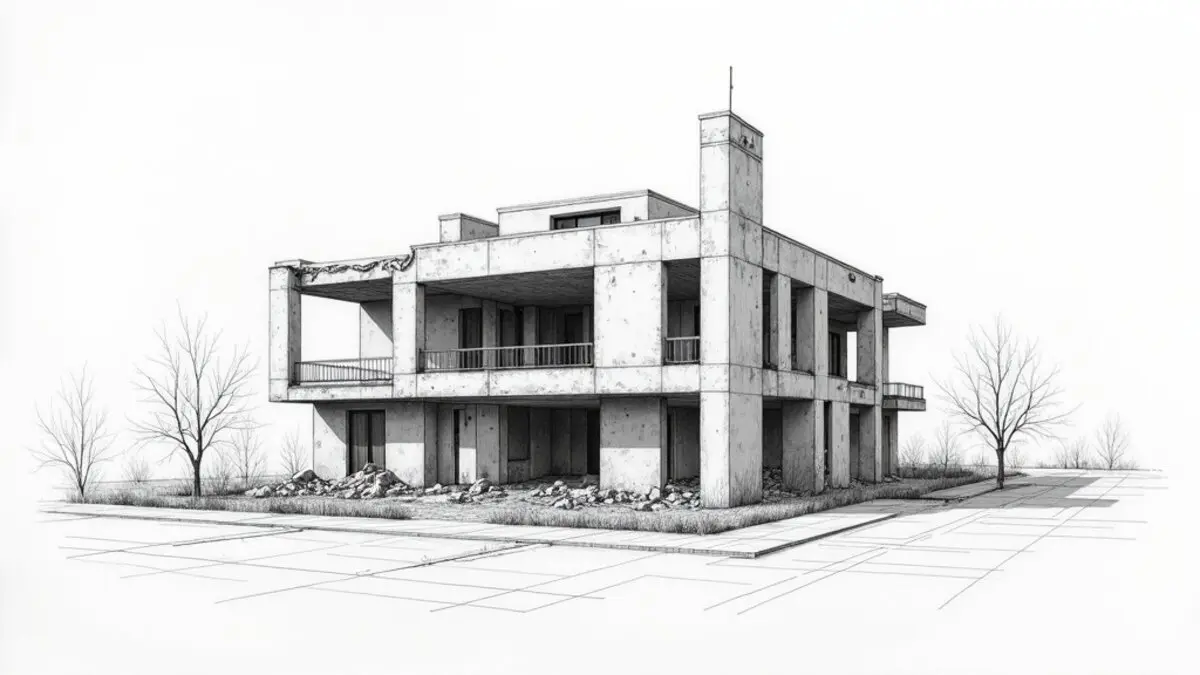
We are in Strasbourg, in the years following the Second World War. A building was destroyed by war. The city of Strasbourg, with state aid, rebuilds and pre-finances it. In this building, a flat was rented to a certain Robert. The original owner – or rather their successor in title – receives war damage compensation. But who now holds the right to let this rebuilt dwelling?
The tenant, Robert, believes that his lease has automatically transferred to the new dwelling. The owner, on the other hand, considers that the destruction terminated the contract and that he can freely relet. The conflict arises when the owner gives Robert notice to vacate in order to occupy the premises or let them to a third party. Robert sues the owner to assert his right to remain in the premises.
The Court of Appeal rules in favour of the tenant. It observes that the rebuilt building replaces the original building and that the lease must continue. The owner appeals to the Supreme Court. Before the highest court, he argues that the reconstruction was carried out by the city of Strasbourg, not by himself, and that the premises are different. But the Supreme Court dismisses his appeal: reconstruction, even by a third party, does not interrupt the lease provided it is done in replacement of the destroyed building and the owner receives the war damage compensation.
The reasoning of the court — broken down
The heart of the reasoning is summed up in one sentence: reconstruction does not create a new building, it replaces the old one. Legally, the lease is attached to the building, not to its materials. If the building rises from its ashes, the lease rises with it.
The Court relies on the texts relating to war damage – notably the Order of 8 September 1945 – which provide that compensation is intended to rebuild identically or equivalently. But it also uses the general law of obligations: the lease ends only for reasons provided by law (expiry of term, termination, rescission). Accidental destruction does not terminate the lease if it is followed by reconstruction. In this, the decision follows prior case law, but it clarifies it: even if the reconstruction is carried out by a third party (here the city), the lease subsists, because the owner retains the rights over the new building.
The owner argued that the lease was a contract intuitu personae (concluded in consideration of the person) and that the disappearance of the leased object extinguished it. The Court replies that the leased object has not legally disappeared: it has been replaced. A subtlety that changed the law.
This decision is still a reference today for all cases of reconstruction after a disaster. It is regularly cited in disputes concerning buildings destroyed by fire, flood, or even voluntary demolition followed by reconstruction.
What this changes for you — concretely
For the landlord owner: you cannot consider that a disaster terminates the lease. If you rebuild, the tenant can require to re-enter the premises. For example, in Arles, an owner saw his building damaged by a flood of the Rhône. He rebuilt with the help of his insurance. The former tenant was able to return, at the same rent (adjustable according to legal rules). If you wish to recover the dwelling to occupy it or sell it vacant, you must respect the rules of the 1989 Act: notice for repossession, sale, or legitimate and serious reason.
For the tenant: you have a right to remain in the premises after reconstruction. But this right is not absolute. If the owner does not rebuild, the lease ends for lack of a leased object. If the reconstruction changes the nature of the property (e.g., reduced surface area, fewer rooms), you can negotiate a rent reduction or refuse re-entry. In practice, keep all your lease documents and proof of rent payments: they will serve to prove your right.
For the purchaser: if you buy a rebuilt building, check whether a lease existed before the destruction. You could inherit a tenant you did not choose. A warranty against eviction clause in the sale deed can protect you.
Four tips to avoid this type of dispute
- Keep all your leases and receipts: in case of a disaster, they are proof of the existence and terms of the lease. Digitise them and store them in the cloud.
- Report the disaster to your insurance as soon as it occurs: insurance often covers loss of rent during reconstruction. It may also cover the tenant's relocation costs.
- Inform your tenant in writing of your reconstruction intentions: a simple registered letter with acknowledgement of receipt suffices. This avoids misunderstandings and sets a starting point for deadlines.
- In case of disagreement, refer the matter to the departmental conciliation commission: before going to court, try mediation. It is free and often quick. In Marseille, the commission handles requests in 2 to 3 months.
Further reading: related case law and developments
The 1965 decision is not isolated. It is part of a line of cases dating back at least to a Supreme Court judgment of 12 July 1956 (No. 55-10.123), which already held that the reconstruction of a building destroyed by war does not break the lease, provided the owner receives war damage compensation. More recently, the Court extended this solution to other disasters, such as fire (Civ. 3e, 10 May 2001, No. 99-18.456).
The trend is therefore constant: the right to the lease survives the destruction of the leased object, provided it is rebuilt. But beware: if the reconstruction is carried out by a third party unrelated to the owner (e.g., a developer who buys the ruins and rebuilds for their own account), the initial lease may be considered extinguished, because there is novation (change of owner and object). The line is sometimes thin, and each case must be examined carefully.
In the future, one can expect judges to continue applying this principle flexibly, while ensuring a balance between the tenant's right to remain in the premises and the owner's right to dispose of their property. The ALUR Act of 2014 did not modify this rule, but it strengthened the landlord's information obligations in case of disaster.
What you absolutely need to remember
Here are the key points in the form of practical Q&A:
- My building is destroyed by fire. Can my tenant return after reconstruction? Yes, in principle, if you rebuild identically or equivalently. The lease continues automatically.
- Can I give notice to my tenant during reconstruction? No, not for this reason. The notice must be based on a legitimate reason (repossession, sale). Reconstruction is not a ground for termination.
- Does the rent remain the same after reconstruction? Yes, except for legal revision or indexation clause. If the surface area changes, an adjustment is possible.
- What if my tenant refuses to re-enter? You may consider that they waive the lease. But have this noted by a bailiff to avoid later challenge.
- And if I do not rebuild? The lease ends for lack of a leased object. You must return the security deposit and compensate the tenant for the harm suffered (relocation costs, etc.).
Besoin d'un conseil personnalisé ? Contactez Maître Zakine — première consultation 30 min à 45€.
Are you in a similar situation? A first 30-minute consultation with Maître Zakine (€45) can save you months of proceedings — and often much more. Book an appointment →
📌 Does this apply to your situation? Maître Cécile Zakine, French real estate lawyer, practises throughout France.
→ Avocat bail commercial |
→ Browse all our legal articles
