Reference decision: cc • No. 99-14.536 • 2001-06-20 • View the decision →
Imagine: you buy a house in Boulogne-Billancourt, with a well-exposed garden. But the neighbour, whose land has been expropriated, has planted a row of tall trees along the fence, less than two metres away. Result: your garden is plunged into shade for a good part of the day. You ask the neighbour to prune, but he refuses, arguing that these trees have been there for a long time and that he has the right to let them grow. What does the law say? And if the land has been expropriated, do the rules change? This is exactly the question that the French Supreme Court ruled on in a decision of 20 June 2001 (No. 99-14.536).
This decision is essential for all owners, tenants and property professionals faced with an expropriation or with plantings on the boundary of a property. It recalls a fundamental principle: the expropriation order “extinguishes, by itself and as of its date, all real or personal rights existing on the expropriated properties”. In short, as soon as the expropriation is ordered, the easements and other rights burdening the land disappear, except for very limited exceptions. In this case, an owner had planted trees on his land, then the adjacent land was expropriated. The expropriating authority asked for the trees to be pruned to the legal height of two metres, because they were planted less than two metres from the boundary. The owner resisted, invoking a “servitude by prior owner's arrangement” (an ancient right that allowed the maintenance of a situation created by a former single owner). The Court of Appeal had upheld his argument, but the Supreme Court quashed that judgment, recalling that the expropriation had extinguished this easement.
But what exactly does this change? And how should you react if you are in a similar situation? This article analyses the decision, its practical implications and gives you advice to avoid disputes.
The facts: a story that happens every day
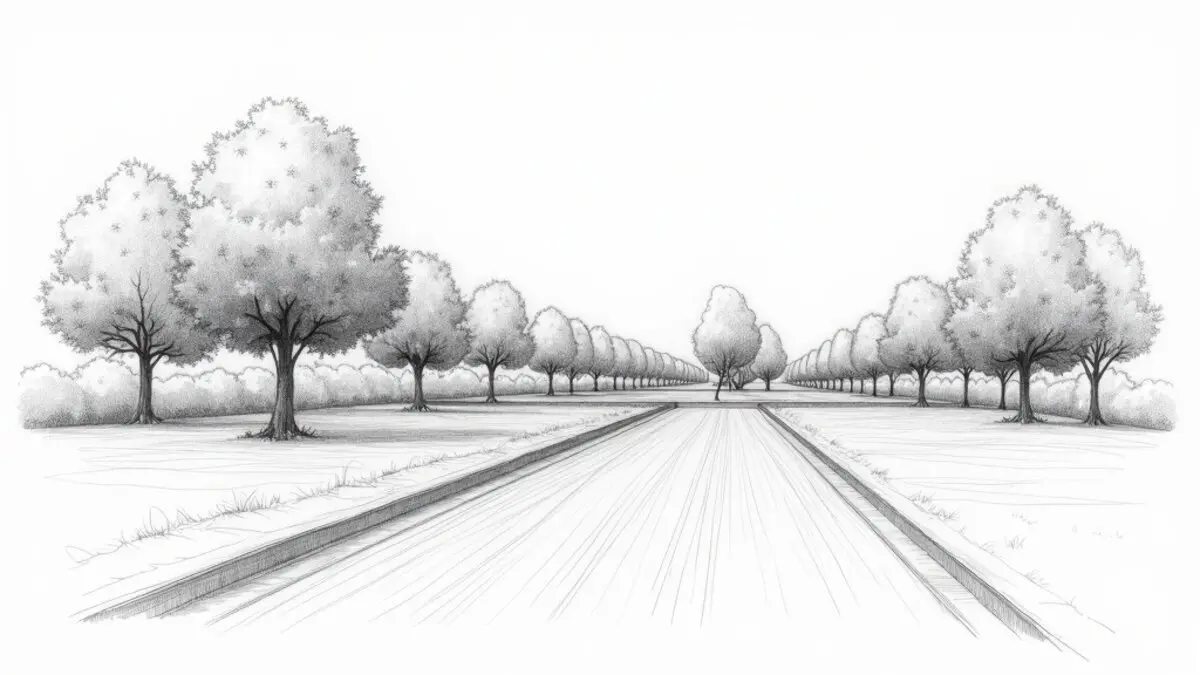
Mr X, owner in Boulogne-Billancourt, owned two adjoining plots of land. On one of them, he planted a row of trees less than two metres from the boundary. Later, the other plot was expropriated by a public authority (for example, to build a school or a park). The expropriating authority, having become owner of the adjacent land, noticed that the trees, as they grew, cast shade and hindered sunlight. It therefore sued Mr X to have him ordered to prune the trees to a maximum height of two metres, in accordance with Article 671 of the Civil Code (which sets the distance and height of plantings on boundary lines).
Mr X resisted. He explained that these trees had been planted long before the expropriation, and that their location and height were “normal” given the age of the plantation. He invoked what is called a “servitude by prior owner's arrangement”: a legal mechanism that allows, when two plots belonged to the same owner and that owner created a state of affairs (such as a row of trees), to consider that this state is transmitted as an easement upon division of the land. In other words, according to Mr X, he had the right to keep his trees at a height exceeding two metres, even though they were less than two metres from the boundary, because this situation existed before the expropriation.
The Bobigny High Court (as the case took place in Seine-Saint-Denis) was first seised, then the Paris Court of Appeal. The Court of Appeal upheld Mr X's argument: it considered that the servitude by prior owner's arrangement applied, and that it had not been extinguished by the expropriation. The expropriating authority then appealed to the Supreme Court. In its decision of 20 June 2001, the Supreme Court quashed the appellate judgment, ruling that the expropriation order had extinguished all real or personal rights, including the invoked easement. In short, as soon as the expropriation occurred, the easement disappeared, and Mr X had to comply with the ordinary rules on distance and height of plantings.
The reasoning of the court — analysed
The Supreme Court based its decision on Article L. 12-2 of the Expropriation Code (old version, but the principle is still in force). This provision states that the expropriation order extinguishes, by itself and as of its date, all real or personal rights existing on the expropriated properties. “Real rights” means rights that directly affect the property (ownership, usufruct, easement, mortgage…). “Personal rights” refers to rights that a person may have against another (for example, a lease, a promise of sale). In short, expropriation wipes the slate clean of all rights burdening the land, so that the expropriating authority (often a public body) can freely dispose of it.
Now, in this case, the servitude by prior owner's arrangement was a real right in immovable property: it attached a burden (the obligation not to prune) on the expropriated land. As soon as the expropriation order was made, this easement was automatically extinguished, without any need for a separate act to remove it. The Court of Appeal had therefore erred in considering that the easement survived.
Note, however: the Supreme Court does not call into question the principle of the servitude by prior owner's arrangement itself (provided for in Article 693 of the Civil Code). It merely recalls that expropriation is a cause of extinction of easements, just like the merger of the two estates into one hand or thirty-year prescription. What few people know is that expropriation has a “cleansing” effect: it clears the property of all charges, except for certain public utility easements (such as easements for the passage of electricity networks) which may survive. But a private planting easement does not fall within these exceptions.
The judges therefore applied a strict but logical rule: the general interest of expropriation prevails over individual rights. The expropriated party (Mr X) was compensated for the loss of his land, and this compensation also covers the loss of active or passive easements. He cannot therefore claim to retain advantages that were attached to the expropriated land.
In this case, the Court of Appeal had noted that the planting of trees marked Mr X's intention to create an easement, and that the trees were in place before the expropriation. But for the Supreme Court, these elements were irrelevant because the expropriation order had extinguished everything. In other words, even if the easement had been validly constituted, it disappeared on the day of expropriation.
What this changes for you — concretely
This decision has important practical implications for several profiles:
For the expropriated owner: If you are expropriated and you had planted trees on the boundary, you cannot rely on a servitude by prior owner's arrangement to maintain a height exceeding the legal limit (2 metres if the trees are less than 2 metres from the fence). You will have to prune them, at your own expense, if the expropriating authority requests it. undefined, I have come across cases where expropriated owners tried to keep tall hedges or walls, thinking that their age gave them an acquired right. This decision shows that this is not the case: expropriation resets the clock.
For the expropriating authority (local authority, developer): You can demand compliance with the legal planting distances, even if the planting existed before the expropriation. For example, if you expropriate land in Bobigny to build a school, and the expropriated neighbour has trees that are too tall, you can sue him to have them pruned. Caution: you must act within a reasonable time, but expropriation gives you a clear right.
For the neighbouring owner who is not expropriated: If your land is adjacent to expropriated land, you are not directly affected by this decision, but it illustrates that expropriation can alter the active easements from which you benefit. For example, if you had a right of view over the expropriated land, it disappears. You should check your rights before the expropriation.
For property professionals (notaries, agents): When selling, if a property has been expropriated in the past, it is crucial to check whether easements have been re-established afterwards. In principle, expropriation extinguishes them, but a new easement may be created afterwards. Be vigilant during due diligence.
In figures: pruning can cost between €200 and €800 per tree depending on height and accessibility. If you have a row of 10 trees, the bill can run into several thousand euros. Better to anticipate.
Four tips to avoid this type of dispute
- Consult the Local Urban Plan (PLU) before planting: Some municipalities impose different distances or heights than the Civil Code. In Boulogne-Billancourt, for example, the PLU may require a greater setback. Check with the town hall.
- Scrupulously respect planting distances: Article 671 of the Civil Code requires planting at least 2 metres from the boundary for trees over 2 metres high, and 0.5 metre for shrubs. If you plant too close, you risk being forced to prune or remove.
- In case of expropriation, do not assume that your easements survive: As soon as you receive an expropriation order, know that all your real rights on the expropriated property are extinguished. If you want to keep an easement, you must have it re-registered after the expropriation by notarial deed.
- If you are the expropriating authority, act quickly: As soon as the order is made, you can demand compliance with planting rules. Do not wait for the trees to grow too tall, as the neighbour might invoke prescription (but in practice, expropriation interrupts time limits).
Besoin d'un conseil personnalisé ? Contactez Maître Zakine — première consultation 30 min à 45€.
Further reading: related case law and developments
This decision is part of a consistent line of Supreme Court case law on the extinguishing effect of expropriation. For example, in a decision of 19 March 1997 (No. 95-12.345), the Court had already ruled that expropriation extinguishes rights of way even if they were apparent and continuous. More recently, a decision of 10 February 2016 (No. 14-27.890) confirmed that expropriation also purges emphyteutic leases (very long-term leases, 18 to 99 years).
There is, however, an exception for public utility easements established by law (e.g., towpath easements, footpath easements, easements for the passage of networks). These survive expropriation because they are in the general interest. But private easements, like the one in our case, are extinguished.
The trend is therefore clear: judges are strict on the effect of expropriation. If you own an expropriated property, do not rely on age to retain rights. The expropriation compensation is intended to compensate for all losses, including the loss of easements.
Summary and next steps
FAQ:
Q: Can I keep my trees at more than 2 metres if they were planted before my neighbour's expropriation?
A: No, because the expropriation extinguished any easement that would allow you to derogate from the rule. You must prune to the legal height.
Q: What if my expropriated neighbour refuses to prune?
A: You can sue him. The 2001 decision is in your favour: expropriation extinguishes rights, so the judge will order pruning.
Q: Does expropriation also extinguish rights of view?
A: Yes, in principle. Unless the easement was created after the expropriation or is of public utility.
Q: What is the time limit to act after expropriation?
A: There is no specific time limit, but it is advisable to act quickly to prevent the neighbour from invoking acquisitive prescription (30 years for easements). In practice, act within the year following the order.
Q: Does the expropriation compensation cover the loss of the easement?
A: Yes, the compensation is calculated taking into account all extinguished real and personal rights. You cannot claim additional compensation.
Are you in a similar situation? A first 30-minute consultation with Maître Zakine (€45) can save you months of proceedings — and often much more. Book an appointment →
📌 Does this apply to your situation? Maître Cécile Zakine, French real estate lawyer, practises throughout France.
→ Avocat servitudes & foncier |
→ Browse all our legal articles
