Reference Decision: cc • No. 19-13.373 • 2020-09-10 • View Decision →
Imagine the scene: you live in a lovely house in Valbonne, with a peaceful garden. One day, your neighbour, a co-owned building, cuts windows in the wall facing your garden. Now, every time you have coffee on the terrace, you feel eyes on you. The new openings provide a direct view into your private life. Worse still, the window sills slightly overhang your property. You are furious, and rightly so. But who do you turn to? The co-ownership association, representing the community, or each co-owner individually? The answer is not so simple, and the Court of Cassation has just ruled in a decision of 10 September 2020 (No. 19-13.373).
This case raises a crucial question for any owner adjacent to a co-owned building: who is liable for nuisances caused by private parts? The judges decided that the windows, skylights and sills in dispute, which light private parts, fall within the individual liability of the co-owners, not the co-ownership association. In short, the association has no standing to defend these elements in court. A decision that may seem technical, but has very concrete consequences for neighbours of co-owned buildings.
In this article, we will dissect this decision, understand why the Court ruled as it did, and above all, see what this changes for you, whether you are an owner, tenant or property professional. We will also see how to anticipate this type of dispute, with concrete examples rooted in the jurisdiction of Grasse, from Valbonne to Cannes.
The Facts: A Story That Happens Every Day
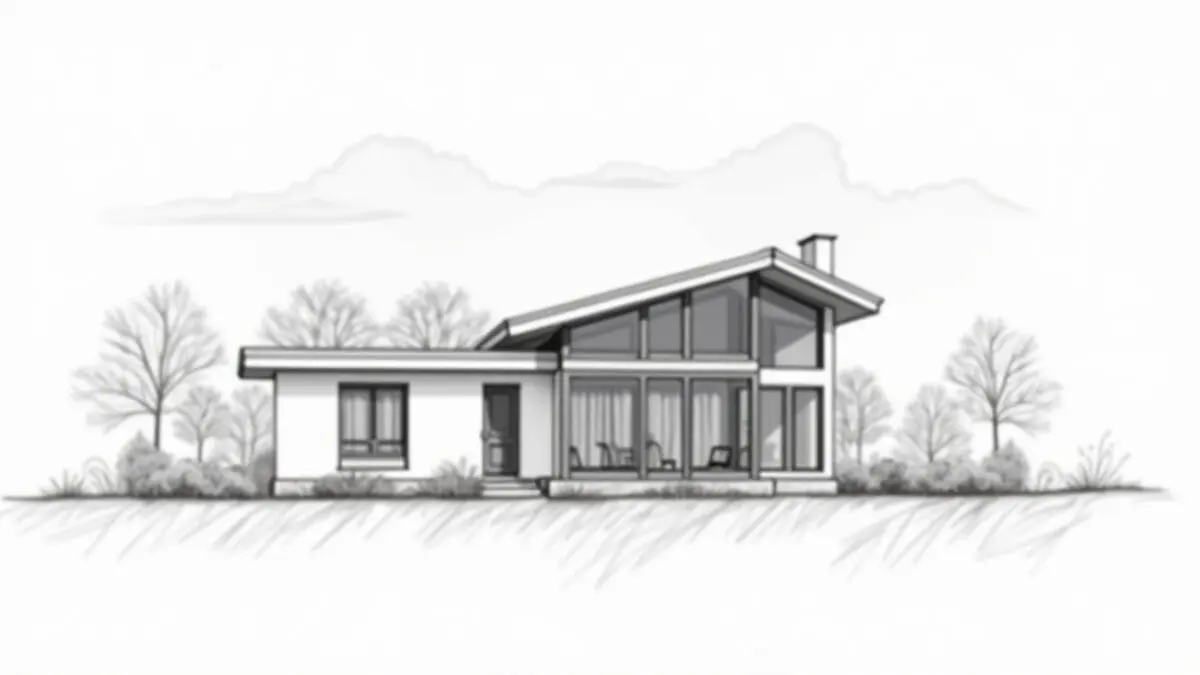
Mr. X is the owner of a detached house in Valbonne, in the Grasse hinterland. His property adjoins a co-owned building. One day, he notices that windows have been cut into the facade wall of the building, as well as a roof window (skylight), and that sills (window sills) overhang his land. These openings create direct views (i.e., direct views, without obstacles) over his garden and house. Mr. X considers that these views infringe his privacy and that the overhangs encroach on his property.
He then sues the co-ownership association of the building before the Tribunal de Grande Instance of Grasse, seeking the removal of the windows and sills, as well as damages. But the association defends itself by arguing that these elements are private parts (belonging to each co-owner), not common parts, and therefore it has no standing to act or defend in this dispute. The tribunal agrees, and Mr. X appeals.
The Court of Appeal of Aix-en-Provence confirms the judgment. It considers that the windows and skylight light private rooms (bedrooms, living rooms) and that the sills are accessories to these windows. It adds that facade ornaments (not relevant here) would be common, but that the windows themselves are private. Consequently, Mr. X's action against the association is inadmissible: it is not the correct defendant. Mr. X then appeals to the Court of Cassation.
The Court of Cassation, by a judgment of 10 September 2020, dismisses the appeal. It approves the reasoning of the Court of Appeal: the windows, skylight and sills constitute private parts, because they are located in external walls but serve exclusively the use of the private lots. Thus, only an action against the relevant co-owners (those who cut the windows) is possible, not against the association.
What few people know is that the co-ownership association does not have standing to sue for disturbances affecting private parts, unless the co-ownership rules provide otherwise. Here, nothing of the sort. Mr. X must therefore turn against the co-owners individually, which complicates the procedure.
The Reasoning of the Court — Explained
To understand the decision, we must revisit the concepts of private parts and common parts in co-ownership. The Law of 10 July 1965 (Article 2) defines private parts as lots reserved for the exclusive use of a co-owner, while common parts are those used by all. Windows, in principle, form part of the external walls, which are common parts. However, case law distinguishes according to the function of the window: if it serves to light a private room, it is considered private, as it is an accessory to the lot.
In this case, the Court of Cassation applied this reasoning. It considered that the windows and skylight lit private rooms (bedrooms, living rooms), so they are private. The sills are also private because they are extensions of the windows. Consequently, the association has no standing to act or defend in court regarding these elements, as this falls within the management of private parts, which is the responsibility of each co-owner.
Article 1240 of the Civil Code (extra-contractual liability) was not even invoked here, because the preliminary question was that of the admissibility of the action. The Court simply confirmed that the action directed against the association was inadmissible for lack of standing to defend. In other words, the association is not the right interlocutor.
This is not a reversal of case law, but a confirmation of a solution already established by the Court of Cassation in earlier judgments (e.g., Civ. 3e, 9 March 2017, No. 15-27.835). The judges remain consistent: the distinction between private and common parts is essential to determine who can act.
But be careful: if the windows had been facade ornaments (like mouldings), they would have been common. The nuance is subtle, but crucial. undefined, I have encountered cases where co-owners modified windows without authorisation, and the association was wrongly sued. It is always necessary to check the legal nature of the disputed element.
What This Changes for You — Concretely
This decision has important practical implications, depending on your profile:
- For the owner neighbouring a co-owned building (like Mr. X): If private windows create direct views over your land, you cannot sue the association. You must identify the relevant co-owner (the one whose room is lit) and sue them personally. This can be complicated if the co-owner is a company or a landlord. In practice, you can ask the managing agent to disclose the owner's name (Art. 8-1 of the 1965 Law). The limitation period is 30 years for abnormal neighbourhood disturbances, but watch out for shorter periods (e.g., 5 years for continuous damage).
- For the co-owner: If you cut a window overlooking the neighbour, you are solely responsible. Make sure to respect the legal distances (1.90 m for a direct view, 0.60 m for an oblique view, under Article 678 of the Civil Code). Otherwise, you risk an action for removal and damages. Concrete example in Cannes: a co-owner had to demolish a window after an action by the neighbour, costing him €5,000 in works and €2,000 in damages.
- For the tenant: You are not directly liable, but you may suffer consequences (disturbance of enjoyment). Report any visual nuisance to the landlord. If the landlord is the co-owner, he must act.
- For the managing agent: This decision protects you: you do not have to answer for disturbances related to private parts. But you must inform co-owners of their obligations. If a neighbour sues you, you can raise inadmissibility.
In summary, if you are in this situation, you must first determine whether the disputed element is private or common. To do this, consult the co-ownership rules or call a lawyer. A mistake in the defendant can cost you time and money.
Four Tips to Avoid This Type of Dispute
- 1. Check distances before cutting a window: Before any works, consult a surveyor or architect to respect legal distances (1.90 m for a direct view). In Valbonne, an owner had to move his window after a check, avoiding a lawsuit.
- 2. Consult the co-ownership rules: Before buying a lot, read the rules carefully. They may classify certain windows as common or impose restrictions. A buyer in Cannes discovered that the windows of his lot were common, which prevented him from modifying them.
- 3. In case of conflict, identify the correct defendant: If you are a neighbour, ask the managing agent for the identity of the co-owner of the relevant lot. Do not rush against the association. A wrongly directed action may be declared inadmissible, as in the commented case.
- 4. Negotiate amicably: Before starting proceedings, try mediation. An amicable agreement can avoid legal costs (count €1,500 to €3,000 for proceedings) and delays (often 1 to 2 years). In Grasse, neighbours found a solution by installing blinds.
Further Reading: Related Case Law and Developments
This decision is part of a consistent line of the Court of Cassation. For example, in a judgment of 9 March 2017 (No. 15-27.835), the Court had already held that private windows are private parts, and that the association has no standing to sue for their removal. Similarly, a judgment of 12 July 2018 (No. 17-21.356) specified that roller shutters are private if they equip a private window.
A divergent decision? Not really, but some lower courts have sometimes considered that windows on the facade are common because they contribute to the external appearance. The Court of Cassation has systematically censured this approach, confirming the current solution.
The trend is therefore stable: the private or common nature depends on the purpose of the element. For the future, it is possible that the law will evolve to clarify these concepts, but for now, the case law is well established. Property professionals must therefore be vigilant when drafting co-ownership rules.
Summary and Next Steps
Here is a checklist of what to do if you face a similar situation:
- Identify the disputed element: window, skylight, sill? Is it a private or common part? Consult the co-ownership rules.
- If it is private: Determine the responsible co-owner (ask the managing agent). Take action against them, not against the association.
- If it is common: Act against the association, but check that the general meeting has authorised the action.
- Negotiate first: A registered letter with formal notice may suffice. If unsuccessful, file a claim with the judicial court.
- Consult a lawyer: From the start, to avoid procedural errors. In Grasse, a lawyer lawyer can help you analyse the situation.
FAQ:
- Can I sue the co-ownership association for private windows? No, as this decision states, the action is inadmissible.
- What is the limitation period to act? 30 years for neighbourhood disturbances, but 5 years if the disturbance is continuous.
- What if the co-owner is unknown? Ask the managing agent for their identity (legal obligation).
- Are overhanging sills always private? Yes, if they are accessories to a private window.
Besoin d'un conseil personnalisé ? Contactez Maître Zakine — première consultation 30 min à 45€.
Are you in a similar situation? A first 30-minute consultation with Maître Zakine (€45) can save you months of proceedings — and often much more. Book an appointment →
