Reference Decision: cc • No. 92-12.031 • 1994-10-05 • View the decision →
You own a flat in Creusot, and your loft, you have converted it into a guest room. A few years later, the commonhold association demands its restoration, arguing that this area should have been deducted from the building possibilities when the building was divided. Unfair? Not so fast. The question is: was this loft convertible for residential use or not?
This is the crux of the dispute decided by the Court of Cassation on 5 October 1994 (No. 92-12.031). A case that seems technical – Articles R. 112-2 and R. 123-22 of the Town Planning Code – but which has very concrete consequences for thousands of commonholds in France, from Chalon-sur-Saône to Marseille. How do you know if an area is deductible? When must the judges verify the convertibility of a loft? And above all, what are the risks if you do not comply with the rules?
This decision, handed down nearly thirty years ago, remains highly topical. It reminds us that town planning law is not just about mathematical formulas: it requires a case-by-case analysis. So, let's take the time to dissect this judgment, as I do every day for my clients in Saône-et-Loire and elsewhere.
The Facts: A Story That Happens Every Day
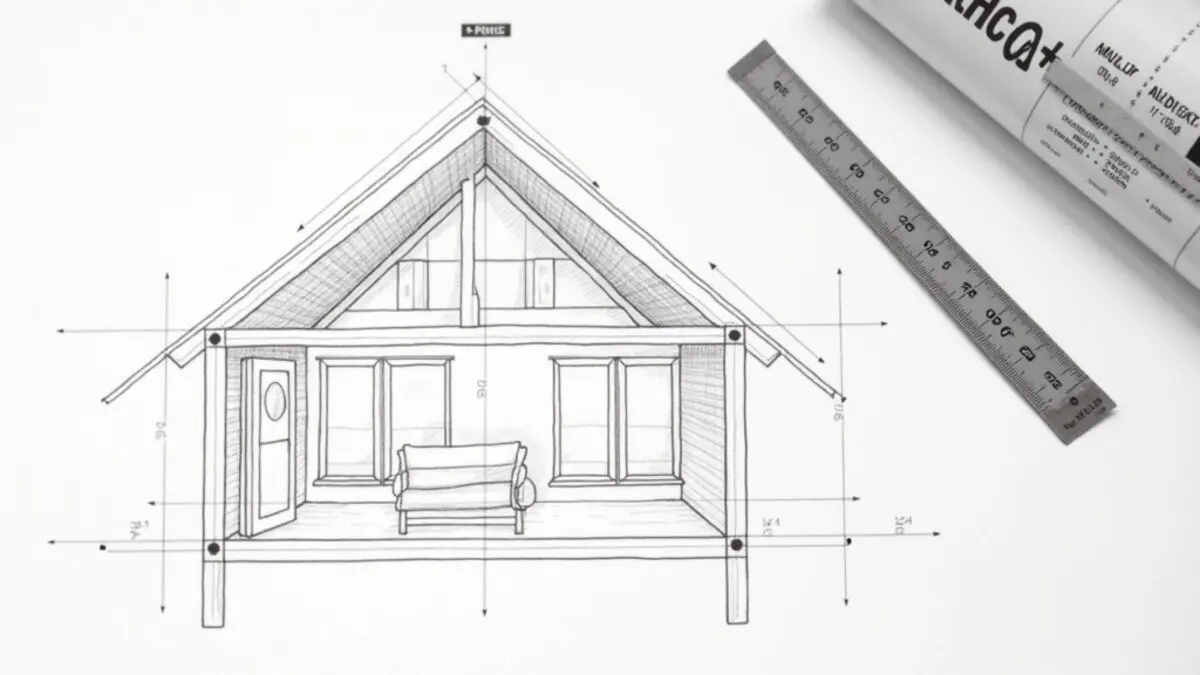
Imagine an old building in Creusot, divided into several commonhold lots. Among them, a loft – spacious, under the roof, with exposed beams and variable ceiling height. At the time of the division, this loft was sold as a separate lot, and its area was deducted from the building possibilities authorised by the original planning permission. In short, the developer said: "This loft does not count in the calculation of floor area, because it is not convertible."
Years pass. A commonholder, Mrs ..., acquires this loft. She carries out works, partially converts it, and uses it as storage and sometimes as a living space. Problem: the commonhold association considers this conversion illegal, because the loft area should have been included in the calculation of development rights. It sues Mrs ... and the initial sellers – Mr and Mrs Y – in court to obtain restoration of the premises and damages for the loss of value suffered by the commonhold.
The Dijon Court of Appeal, seised of the case, rules in favour of the association. It orders Mr and Mrs Y to pay damages to Mrs ..., considering that the neighbourhood disturbances (noise nuisance) caused by the loft conversion exceeded normal neighbourhood inconveniences. But it does not check a crucial point: was the loft technically convertible for residential use?
Mr and Mrs Y appeal to the Court of Cassation. And the High Court rules in their favour: the judgment is quashed, because the Court of Appeal did not investigate whether, due to its characteristics (height, access, insulation...), the loft was convertible or not. Without this verification, it is impossible to say whether its area should have been deducted or not.
The Reasoning of the Court — Dissected
The Court of Cassation relies on two texts of the Town Planning Code: Article R. 112-2, second paragraph a, and Article R. 123-22, 2°. The first provides that the area of existing buildings retained on the land is deducted from the building possibilities. The second specifies that the net floor area (SHON) of a building is equal to the gross floor area (SHOB) after deducting the floor areas of non-convertible attics.
In translation: when calculating how many square metres can be built on a plot, the area of existing buildings is subtracted. And among these buildings, attics (lofts) that are not convertible – i.e., cannot be transformed into habitable rooms for technical reasons (insufficient height, roof slope, lack of insulation...) – are not taken into account.
In our case, the loft was subtracted from the calculation at the time of division. But for this subtraction to be lawful, the loft must actually be non-convertible. However, the Court of Appeal did not verify this point: it merely said that the loft existed and had been deducted, without examining its technical characteristics. Serious error!
The Court of Cassation therefore reminds us that the trial judge must, in each case, ask the question: "Can one live in this loft?" If yes, its area must be included in the calculation of development rights, and its conversion is subject to authorisation. If no, it can be deducted, and the commonholder can use it as they see fit, within the limits of abnormal neighbourhood disturbances.
This decision is a confirmation of prior case law: it does not create new law, but it reminds us of a fundamental rule – the assessment in concreto of technical characteristics. It also shows that judges must not be satisfied with a formal approach (the loft appears on the cadastre) but must go into detail.
What This Changes for You — Concretely
Are you the owner of a loft in a commonhold in Chalon-sur-Saône? Have you converted it into a studio, and the association threatens you with an action for restoration? This decision is a double-edged sword. On one hand, you can invoke the non-convertible nature of the loft to justify its deduction and your right to convert it. On the other hand, if the loft is convertible, you risk a lot: an order to restore the premises, and damages.
Let's take a concrete example: in Creusot, a commonholder converts a 40 m² loft with an average ceiling height of 1.80 m. The commonhold regulations state that this loft is a private lot, but without specifying its convertibility. The association sues. What will happen? The court will have to have the premises inspected by an expert: height, slope, access, insulation, etc. If the expert concludes that the loft is non-convertible (insufficient height, for example), the commonholder wins. Otherwise, they will have to demolish everything and pay damages for the loss of value of the common parts.
For buyers: beware of lofts sold as "non-convertible" in advertisements. Always check the commonhold regulations and the original planning permission. An area deducted from development rights can be a trap if it is actually convertible – you could be forced to restore it.
For real estate professionals (agents, developers): this decision requires you to precisely document the technical characteristics of attics at the time of division. A simple bailiff's report or technical note can save you years of litigation.
Four Tips to Avoid This Type of Dispute
- Have a technical diagnosis carried out before any purchase or conversion of a loft. A design office or architect can determine whether the loft is convertible for planning purposes (ceiling height > 1.80 m, access, insulation...). This document will serve as proof in case of a challenge.
- Consult the commonhold regulations and the original planning permission. They often mention whether the loft is a private lot or a common part, and whether it has been deducted from development rights. If in doubt, request a modification of the regulations.
- Before converting, obtain authorisation from the commonhold association. Even if the loft is private, works may affect common parts (roof, framework). The general meeting must vote by the required majority (often an absolute majority for major works).
- In case of a dispute, do not neglect the conciliation phase. Mediation can avoid expert and lawyer costs. In Chalon-sur-Saône, the judicial court offers free conciliation sessions.
Besoin d'un conseil personnalisé ? Contactez Maître Zakine — première consultation 30 min à 45€.
Further Exploration: Related Case Law and Developments
This 1994 decision is part of a consistent line. Already, in a judgment of 17 March 1981 (No. 79-15.203), the Court of Cassation had ruled that non-convertible attics must be deducted from the net floor area (SHON). Conversely, in a judgment of 12 July 1989 (No. 88-11.234), it quashed a decision that had deducted attics without verifying their convertibility, exactly as here.
Since 1994, case law has evolved on one point: the notion of "convertible" is now assessed with regard to the construction standards in force at the time of the application (RT 2012, then RE 2020). Thus, a loft that was non-convertible in 1990 could become convertible after insulation works. So be careful about the reference date.
The trend of the courts is towards strictness: they require solid technical proof. Judges are no longer satisfied with a simple declaration on honour. A bailiff's report or expert report is often essential. For the future, with urban densification, disputes over floor areas should increase. Better to anticipate.
Checklist Before Acting
- Check the status of the loft in the commonhold regulations. Is it private or common? Is the area mentioned as deducted from development rights?
- Have the convertibility assessed by a professional. Ceiling height, slope, access, acoustic and thermal insulation, presence of windows.
- Obtain authorisation from the association before any conversion. Vote at the general meeting, required majority (often Article 25 or 26 of the 1965 Act).
- Keep all documents: original planning permission, commonhold regulations, minutes of general meetings, expert report.
- In case of a dispute, consult a lawyer specialising in property law. Advice upfront can avoid much higher costs.
Are you in a similar situation? A first 30-minute consultation with Maître Zakine (€45) can save you months of litigation – and often much more. Book an appointment →
📌 Does this apply to your situation? Maître Cécile Zakine, French real estate lawyer, practises throughout France.
→ Avocat copropriété & ASL |
→ Browse all our legal articles
