Reference Decision: cc • No. 73-12.897 • 1976-05-25 • View the decision →
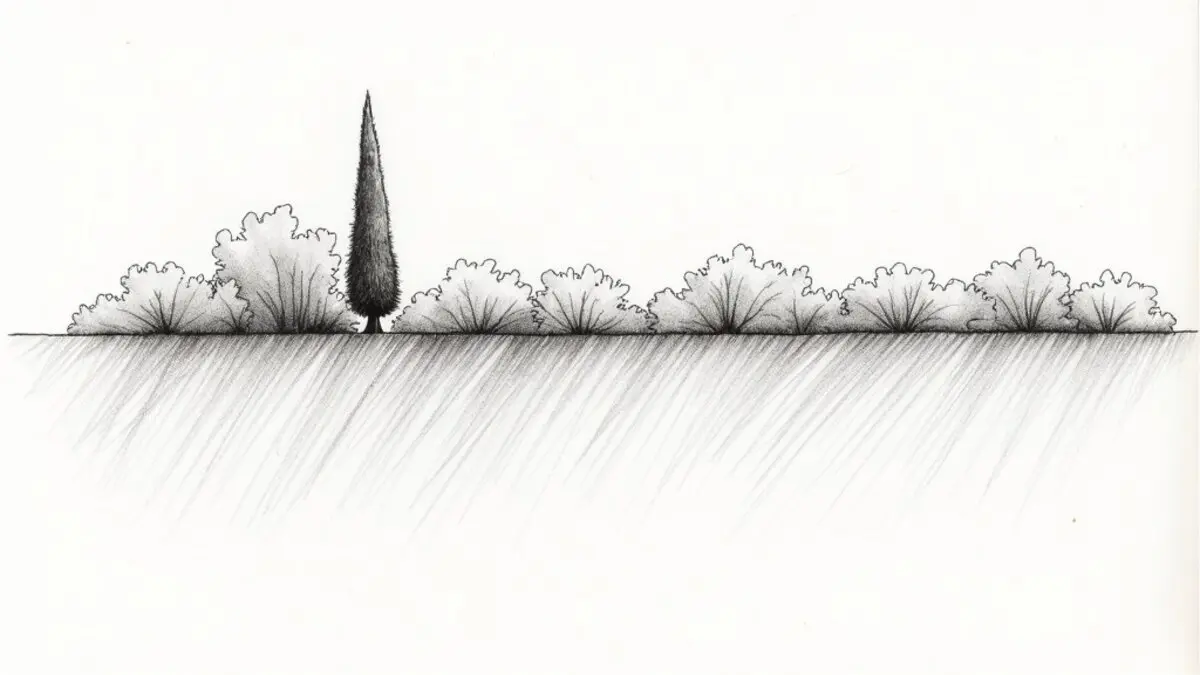
Imagine: you return home to Boulogne-Billancourt and discover that your beautiful cypress hedge, which protected you from prying eyes and the wind, has been reduced to ashes. Children played with a lighter, and the fire spread. You are furious, but also worried: how long do you have to claim damages? Three years? Five years? The answer is not obvious, because the law distinguishes based on the nature of the vegetation.
This 1976 decision of the Court of Cassation precisely answers this question. It says that cypress trees planted as a hedge are not 'woods and forests' within the meaning of the Forestry Code. Consequently, the special three-year period provided for forestry offences does not apply. The owner benefits from the standard five-year period (Article 2224 of the Civil Code) to bring legal action.
In short, if you own a hedge, even if tall and dense, you are not subject to the restrictive rules of forestry. You can pursue those responsible for a fire for five years. What few people know is that this distinction can also apply to other plantings: fruit trees, decorative groves, etc. But what exactly does this change for you?
The Facts: A Story Like Many Others
Mr X, owner of a house in Boulogne-Billancourt, had planted a cypress hedge along his fence. These trees, several metres high, formed a dense green screen. One afternoon, children from the neighbourhood, while playing, set the hedge on fire. The fire quickly destroyed about twenty cypress trees, causing aesthetic damage and loss of privacy for Mr X.
The children's parents were prosecuted in the criminal court for destruction of plantation by fire, under Article 179 of the Forestry Code (now L. 131-1 of the Forestry Code). This provision punishes anyone who causes the burning of woods, forests, heaths, scrub or plantations. The first instance court convicted the parents but applied the three-year limitation period specific to forestry offences, holding that the civil action was time-barred because it was brought more than three years after the facts.
Mr X appealed. The Paris Court of Appeal upheld the criminal conviction but rejected the three-year limitation period, ruling that cypress trees planted as a hedge do not constitute a 'plantation' within the meaning of the Forestry Code, or at least do not fall under the forestry regime. The parents then appealed to the Court of Cassation, arguing that the cypress hedge was indeed a plantation and that the action was time-barred.
The Court's Reasoning — Analysed
The Court of Cassation had to decide a question of classification: is a cypress hedge a 'plantation' within the meaning of Article 179 of the Forestry Code? If yes, the three-year limitation period applies; if not, the standard period under Article 1240 of the Civil Code (extra-contractual liability) applies, i.e. five years.
The lower courts had held that the term 'plantations' is general and could apply to cypress trees arranged as a hedge. But the Court of Cassation quashed their reasoning: it recalled that the Forestry Code aims to protect woods and forests, and that trees planted as a hedge, even if numerous, do not fall under this special regime. In other words, a cypress hedge is not a forest, even a miniature one.
Note, however: the Court does not say that cypress trees are not plantations. It says that their destruction does not fall within the scope of Article 179 of the Forestry Code, because that article must be interpreted restrictively. Consequently, the three-year limitation period does not apply. The owner can therefore act on the basis of ordinary civil liability, within five years from the date he became aware of the damage.
What few people know is that this decision was handed down before the 2008 reform on limitation periods. Today, the standard period is five years (Article 2224 of the Civil Code), but the reasoning remains valid: the special limitation period for forestry offences (Article 9 of the Code of Criminal Procedure) does not apply to hedges.
What This Changes for You — Practically
For the owner of a hedge: you have five years to claim compensation from the person who caused the fire, whether a child, a neighbour or a passer-by. In practice, if your cypress trees have burned, you must act quickly, but you are not stuck with the three-year period. Example: in Évry, an owner saw his thuya hedge destroyed by an uncontrolled garden fire. He was able to obtain €2,500 in damages after four years, because the three-year limitation period did not apply.
For the tenant: if you rent a house with a garden, you are responsible for tenant damage. But if a third party sets the hedge on fire, it is up to you or the landlord to pursue the third party. The five-year period gives you time to gather evidence.
For the insurer: home insurance policies often cover fires of vegetation, but with declaration deadlines. Know that you can take legal action even if the insurance has already compensated (subrogation).
For parents of minor children: you are civilly liable for the acts of your children. But you may benefit from a shorter limitation period if the hedge was classified as a forest. Thanks to this decision, you will be pursued under ordinary law, with a five-year period. Caution: parental liability may be engaged even without personal fault.
If you are in this situation, you should:
- Have the fire recorded by a judicial officer (formerly bailiff) or the police.
- Keep all photos and witness statements.
- Report the incident to your insurance within 5 working days.
- Consult a lawyer to assess the damage and chances of success.
Four Tips to Avoid This Type of Dispute
- Install a protective fence or grill: if your hedge is along a street or neighbouring property, a physical barrier can deter children playing nearby. The cost is modest compared to a lawsuit.
- Take out appropriate liability insurance: check that your policy covers damage caused by third parties to your plantings. Some policies include 'vegetation fire' cover.
- Maintain your hedge regularly: a trimmed hedge, without dry low branches, is less flammable. Moreover, in the event of an incident, maintenance proves your diligence and may limit your liability.
- Photograph your hedge every year: keep evidence of its condition before any incident. This will facilitate the assessment of damage.
Further Reading: Related Case Law and Developments
The 1976 decision is part of a series of rulings where the Court of Cassation restricted the notion of 'plantation' in the forestry sense. For example, in a decision of 15 February 1972 (No. 70-92.487), it held that isolated trees do not constitute a forest. Conversely, in a decision of 8 November 1983 (No. 82-93.456), it considered that a pine wood of several hectares falls within the Forestry Code, even if planted in rows.
The trend is clear: judges interpret derogatory texts (like the three-year limitation period) strictly and favour ordinary liability law. This means that owners of hedges, groves or non-forestry tree alignments benefit from longer protection. On the other hand, owners of actual forests must act within three years.
For the future, it is possible that the legislature will unify limitation periods, but for now, the distinction remains. If you are unsure about the classification of your planting, do not hesitate to consult a lawyer.
Summary and Next Steps
FAQ:
- Question: What if my cypress hedge burned more than 3 years ago?
Answer: You can still act if less than 5 years have passed. Gather evidence and consult a lawyer. - Question: Can I sue the parents of a minor child who set the fire?
Answer: Yes, under Article 1242 of the Civil Code (parental liability). The period is 5 years. - Question: What is the amount of damages for a destroyed hedge?
Answer: The aesthetic damage and loss of privacy are assessed by the judge. Expect between €1,000 and €5,000 depending on height and number of trees. - Question: Do I have to file a criminal complaint?
Answer: It is not mandatory, but it can help establish the facts. The civil action can be brought independently.
Are you in a similar situation? A first 30-minute consultation with Maître Zakine (€45) can save you months of proceedings — and often much more. Book an appointment →
📌 Does this apply to your situation? Maître Cécile Zakine, French real estate lawyer, practises throughout France.
→ Prendre rendez-vous pour une consultation |
→ Browse all our legal articles
