Reference Decision: cc • No. 87-19.642 • 1990-11-14 • View Decision →
Imagine: you have just moved into a lovely house in Pont-l'Abbé, with a view of the harbour. You set up your television, but the image keeps flickering. Your neighbour, a recently built high-rise building, is blocking the signal. What can you do? This is the question every owner or tenant facing this modern annoyance asks themselves.
The Court of Cassation, in a judgment of 14 November 1990, gave a clear answer: victims of such disruptions can take direct action against the owner of the offending building, on the basis of Article L. 112-12 of the Construction and Housing Code. And this applies regardless of the construction date of the building. Better still: they can also take action against the builder, even after the works are completed.
This decision, handed down over thirty years ago, remains an absolute reference. It dismisses the idea that one must first approach the public broadcasting authority (such as TDF). No: the disturbance is direct, and the liability of the owner or builder can be engaged without an intermediary.
The Facts: A Story That Happens Every Day
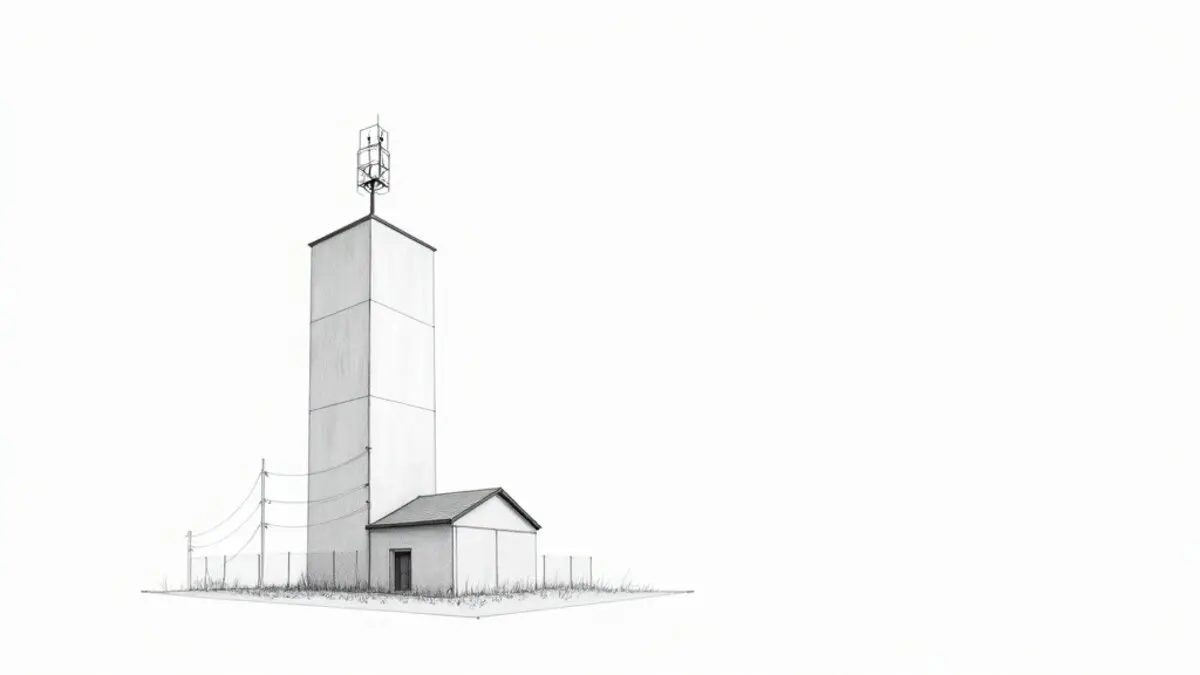
In this case, owners of individual houses located within the jurisdiction of Quimper, near Concarneau, had been suffering for several years from disruptions in the reception of television broadcasts. The cause: a high-rise building (IGH) built nearby, whose mass created a veritable electromagnetic shadow zone. Residents could no longer receive terrestrial channels properly.
Tired of these interferences, several neighbours sued the owner of the building, as well as the builder. They sought, on the one hand, an order requiring the builder to carry out works to remedy the disturbance, and on the other hand, compensation for their loss (loss of enjoyment of their television, cost of alternative installations).
The Tribunal de Grande Instance of Quimper, and then the Court of Appeal of Rennes, ruled in favour of the claimants. However, the owner and builder appealed to the Court of Cassation. Their main argument? The neighbours' action was inadmissible because they had not involved the public broadcasting authority (Télédiffusion de France), which they claimed was solely responsible for reception quality. The Court of Cassation rejected this argument, confirming that a direct action against the owner and builder is perfectly admissible.
The Reasoning of the Court — Analysed
The judges of the Court of Cassation relied on Article L. 112-12 of the Construction and Housing Code, in its first two paragraphs. The first paragraph provides that "where the construction of a high-rise building disrupts or prevents the reception of television broadcasts in neighbouring buildings, the owner of the offending building is required to put an end to the disturbance". The second paragraph specifies that "the builder is also liable, even after the completion of the construction".
The Court interpreted this text broadly: the victim does not have to prove any particular fault on the part of the owner or builder. The mere fact that the building creates a disturbance is sufficient to engage their liability. In other words, this is a strict liability (no-fault) regime: the owner is obliged to stop the disturbance, without needing to prove an intention to harm or negligence.
The judges also dismissed the argument that the action was conditional on involving the public broadcasting authority. For them, the disturbance is directly attributable to the offending building, not to the transmitter. The Court therefore dismissed the appeal, upholding the order for the owner to compensate the loss and for the builder to carry out the necessary works.
This decision confirms a jurisprudential trend protective of neighbours. It follows earlier decisions recognising a right to television reception as an element of the right to property and the peaceful enjoyment of premises.
What This Means for You — Practically
If you own a house or flat and a high-rise building (over 28 metres for residential buildings, 50 metres for other buildings) disrupts your TV reception, this decision gives you a strong legal weapon. You can take direct action against the owner of the offending building, without going through the broadcasting operator.
For example, in Concarneau, a retired couple saw their TV reception completely disrupted after the construction of a 12-storey seaside residence. The owner of the residence was ordered to install a collective antenna or to connect the neighbours to cable. The cost of the works? Between €2,000 and €5,000 per home, depending on complexity. Without this case law, they would have had to bear these costs alone.
If you are a tenant, you can ask your landlord to take action. If you are a landlord, you are responsible to your tenant for the disturbance of enjoyment. Finally, if you are buying a property near a high-rise building, check before signing whether any disturbances exist. A clause in the sale deed can protect you.
The limitation period for taking action is 5 years from the date the disturbance manifested itself (general limitation period). The amounts involved? In addition to the cost of works, you can claim damages for loss of enjoyment (a few hundred to a few thousand euros depending on duration).
Four Tips to Avoid This Type of Dispute
- Before building a high-rise building, carry out an impact study on TV reception. Use a specialist consultancy firm. In Pont-l'Abbé, a developer anticipated the problem by installing a collective antenna from the outset, avoiding any litigation.
- If you are a neighbour of a high-rise building under construction, document the disturbances as soon as they appear. Keep screenshots, video recordings, technician statements. The stronger the evidence, the more effective your action will be.
- Do not wait until the builder leaves the site. Some companies disappear or go into liquidation. Act during construction, by formally notifying the builder to take interim measures.
- If the disturbance is established, send a registered letter with acknowledgement of receipt to the owner of the building. Set out the facts, attach your evidence, and demand that the disturbance cease within 15 days. This formality is often sufficient to obtain an amicable solution.
Besoin d'un conseil personnalisé ? Contactez Maître Zakine — première consultation 30 min à 45€.
Further Reading: Related Case Law and Developments
The Court of Cassation confirmed this solution in a later judgment (Civ. 3e, 15 March 2000, No. 98-14.123), ruling that the general theory of abnormal neighbourhood disturbance can also be invoked, even in the absence of a specific text. Thus, if the high-rise building does not fall within the scope of Article L. 112-12 (for example, a building under 28 metres), you can take action on the basis of abnormal neighbourhood disturbances.
The courts therefore tend to protect neighbours, considering that television reception is part of normal modern comfort. With the advent of digital terrestrial television, the problem has become more complex, but the principle remains the same: any building that disrupts reception engages the liability of its owner or builder.
In the future, it is likely that judges will extend this protection to other types of waves (radio, mobile internet) if buildings disrupt them. A development to watch closely.
Checklist Before Taking Action
- Is there indeed a high-rise building nearby? Check its height (over 28 m for residential buildings).
- Is the disturbance established? Have it confirmed by a technician (aerial installer, consultancy firm). Keep a written report.
- Have I formally notified the owner? A registered letter with acknowledgement of receipt is essential before any court action.
- What is the legal basis? Article L. 112-12 of the Construction and Housing Code (for high-rise buildings) or abnormal neighbourhood disturbance (Article 1240 of the Civil Code) for other buildings.
- What is the time limit? 5 years from the first disturbance. Do not delay; evidence fades.
Are you in a similar situation? A first 30-minute consultation with Maître Zakine (€45) can save you months of proceedings — and often much more. Book an appointment →
📌 Does this apply to your situation? Maître Cécile Zakine, French real estate lawyer, practises throughout France.
→ Avocat VEFA & construction |
→ Browse all our legal articles
