Reference decision: cc • No. 89-21.250 • 1991-02-13 • View the decision →
Imagine you are peacefully sitting in your garden in Olivet, when suddenly a burning smell alerts you. You look up: a thick black smoke rises from the neighbouring field, and the flames are advancing dangerously towards your fence. Within minutes, your shed, your fruit trees, perhaps even your house are threatened. Who will pay for the damage? And what if the cause of the fire remains unknown? This is precisely the question the Court of Cassation answered on 13 February 1991, in a decision that remains authoritative.
This decision, often unknown to owners, is nevertheless crucial: it establishes that, to hold the owner of the land where the fire originated liable, it is not necessary to prove the primary cause of the fire. A presumption of liability rests on him, which he can only rebut by proving a case of force majeure (storm, lightning…) or fault of the victim. A rule that changes everything, especially when expert reports are inconclusive.
In this article, I will tell you the story behind this decision, dissect the judges' reasoning, and above all give you the keys to understanding what it means for you, whether you are an owner, tenant or farmer. And as always, I will offer you practical tips to avoid finding yourself in such a situation.
The facts: a story that happens every day
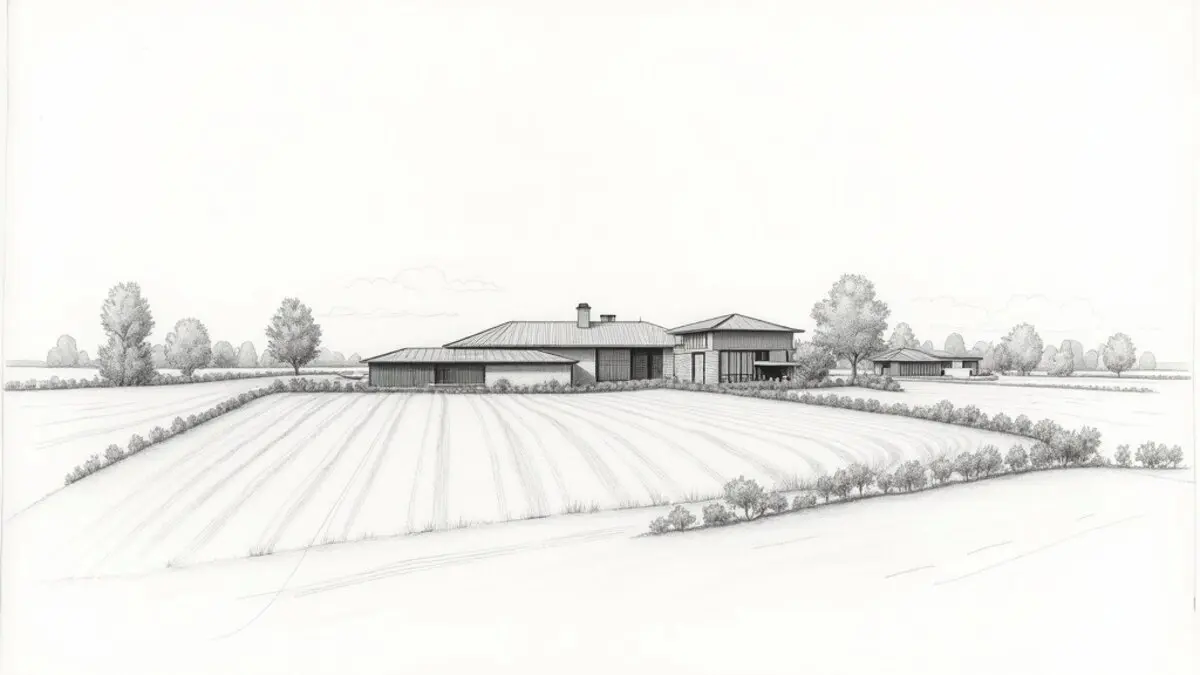
A farmer, owner of a field in Olivet, was harvesting his wheat with a tractor. Suddenly, a flame shot out from the engine of the vehicle and set fire to the stubble he had just cut. The wind that day was capricious: it pushed the flames towards the neighbouring property, occupied by a private individual, Mr Matteoda. The fire destroyed part of his house, his plants, and even caused psychological damage to his mother and his minor son, who were present.
Mr Matteoda sued the farmer for compensation. The Tribunal de grande instance of Orléans, and then the Court of Appeal of Orléans, ordered him to pay 150,000 francs in damages (about €23,000 today). But the farmer appealed to the Court of Cassation: according to him, for him to be liable, it would be necessary to prove that the fire was caused by a lack of maintenance of his tractor or by a fault on his part. However, the exact origin of the flame had not been determined with certainty.
The Court of Cassation, in its decision of 13 February 1991, rejected his argument. It recalled that former Article 1384, paragraph 2, of the Civil Code (now Article 1240) makes no distinction: “it is sufficient that the fire originated in the immovable property or the movable property of the latter” for his liability to be engaged. It does not matter whether the primary cause is unknown or linked to a thing of which he is the custodian: the mere fact that the fire originated on his land is enough to make him liable for damage caused to the neighbour.
The reasoning of the court — dissected
To understand this decision, we must return to the law of civil liability. In principle, to obtain compensation for damage, the victim must prove three elements: a fault, damage, and a causal link between the two. This is provided for in Article 1240 of the Civil Code (former 1382). But there are exceptions, notably for fires.
Former Article 1384, paragraph 2, of the Civil Code (now Article 1241 since 2016) provides that “the owner of a building, or the tenant, is liable for the fire of that building, unless he proves that the fire was caused by a fortuitous event, force majeure, or a construction defect”. In other words, the owner or tenant is presumed liable as soon as the fire originated in his building. He can only exonerate himself by proving an unforeseeable and irresistible external cause (lightning, an explosion caused by a third party…) or a construction defect for which he is not responsible.
In the case before the Court of Cassation, the farmer argued that the fire came from his tractor, not from his immovable property (the field). But the Court dismissed this argument: the field is immovable property, and the fact that the fire originated in the tractor, which is movable property, is irrelevant. What matters is that the fire originated in the field (that is, the flames began to burn the stubble on his property). The primary cause is irrelevant: a spark from the tractor, a poorly extinguished cigarette butt, an act of malice… As soon as the fire originated on his land, he is liable.
This decision is a confirmation of a constant line of case law, already old at the time. It is not a reversal, but a strict application of the text. The Court of Cassation recalls that the legislature intended to protect fire victims by easing the burden of proof: they do not have to prove the fault of the neighbouring owner, it is enough to establish that the fire came from his property.
What this changes for you — concretely
This decision has very important practical consequences for all owners and tenants. Let's look at them by profile.
For the owner of a house or land: If a fire originates on your property (even in your garden, shed, woodpile) and spreads to the neighbour, you are presumed liable. It does not matter that you committed no fault. You can only exonerate yourself by proving a case of force majeure (e.g., lightning struck your roof, a criminal arson by an unknown person). In practice, this proof is very difficult to provide. Result: you will have to compensate your neighbour for all his damage (material, immaterial, even personal injury).
For the tenant: Article 1384, paragraph 2, also applies to the tenant. If you are a tenant of a house or flat and a fire originates in your home and damages the common parts or the neighbouring flat, you are liable. Your home insurance may cover it, but watch out for deductibles and exclusions.
For the farmer or operator: This is the most common case. Fires in fields, crops or agricultural machinery are frequent. This decision reminds you that you must be particularly vigilant. If you burn stubble, use a combine harvester or store hay, you incur liability as soon as the fire crosses your property boundary. In Saint-Jean-de-Braye, a farming client had to pay €45,000 in damages to his neighbour after a stubble fire, lit to clean his field, destroyed a neighbouring greenhouse. He could not prove that the wind was unforeseeable.
For the co-owner: In a condominium, a fire may originate in a private part (your flat) and spread to the common parts or other units. You will be liable vis-à-vis the condominium owners' association and other co-owners. Your individual insurance must cover this risk.
If you are in this situation, you must act quickly: notify your insurance within 5 working days (legal deadline), have the damage recorded by a bailiff if possible, and do not admit liability without consulting a lawyer. The amounts at stake can be considerable: between €10,000 and €500,000 depending on the extent of the damage.
Four tips to avoid this type of dispute
- Maintain your equipment and surroundings. Have your electrical installations, chimneys, and heating appliances checked regularly. A lack of maintenance may be held against you if the fire has a known cause. Trim hedges, clear undergrowth, keep woodpiles away from property boundaries.
- Take out suitable public liability insurance. Check that your policy covers damage caused to neighbours by fire, including if the fire originates in your garden or outbuilding. In agriculture, specific insurance for crop fire risks is essential.
- Never burn green waste in dry or windy weather. Prefectural orders often prohibit open burning. Even if you are authorised, a simple gust of wind can turn a small blaze into a disaster. Prefer shredding or the dump.
- Document the condition of your property. Take regular photos of your installations, equipment, and crops. In the event of a dispute, this evidence can show that you took the necessary precautions. Also keep maintenance invoices.
- In the event of a loss, don't panic. Call the fire brigade, secure the premises, then contact your insurance. Do not make any written statement without advice: a simple “I am sorry” can be interpreted as an admission of liability.
Further reading: related case law and developments
The case law on liability for fires is rich and consistent. Before the 1991 decision, the Court of Cassation had already affirmed in a decision of 5 March 1980 (No. 78-15.486) that the owner of the land where the fire originated is liable, even if the cause of the fire is undetermined. The 1991 decision merely confirms this position.
More recently, the Court of Cassation specified in a decision of 15 May 2019 (No. 18-15.694) that the presumption of liability also applies to the tenant, even if the fire is due to a lack of maintenance attributable to the owner. The tenant must then claim against the owner for reimbursement, but towards the victim, he remains liable.
Another notable development: the law of 17 January 2001 amended Article 1384 by adding the possibility for the owner to exonerate himself by proving a construction defect. But in practice, this proof is very difficult to provide, because it must be shown that the defect existed before the fire and was the sole cause of the loss.
The trend of the courts is therefore clear: to protect fire victims by facilitating their action for compensation. For owners, this means they must be extremely vigilant and well insured. The future may see an extension of this presumption to forest fires, with even more serious financial consequences.
Frequently asked questions
1. What to do if a fire originates on my property and spreads to the neighbour?
Call the fire brigade immediately, then your insurance. Do not admit liability. Gather evidence (photos, witness statements). Consult a specialist lawyer to prepare your defence.
2. Can I be sued even if the fire is due to a malicious act by a third party?
Yes, because the presumption of liability does not cover a fortuitous event or force majeure. A malicious act is not considered a fortuitous event if it was foreseeable. You will have to claim against the perpetrator of the fire if you identify them, but towards the victim, you remain liable.
3. What are the time limits for taking legal action?
The limitation period for liability claims is 5 years from the day the owner knew or ought to have known of the damage (Article 2224 of the Civil Code). For non-material damage, the period runs from the date of consolidation. It is imperative to act quickly so as not to lose your rights.
4. Does my home insurance cover this risk?
Yes, the public liability cover included in multi-risk home insurance policies generally covers damage caused to third parties by fire. However, check the exclusions (e.g., serious lack of maintenance, intentional fire). For farmers, specific “farming public liability” insurance is necessary.
5. What if my neighbour refuses to compensate for the damage after a fire originated from his property?
Send him a formal notice by registered letter with acknowledgement of receipt. Notify your insurer, who may pursue a claim. As a last resort, sue him in the judicial court of the location of the property. A lawyer will help you quantify your loss and obtain full compensation.
Are you in a similar situation? A first 30-minute consultation with Maître Zakine (€45) can save you months of proceedings — and often much more. Book an appointment →
📌 Does this apply to your situation? Maître Cécile Zakine, French real estate lawyer, practises throughout France.
→ Prendre rendez-vous pour une consultation |
→ Browse all our legal articles
