Reference decision: cc • No. 74-11.151 • 1975-06-04 • View the decision →
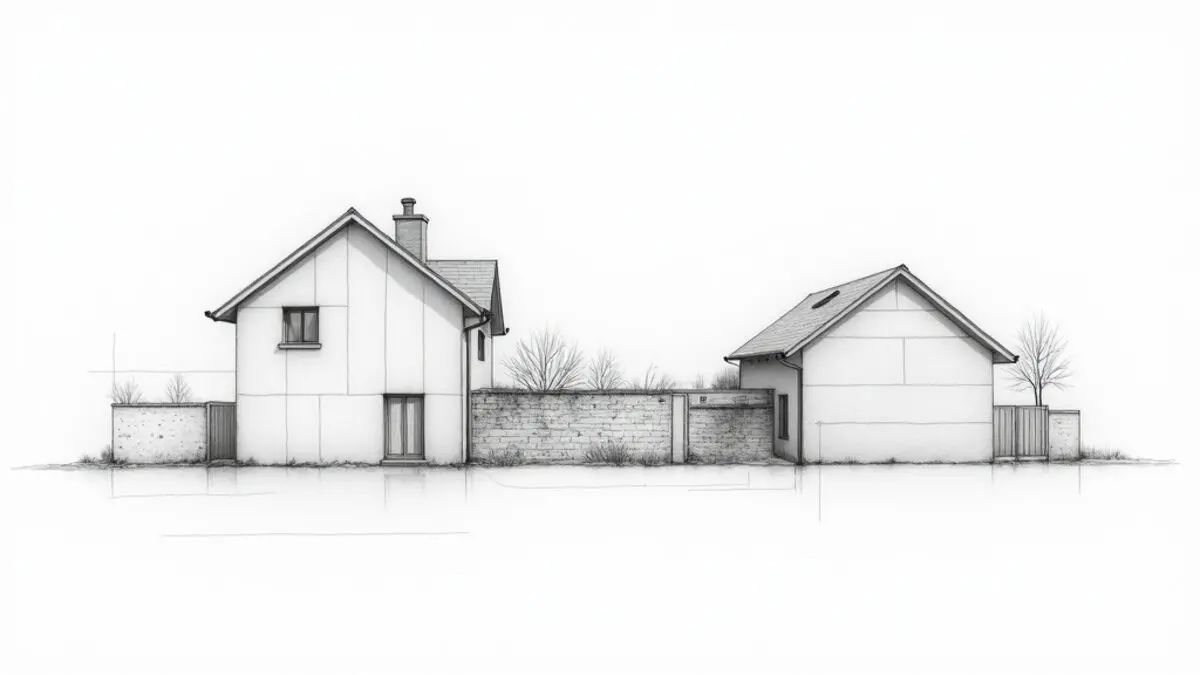
Picture the scene: in Mimizan, in the Landes, two neighbours have been arguing for years over a concrete block boundary wall. One claims it belongs to him outright, the other that it is a party wall. Each produces his title deed, but the dates differ. The more recent deed mentions exclusive ownership, while the original deed, signed by both parties, refers to a party wall. Whom to believe? This is precisely the question the French Supreme Court decided on 4 June 1975, in a ruling that is still authoritative.
Every owner wonders at some point: 'But this wall, does it belong to me or to my neighbour?' The answer is not always in the sale deed you signed yesterday. Sometimes you have to go back much further. And that is where many are mistaken, believing that a recent deed can change everything.
This ruling teaches us that the provisions of the oldest deeds, and especially those common to both parties, must prevail over those of their later titles. In other words, one cannot unilaterally change, by an individual deed, the legal regime of a wall that was previously established by mutual agreement. A decision that protects the stability of real rights (rights over a thing, such as ownership).
The facts: a story like many that happen every day
Mr. X, owner of a house in Saint-Vincent-de-Tyrosse, and Mr. Y, his neighbour, have shared a boundary wall for decades. In the initial sale deed, signed by both parties in 1950, the wall is expressly described as 'party' (mitoyen), meaning it belongs half to each, with reciprocal rights and obligations of maintenance and repair.
In 1970, Mr. X sells his property to Mrs. A. In the sale deed, the notary, perhaps by mistake, states that the wall is 'private' to Mr. X (i.e., belonging to him outright). Mrs. A, relying on this statement, decides to raise the wall without seeking Mr. Y's consent, thereby obstructing his view and causing excessive shading. Mr. Y protests and sues Mrs. A to have the party wall status recognised.
The first instance court in Mont-de-Marsan rules in favour of Mr. Y, holding that the 1950 deed, common to both parties, is conclusive. Mrs. A appeals, arguing that her title deed is more recent and should prevail. The court of appeal upholds the judgment. Mrs. A then appeals to the Supreme Court.
The French Supreme Court, in its judgment of 4 June 1975, dismisses the appeal. It recalls that 'the provisions of the oldest deeds common to the parties to the property claim must prevail over those of their later titles'. In plain terms, a later unilateral deed cannot change the legal regime of a wall that was established by mutual agreement in an earlier deed. Party wall status, once established, can only be changed by a new agreement between the two owners.
The court's reasoning — dissected
Why did the judges rule in favour of Mr. Y? Their reasoning is based on two pillars: the principle of the opposability of real rights to all and the prohibition on unilaterally changing a previously established legal regime.
First, the Court recalls that ownership, like the real rights it creates, is enforceable against everyone. This means that if a wall is declared a party wall in a common deed, this character binds all successive owners, even if a later sale deed describes it differently. The oldest common deed constitutes the law between the parties and their successors (those who succeed them).
Second, the Court emphasises that the right to acquire party wall status (provided for in Article 661 of the Civil Code) presupposes that the existence of an undivided right of ownership does not prevent the establishment of a party wall. In other words, one cannot, by a later unilateral deed, erase with a stroke of the pen what was agreed together.
However, note: this ruling does not say that a later deed can never change the party wall status. It says that a unilateral deed (signed by one party alone) cannot do so. If both neighbours sign together a new deed that changes the wall's regime, then that is valid. But as long as there is no mutual agreement, the oldest common deed prevails.
What few people know is that this solution also applies to other real rights, such as easements (right of way, for example). undefined, I have come across cases where an owner tried to remove a right of way by relying on a recent sale deed that did not mention it. But the old deed, common to both properties, mentioned it. Result: the easement remained.
What this means for you — practically
For landlord owners: if you buy a property with a party wall, check the oldest deed. Do not rely solely on the statement in your title deed. For example, if you buy a house in Saint-Vincent-de-Tyrosse with a wall that the seller claims is private, but the original 1960 deed says it is party, you are bound by that party wall status. You cannot raise the wall without your neighbour's consent.
For tenants: you are not directly affected by party wall status, but if your landlord carries out work on a party wall without permission, it may affect your peaceful enjoyment. You can inform him of his obligations.
For buyers: before buying, trace the chain of titles (successive sale deeds) back at least 30 years. If an old deed mentions a party wall or easement, it binds you. A competent notary in Mont-de-Marsan can help you. The cost of a thorough check is negligible compared to a lawsuit (expect €3,000 to €10,000 in legal and expert fees).
For co-owners: in a condominium, external walls are often party walls between the private unit and the common parts. A recent sale deed cannot change this regime without the approval of the general meeting. Beware of erroneous statements in condominium regulations.
If you find yourself in this situation, you must act quickly. If your neighbour carries out work on a wall you believe to be party, send him a registered letter with acknowledgment of receipt asking him to stop work and provide his title. If the conflict persists, apply to the Mont-de-Marsan judicial court. Proceedings typically take 6 to 18 months.
Four tips to avoid this type of dispute
- Keep all old deeds. Never throw away a sale deed, even if it is 50 years old. They may contain crucial provisions about party walls or easements. Digitise them and file them in a 'Title Deeds' folder.
- Before any purchase, have the chain of titles checked by a notary. Ask him to trace back to the oldest deed (at least 30 years). A 1970 deed may hide a party wall dating from 1950. Cost: about €150 to €300, an insurance policy for your property right.
- If in doubt about a wall, agree a written agreement with your neighbour. If you want to change the party wall regime, execute a notarial deed (before a notary) signed by both parties. A simple oral agreement or a private deed (signed between individuals) may be challenged.
- If you own a wall you believe is private, but the old deed says it is party, do nothing without consulting a lawyer. An unauthorised raising may result in damages (several thousand euros) and restoration of the original state.
Further details: related case law and developments
This 1975 ruling is part of a consistent line of decisions by the French Supreme Court. Already in 1962 (Civ. 3e, 12 July 1962, No. 61-10.123), the Court had held that 'party wall status, once acquired, can only be lost by a contrary deed from both owners'. The 1975 decision merely confirms and clarifies this principle.
More recently, the French Supreme Court applied the same logic to easements (Civ. 3e, 15 March 2018, No. 17-10.456): a recent sale deed cannot remove a right of way established by an old deed common to both properties. The trend is therefore clear: the courts protect the stability of real rights created by mutual agreement.
For the future, this case law remains fully relevant, especially with the increase in property sales and the neglect of historical checks. It reminds us that the right of ownership is not absolute: it fits into a chain of deeds and agreements that limit it.
In practice: what to do
FAQ:
- Q: Can I rely on my recent sale deed to know if a wall is party? A: No, if the oldest common deed says the opposite. Your recent deed cannot unilaterally change the legal regime.
- Q: What should I do if my neighbour builds on a wall I believe is party? A: Send him a registered letter with AR asking him to justify his title. If the conflict persists, apply to the court. An interim order (référé) can order the work to stop.
- Q: What is the time limit to act? A: The action to claim party wall status is subject to a 30-year limitation period (Article 2227 of the Civil Code). But in case of manifest disturbance, act quickly to prevent the work from being completed.
- Q: How much does a procedure cost? A: Expect €2,000 to €5,000 in lawyer's fees for a full trial, plus expert fees (€1,000 to €3,000) if necessary. Mediation (€500 to €1,500) can settle the conflict amicably.
- Q: Can I claim damages if my neighbour altered the wall without my consent? A: Yes, if you suffer harm (loss of view, shading, damage). The amount is assessed by the court, often between €1,000 and €10,000 depending on the severity.
Besoin d'un conseil personnalisé ? Contactez Maître Zakine — première consultation 30 min à 45€.
Are you in a similar situation? A 30-minute initial consultation with Maître Zakine (€45) can save you months of proceedings — and often much more. Book an appointment →
📌 Does this apply to your situation? Maître Cécile Zakine, French real estate lawyer, practises throughout France.
→ Avocat servitudes & foncier |
→ Browse all our legal articles
