Reference Decision: cc • No. 66-13.180 • 1968-05-09 • View the decision →
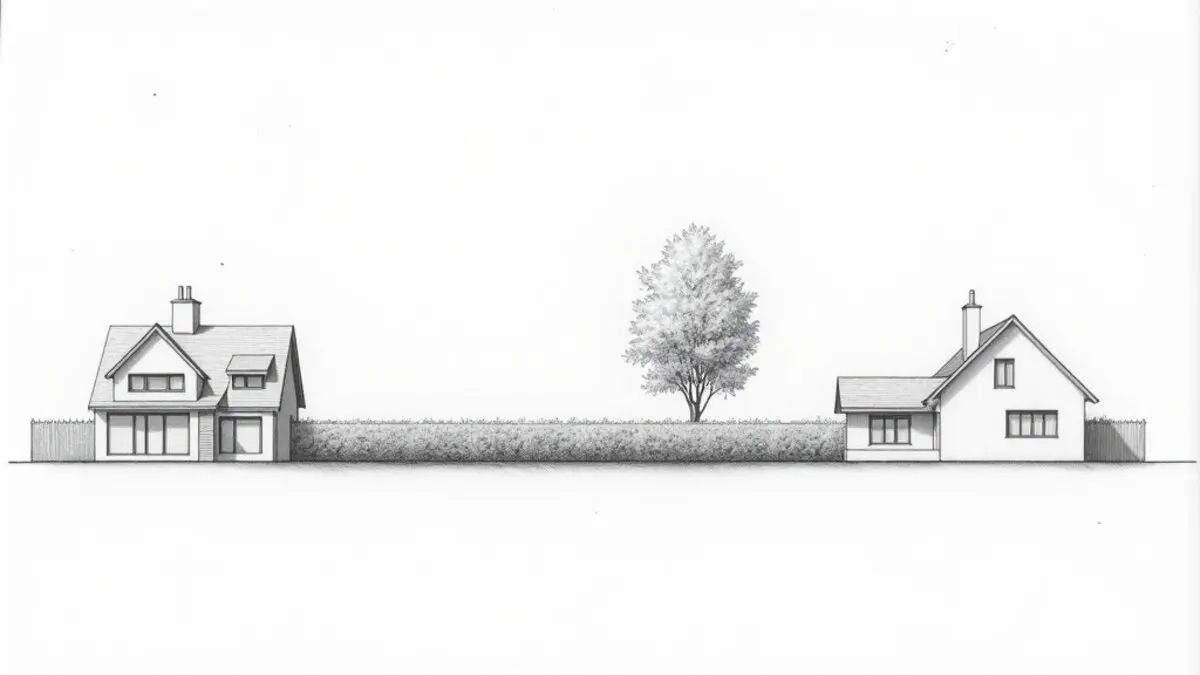
Imagine: you are a homeowner in Danjoutin, in the Territoire de Belfort. For years, a hedge has separated your garden from your neighbour's. One morning, you discover that he has torn it all down and built a concrete block wall in its place. You are furious, but can you really stop him? And if the wall is built set back, on his own land, is he entitled to do as he pleases?
This is precisely the question that arose in a case decided by the Court of Cassation on 9 May 1968 (appeal no. 66-13.180). The judges had to rule: can a co-owner destroy an entire party hedge and replace it with a wall, on the ground that the wall is built set back from the boundary line on his own land? The answer is no, and the consequences are severe for those who think they can act unilaterally.
This ruling, although old, remains an absolute reference in matters of party walls and nuisance. It reminds us that a hedge is not just a plant: it is a fence that belongs half to each owner, and its destruction without agreement can lead to damages and an obligation to restore the former state. Let us break down this decision and see what it means for you, whether you are an owner, tenant, or co-owner.
The Facts: A Story Like Many Others
In this case, the X couple owned a house in Danjoutin, adjacent to the property of the Y couple. Between the two plots, a party hedge had served as a boundary for ages. One day, the Y couple decided to clear the space: they entirely uprooted the hedge — "the entirety," the judges specify — and replaced it with a solid wall.
The X couple did not take this lying down: they sued their neighbours for disturbance of possession. Their argument? The hedge was party property, so each had rights over it. By destroying it without their consent, the Ys violated Article 668 of the Civil Code, which imposes a specific procedure for renouncing party ownership of a hedge or fence.
For their part, the Y couple defended themselves by explaining that the wall was built set back from the boundary line, on their own land. According to them, they did not need their neighbours' permission because they were staying on their own property. But the trial judges disagreed. They ordered the Ys to compensate for the disturbance caused, and the Court of Cassation confirmed in 1968.
The reasoning is unassailable: by destroying the hedge, the Ys removed an element over which the Xs had rights. It does not matter that the wall is set back: the damage consists of the loss of the hedge itself. The judges also noted that the Ys did not comply with the provisions of Article 668, paragraph 2, which requires notice and an opportunity for the co-owner to buy the party part.
The Court's Reasoning — Explained
The Court of Cassation, in its decision of 9 May 1968, examined two main issues. First, does the destruction of a party hedge constitute a disturbance of possession? Second, does building a wall set back on one's own land justify that destruction?
On the first point, the answer is clear: yes, there is a disturbance. Article 668 of the Civil Code (in its then-current wording, but the principle remains the same today) provides that "any co-owner of a party hedge may have it torn down, but at his own expense to rebuild a party wall." Paragraph 2 specifies that if one co-owner wishes to renounce party ownership, he must do so expressly and leave the other the possibility to purchase his share. By tearing down the hedge without any prior discussion, the Ys violated this provision.
On the second point, the judges implicitly respond to the Ys' argument: even if the wall is built set back, that does not eliminate the disturbance caused by the destruction of the hedge. Because the hedge was not just a boundary: it belonged to both neighbours, each had private rights over it that they could assert. Unilaterally replacing it restricts the use that the Xs could make of it — for example, shade, privacy, aesthetics.
Between the lines, the Court confirms an essential principle of party wall law: one cannot modify a common fence without the other co-owner's consent, unless a strict procedure is followed. And this applies whether the new construction is on the boundary line or set back. The decision is part of a consistent line of case law that protects the peaceful possession of property.
Note that the decision does not create new law: it applies existing texts. But it has the merit of forcefully reminding that the freedom to build on one's own land has limits when it encroaches on the rights of others.
What This Means for You — Practically
For an owner, this decision is a warning. If you own a party hedge and want to replace it with a wall, you must obtain your neighbour's agreement or follow the procedure in Article 668. Otherwise, you risk damages and an obligation to restore the original state.
Let's take a concrete example in Offemont: suppose you destroy a 20-metre-long hedge without agreement. Your neighbour sues you. Legal fees can reach €2,000 to €5,000, and you could be ordered to replant an equivalent hedge (costing €1,500 to €3,000) plus damages for loss of enjoyment (often €1,000 to €3,000). That totals €4,500 to €11,000 — much more than a simple wall.
For a tenant, the situation is different: you do not own the hedge, but you may suffer the disturbance if your neighbour tears it down. You must then inform your landlord, who can take legal action. In the meantime, you may request a rent reduction if your enjoyment is diminished.
For a buyer, before purchasing a property, check the condition of the fences. If a party hedge has been replaced by a wall without authorisation, the seller may be required to regularise it. Include a clause in the sale agreement.
In a co-ownership, the rule is even stricter: common parts (including party hedges) cannot be modified without the approval of the general meeting. A co-owner who acts alone may be ordered to restore the property under penalty.
Four Tips to Avoid This Type of Dispute
- Before touching a hedge, check its status. Consult the land registry, the deed of ownership, or ask your neighbour. If it is party property, you cannot tear it down without their written consent.
- If you want to replace the hedge with a wall, negotiate. Offer to share the costs with your neighbour, or buy out their share of the party ownership. Have a written agreement drawn up by a notary to avoid any challenge.
- Respect a notice period. Article 668 requires a notice period (usually 1 to 3 months) to allow the other party to assert their rights. Do not rush anything.
- If there is disagreement, do nothing. Engage in mediation or consult a specialist solicitor. Hasty action can cost you dearly: legal costs and damages far exceeding the cost of a fence.
Besoin d'un conseil personnalisé ? Contactez Maître Zakine — première consultation 30 min à 45€.
Further Reading: Related Case Law and Developments
This 1968 decision is part of a consistent line. For example, a Court of Cassation ruling of 13 March 1973 (appeal no. 71-13.874) held that the destruction of a party wall without consent constitutes a trespass. More recently, in 2015 (no. 14-15.123), the Court reminded that nuisance can exist even without material damage, through the mere loss of an amenity (shade, view, privacy).
Thus, the courts are very protective of the co-owner who suffers a unilateral modification. At a time when constructions on boundary lines are multiplying, this case law remains more relevant than ever. If you are considering work, remember that dialogue and written agreement are your best allies.
Summary and Next Steps
FAQ:
- Can I tear down a party hedge if I build a wall set back on my land? No, the destruction of the hedge itself constitutes a disturbance, regardless of the wall's location.
- What if my neighbour has already torn down the hedge? Gather evidence (photos, witnesses) and consult a solicitor to bring an action for disturbance of possession. You can claim damages and restoration.
- What are the time limits for action? The action for disturbance of possession is subject to a 5-year limitation period from the disturbance. But act quickly to prevent the situation from consolidating.
- What is the cost of proceedings? Expect €2,000 to €5,000 in legal fees, plus possible expert fees. But the outcome will allow you to obtain redress.
Are you in a similar situation? A first 30-minute consultation with Maître Zakine (€45) can save you months of proceedings — and often much more. Book an appointment →
📌 Does this apply to your situation? Maître Cécile Zakine, French real estate lawyer, practises throughout France.
servitude-droit-passage-avocat/" rel="dofollow">→ Avocat servitudes & foncier |
→ Browse all our legal articles
