Reference Decision: cc • No. 92-82.341 • 1993-01-05 • View the decision →
You have just bought a plot of land in Biscarrosse, with stars in your eyes, to build your family home. You submit a planning application, and after two months of silence from the town hall, you think: 'It's okay, the permission is deemed granted, I can start.' You begin work, but three months later, you receive a municipal order withdrawing your permission. Shock. Is this legal? The Court of Cassation answers in the affirmative in a judgment of 5 January 1993, under certain conditions. Analysis of a decision that changes the game for owners and developers, in Biscarrosse as in Mimizan.
The Facts: A Story Like Many Others
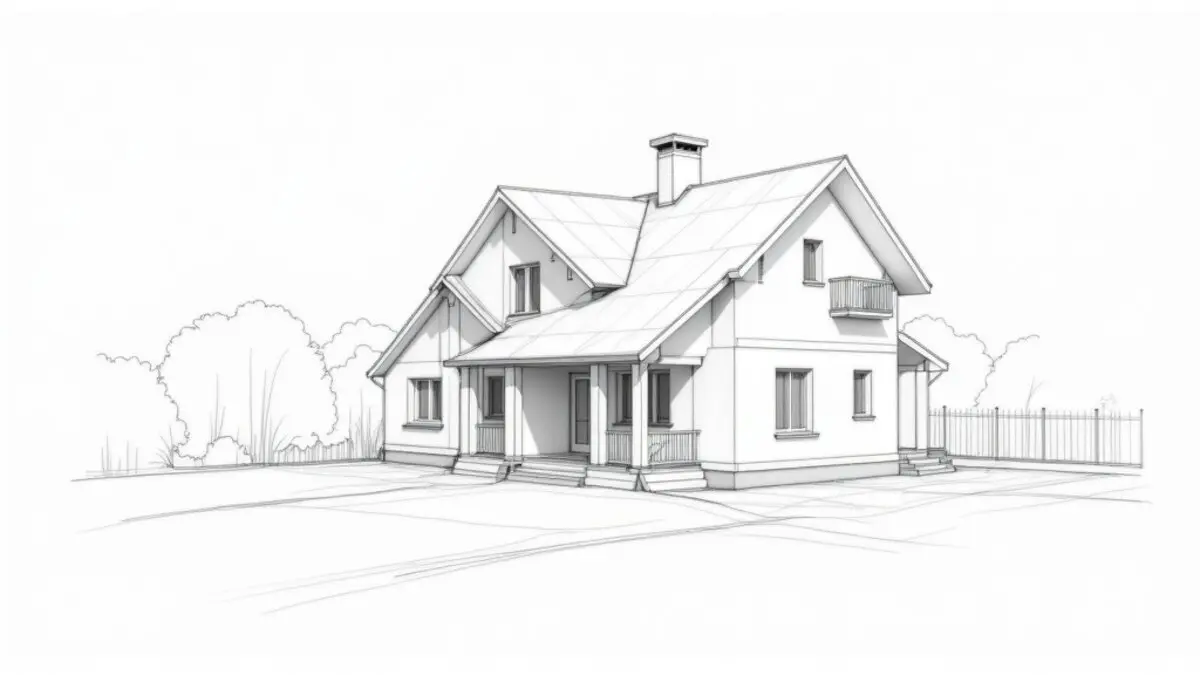
Mr X, owner of a plot in Biscarrosse, submits a planning application for a villa with a swimming pool. The town hall does not respond within the legal period of two months (Article R. 421-12 of the French Planning Code, which provides that a planning permission is deemed granted tacitly in the absence of a response). Mr X therefore considers himself authorised to build. He starts the foundations. But a few months later, the municipality of Biscarrosse adopts a Local Town Planning Plan (PLU) which classifies the plot as non-buildable land. On the basis of this illegality (the deemed permission is contrary to the new PLU), the town hall issues an order withdrawing the deemed permission. Mr X challenges this withdrawal before the courts, arguing that a deemed permission is final and cannot be withdrawn. The Administrative Court rules in his favour, but the Court of Appeal of Bordeaux (in its jurisdiction, Mont-de-Marsan) overturns this judgment. Mr X appeals to the Court of Cassation. The Court of Cassation dismisses his appeal and confirms that the withdrawal is possible within the period for judicial review (two months from notification of the permission) if the permission is unlawful.
The Court's Reasoning — Analysed
The Court of Cassation relies on Article R. 421-12 of the French Planning Code (which provides for deemed permission) and on the general principle of administrative law that an unlawful individual decision may be withdrawn within the period for judicial review (two months). In short, even if the permission is deemed, it is not 'final': the administration retains a right of scrutiny for two months. But note: this withdrawal is only possible if the permission is tainted by illegality. Here, the illegality was manifest: the land had become non-buildable after the adoption of the PLU. The judges specify that the town hall had not failed to indicate to Mr X that the permission was revocable within this period. In other words, the administration's silence does not amount to a waiver of its power of control. This decision confirms consistent case law (CE, 1989, Dame Lamotte): any unlawful administrative decision may be withdrawn within the period for review. It does not create a new precedent, but it forcefully reminds that deemed permission is not a 'blank cheque'.
What This Means for You — Concretely
For owners and developers: do not rejoice too quickly over a deemed permission! If the project is contrary to planning rules (PLU, local town planning plan, etc.), you risk withdrawal within two months. Concrete example: in Mimizan, you submit an application for a development of 10 houses. If the town hall does not respond, but your land is in a natural zone, the deemed permission can be withdrawn. You will have incurred costs (architect, soil studies: between €15,000 and €30,000) with no guarantee. For buyers: before buying a plot with a deemed permission, request a planning certificate (which sets out the applicable rules). If you are in this situation, you must check the legality of the permission within two months and, if in doubt, consult a lawyer to secure your project. For tenants: indirectly, if your landlord obtains a deemed permission for an extension, it can be withdrawn, delaying the work. Be vigilant about authorisations.
Four Tips to Avoid This Type of Dispute
- Check the compliance of your project before submission: Consult the PLU of your municipality (in Biscarrosse, available at the town hall or online). If your project is in a non-buildable zone, it is pointless to submit an application, even for a garden shed. A simple operational planning certificate costs about €50 and saves you months of uncertainty.
- Do not start work before the expiry of the review period: Wait two months after obtaining the permission (deemed or express) before starting. If you start earlier, you risk a withdrawal and having to demolish at your own expense. Example: in Mimizan, an owner started his foundations 15 days after submission: the permission was withdrawn, and he had to backfill everything for €8,000.
- Keep all proof of submission: The receipt of submission at the town hall (with date) is your evidence. In case of a dispute, it proves that the two-month period has started. Without it, you cannot prove the existence of the deemed permission.
- Get professional assistance for complex projects: If your project is significant (development, construction over 150 m²), an architect or a lawyer specialising in planning law can help you anticipate risks. The cost of a consultation (around €150) is negligible compared to a withdrawal procedure that can last a year.
Further Reading: Related Case Law and Developments
This 1993 decision is consistent with a constant line of authority: the Conseil d'État had already ruled in 1989 (Dame Lamotte judgment) that any unlawful administrative decision may be withdrawn within the review period. More recently, in 2020, the Conseil d'État clarified that this withdrawal can take place even after the expiry of the period if the decision is tainted by a serious illegality (CE, 2020, no. 423456). What few people know is that the withdrawal can also be requested by a third party (neighbour, association) within the same period. The trend of the courts is therefore to strengthen legal certainty: a deemed permission is never final until the review period has expired. For the future, expect town halls to be more vigilant and to withdraw unlawful deemed permissions more often, especially in pressured areas such as the Landes coast.
Key Points to Remember
- Deemed permission can be withdrawn within two months of its grant if it is unlawful.
- The illegality may arise from a change in the PLU, a zoning error, or non-compliance with the rules.
- Never start work before the expiry of the review period (2 months).
- If in doubt, consult a lawyer specialising in property law.
- Keep the receipt of submission of your application safe.
Besoin d'un conseil personnalisé ? Contactez Maître Zakine — première consultation 30 min à 45€.
Are you in a similar situation? A 30-minute initial consultation with Maître Zakine (€45) can save you months of proceedings — and often much more. Book an appointment →
