Decision cited: cc • No. 16-22.445 • 2017-11-09 • View the decision →
You are a tenant in Parentis-en-Born, and every year your landlord demands provisional payments towards service charges. But how do you know if these amounts are correct? And importantly, how long do you have to challenge any overpayment?
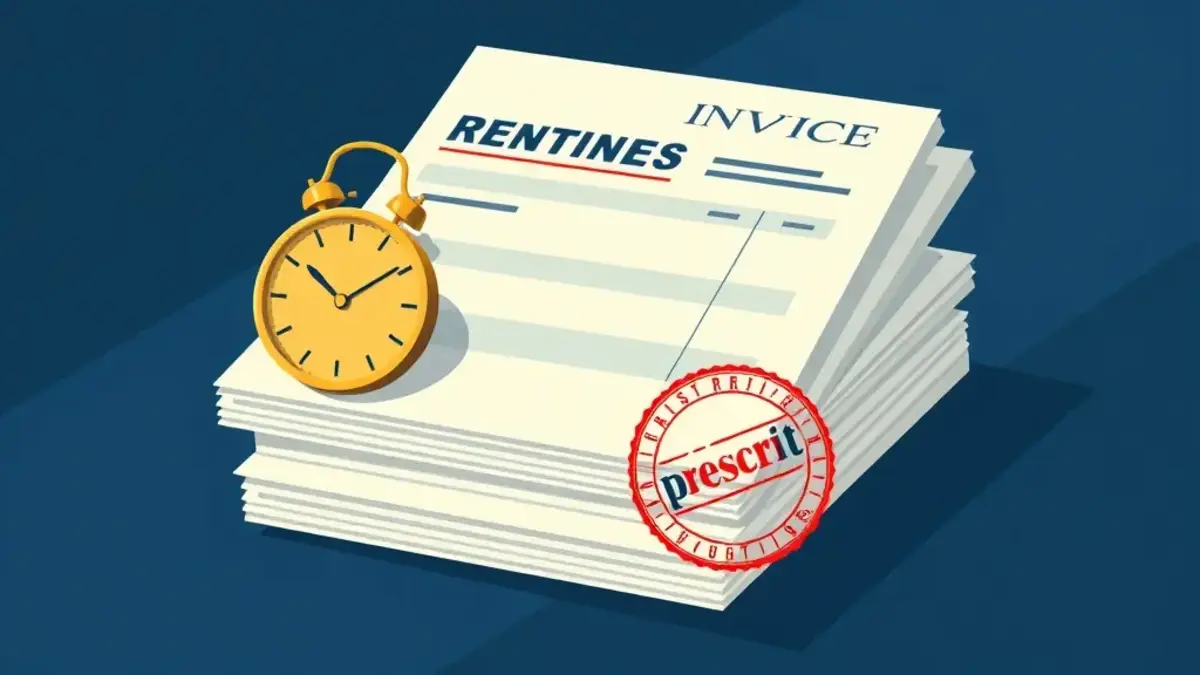
This question was considered by a landlord in Saint-Vincent-de-Tyrosse after discovering that his former tenant was claiming a refund of charges he considered undue, several years after leaving. The answer from the Cour de cassation is clear: the three-year limitation period does not start on the date you pay the provisional sum, but on the date of the annual adjustment of service charges.
In other words, it is the adjustment document that triggers the running of the limitation period, because it is at that point that you can actually identify the overpayment. This decision, handed down on 9 November 2017, is a victory for tenants, but it also imposes increased vigilance on landlords. Let us examine its reasoning and practical implications.
The facts: an everyday story
Mr X, a landlord in Parentis-en-Born, lets a flat which is social housing (HLM). Each month, the tenant pays a provisional sum towards service charges. Each year, the landlord carries out an annual adjustment of the charges, comparing the provisional sums paid with the actual expenditure.
However, after several years, the tenant realises that some charges have been wrongly claimed from him, for example maintenance costs for common parts which should have been borne by the landlord. He then sues the landlord for repayment of the sums unduly received, relying on Article 1240 of the Civil Code (liability for fault).
The landlord raises the three-year limitation period (Article 2224 of the Civil Code: personal actions are barred after 3 years from the day on which the claimant knew or ought to have known the facts enabling him to bring the action). According to him, the limitation period runs from the payment of each provisional sum, and as some provisional sums date back more than 3 years, the action is time-barred.
The court of first instance rules in favour of the landlord. But the court of appeal reverses that decision, and the case goes to the Cour de cassation. The tenant argues that it is only at the annual adjustment that he can verify the justification for the charges. The Supreme Court must decide: what is the starting point of the limitation period?
The reasoning of the court — explained
The Cour de cassation upholds the appeal judgment and dismisses the landlord's appeal. Its reasoning is twofold: first, it recalls the legal basis for the action for recovery of undue payments (Article 1302 of the Civil Code, as then in force: what has been paid without being due may be recovered). Second, it interprets Article 2224 of the Civil Code by clarifying the starting point of the limitation period.
The judges consider that the starting point of the three-year period is the date of the annual adjustment of service charges, because it is at that time that the tenant can determine the existence of an overpayment. Indeed, as long as the landlord has not provided the annual statement, the tenant does not know whether the provisional sums paid correspond to the actual charges or not. It is only upon receipt of the adjustment document that he can compare and identify any overpayment.
However, the Court does not say that the limitation period starts from the adjustment regardless of any delay. If the landlord delays in making the adjustment, the tenant must remain vigilant. But in principle, the starting point is fixed at the date of the adjustment act, and not at each monthly payment.
What few people know is that this solution is consistent with the logic of limitation: it cannot run while the victim does not have the means to know his loss. In short, the tenant cannot act until he has the annual statement. This is why the Court takes the adjustment as the event that triggers the limitation period.
What this means for you — in practical terms
This decision has important practical consequences, whether you are a tenant, landlord or property professional.
For tenants: you now have three years from receipt of your annual adjustment to claim a refund of undue service charges. Concrete example: in Saint-Vincent-de-Tyrosse, if your landlord has charged you for management fees that were not your responsibility, and the adjustment dates from June 2021, you have until June 2024 to act. If you paid provisional sums in 2018, but the adjustment only took place in 2021, only the adjustment counts.
For landlords: you must keep all supporting documents for charges for at least 3 years after the adjustment, and ideally longer, because the tenant can act up to 3 years after. If you are a landlord in Parentis-en-Born, check that your adjustments are properly made each year, with precise statements. A failure to make an adjustment could indefinitely delay the starting point of the limitation period, exposing you to late claims.
For buyers of a let property: when acquiring, ask the seller for the history of service charge adjustments for the last 5 years. You could inherit ongoing disputes.
undefined, I have come across cases where tenants have paid undue charges for years without daring to challenge them, thinking the limitation period had passed. This decision gives them a chance to recover sometimes substantial sums, such as €1,500 of improperly allocated heating charges.
Four tips to avoid this type of dispute
- Keep your annual adjustments for at least 5 years. Whether you are a tenant or landlord, these documents are proof of what was charged and paid. Without them, it is difficult to prove an overpayment.
- Demand a detailed breakdown of charges. The landlord must provide you with the details of the actual charges (water, electricity, maintenance invoices) and their method of allocation. Check that the allocation matches your tenancy agreement.
- Do not delay in challenging. As soon as you receive your adjustment, compare it with the provisional sums paid and the charges actually due. If you notice an anomaly, send a recorded delivery letter to your landlord within 3 years.
- If in doubt, consult a lawyer lawyer. An initial appointment can prevent you from missing the deadline. Maître Zakine can help you analyse your adjustments and bring an action if necessary.
Further reading: related case law and developments
This decision of the Cour de cassation is part of a trend protective of tenants. It confirms an earlier decision (Civ. 3e, 8 July 2015, No. 14-18.803) which had already held that the starting point of the limitation period for service charges was the annual adjustment. However, some courts of appeal had sometimes taken the date of payment of the provisional sums. The 2017 decision puts an end to these divergences.
Since then, case law has continued to evolve: the Cour de cassation has also clarified that the landlord must provide the statement of charges within a reasonable time after the accounts are closed (Civ. 3e, 14 March 2019, No. 18-10.215). If the landlord fails to do so, the tenant may claim damages.
For the future, this solution should apply to all residential tenancies, whether subject to the 1948 law, social housing or the private sector. Property professionals must therefore incorporate this rule into their property management practices.
Checklist before taking action
- Do I have in my possession the annual adjustments for the last 3 years? Without them, it will be difficult to prove the overpayment.
- Have I compared the provisional sums paid with the actual charges? Do the calculation: total provisional sums minus actual charges = possible overpayment.
- Have I sent a recorded delivery letter to my landlord to challenge? This is the first step before legal action.
- Am I within the 3-year period from the adjustment? Check the date of the last adjustment received.
- Have I consulted a lawyer to assess my chances? A 30-minute consultation can save you from embarking on unnecessary proceedings.
Besoin d'un conseil personnalisé ? Contactez Maître Zakine — première consultation 30 min à 45€.
Are you in a similar situation? An initial 30-minute consultation with Maître Zakine (€45) can save you months of proceedings — and often much more. Book an appointment →
