Aller au contenu principal
Apportionment of Special Common Charges: When the General Meeting Has Not Decided
Droit-immobilier

Apportionment of Special Common Charges: When the General Meeting Has Not Decided

📅 Décision du 06 October 1999⚖️ Cour de cassation👁️ 4 vues📖 5 min de lecture

The Court of Cassation reminds that a judge cannot apportion special common charges among units resulting from a division if the general meeting of co-owners has not been previously consulted. Decision of 6 October 1999 (No. 98-10.924).

Reference decision: cc • No. 98-10.924 • 1999-10-06 • View the decision →

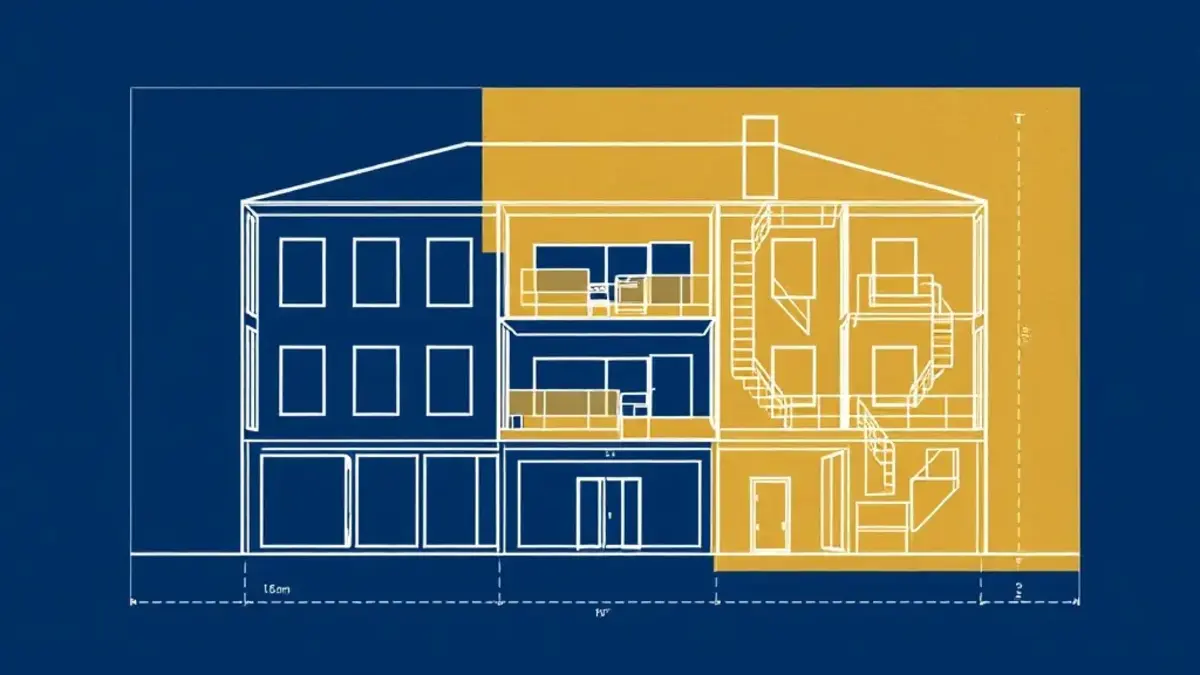
Imagine: you live in Mimizan, in a quiet co-ownership residence. An owner decides to divide his unit into five flats. But who pays what for the special common charges (lift, central heating)? The question can quickly become a headache.

What to do if the general meeting has not voted on the apportionment? Can you go directly to the judge? The Court of Cassation ruled in 1999: it is premature to bring the matter before the court until the general meeting has been consulted. A decision that has direct consequences for co-owners in Saint-Vincent-de-Tyrosse and elsewhere.

In this article, we analyse the judgment of 6 October 1999 (No. 98-10.924) and explain how to act to avoid a deadlock.

The facts: a story that happens every day

Mr X, owner of a large unit in a co-ownership in Mimizan, decides to divide his unit into five separate units. Each new unit is allocated a share of the common parts. However, for special common charges (e.g., maintenance of the swimming pool or entrance hall), no apportionment is provided for in the co-ownership regulations.

The general meeting of co-owners was not asked to vote on an apportionment key. Some dissatisfied co-owners bring the matter before the court to have it fix the apportionment itself. The Tribunal de Grande Instance of Mont-de-Marsan (the jurisdiction covering Mimizan) is seised.

The Court of Appeal of Pau, and then the Court of Cassation, are called upon to rule. The lower courts had ruled in favour of the applicant co-owners, but the Court of Cassation quashes the decision: the seising was premature, as the general meeting had not been consulted beforehand.

The reasoning of the court — explained

The Court of Cassation relies on Article 10 of the Law of 10 July 1965 (which defines co-ownership charges). It recalls that the apportionment of special common charges among units is a matter for the exclusive competence of the general meeting of co-owners. The judge cannot substitute himself for it.

In clear terms, the Court of Appeal should have noted that the general meeting had taken no decision on this apportionment. By itself fixing the apportionment keys, it exceeded its powers.

Beware, however: this is not a reversal of precedent, but a confirmation of a constant principle: the judge cannot make up for the failure of the general meeting. Co-owners must first vote at a general meeting. It is only in the event of a refusal or persistent disagreement that the judge may be seised, but only after a decision of the general meeting.

What few people know: in my practice, I have come across cases where co-owners went directly to court without going through the general meeting. Result: the proceedings are declared inadmissible, and they have to start all over again, with additional costs.

What this means for you — practically

For a co-owner in Saint-Vincent-de-Tyrosse who wishes to divide his unit: you must submit the apportionment of special charges to the general meeting. If you do not, the judge cannot help you.

For a buyer: before purchasing a unit resulting from a division, check that the general meeting has voted on an apportionment of charges. Otherwise, you risk having to pay an undetermined share, or facing litigation.

For a managing agent: you must include this question on the agenda of the general meeting. In the absence of a decision, the charges remain unpaid, which can block the co-ownership budget.

Concrete example: if the apportionment is not voted, the owner of the new unit may pay the same amount as before the division, which is unfair to the others. The general meeting must therefore fix a fair key.

Four tips to avoid this type of dispute

  • Anticipate the division: before dividing a unit, provide a clause in the co-ownership regulations for special charges, or have a resolution voted at the general meeting.
  • Put the question on the agenda: the managing agent must ensure that the apportionment of charges for the new units is submitted to the general meeting as soon as possible.
  • Consult a lawyer before seising the judge: a premature seising may be rejected. Prior advice will save you unnecessary costs.
  • Negotiate among co-owners: an amicable agreement, even informal, can facilitate the vote at the general meeting. But it must be formalised in a resolution.

The Court of Cassation has reaffirmed this principle in several subsequent judgments. For example, in a judgment of 12 May 2004 (No. 02-18.123), it held that the judge cannot fix the share of special charges without a prior decision of the general meeting.

The trend is therefore constant: the autonomy of the general meeting is protected. Courts cannot substitute themselves for it, except in cases of manifest failure (systematic refusal to vote).

For the future, this case law could evolve if the legislature intervenes to simplify divisions of units. But as it stands, the message is clear: go through the general meeting.

Checklist before acting

FAQ:

  • Can I seise the judge if the general meeting has not voted on the apportionment? No, the seising will be declared premature. You must first request a vote at the general meeting.
  • What if the general meeting refuses to vote? You can then seise the judge to have the refusal recorded and request a judicial apportionment.
  • What are the time limits? The general meeting must meet at least once a year. If the question is not on the agenda, you can request an extraordinary general meeting.
  • What costs? A premature seising can cost several thousand euros in lawyers' fees and court costs, without result.
  • Can I challenge the apportionment voted by the general meeting? Yes, if it is abusive or disproportionate, within two months of the vote.

Besoin d'un conseil personnalisé ? Contactez Maître Zakine — première consultation 30 min à 45€.

Are you in a similar situation? A first 30-minute consultation with Maître Zakine (€45) can save you months of proceedings — and often much more. Book an appointment →

Questions fréquentes

Puis-je saisir le juge si l'assemblée générale n'a pas voté la répartition des charges spéciales ?

Non, la saisine serait prématurée. Vous devez d'abord soumettre la question à l'assemblée générale. Le juge ne peut pas se substituer à elle.

Que faire si l'assemblée générale refuse de voter la répartition des charges ?

Après un refus, vous pouvez saisir le juge pour qu'il constate le refus et ordonne une répartition judiciaire. Mais il faut d'abord passer par l'AG.

Quels sont les délais pour contester une répartition votée par l'AG ?

Vous avez deux mois à compter du vote pour contester la décision devant le tribunal judiciaire, si elle est abusive ou contraire à la loi.

Un copropriétaire peut-il diviser son lot sans l'accord de l'AG ?

Oui, la division est libre, mais la répartition des charges spéciales doit être approuvée par l'AG. Sans cela, les nouveaux lots n'ont pas de clé de répartition.

Quels frais engager si je saisis le juge prématurément ?

Vous risquez de perdre plusieurs milliers d'euros en frais d'avocat et de justice, sans obtenir de décision sur le fond. Mieux vaut consulter un avocat avant.

Informations juridiques

  • Numéro: 98-10.924
  • Juridiction: Cour de cassation
  • Date de décision: 06 octobre 1999

Mots-clés

répartition charges copropriétécharges communes spécialesdivision lot copropriétéassemblée générale copropriétéCour de cassation 1999

Cas d'usage pratiques

1

Owner wishing to divide his unit in Mimizan

Mr Dupont, owner of a large flat in Mimizan, wants to divide it into three studio flats. He anticipates new maintenance charges for the common parts, but has not submitted the apportionment to the general meeting.

Application pratique:

Mr Dupont must convene an extraordinary general meeting to have the apportionment of special charges voted (e.g., 30% for studio A, 40% for B, 30% for C). Without a vote, the charges remain his responsibility, and he cannot pass them on to the tenants.

2

Co-owner suffering an unfair apportionment in Saint-Vincent-de-Tyrosse

Mrs Martin, a co-owner in Saint-Vincent-de-Tyrosse, sees her charges increase after the division of a neighbouring unit. The apportionment of special charges has not been voted, and she is paying more than her share.

Application pratique:

Mrs Martin can ask the general meeting to vote on a new apportionment. If the general meeting refuses, she can seise the judge to have the absence of a decision recorded and request a fair apportionment, but only after having attempted the general meeting.

3

Managing agent handling an unvoted division

The managing agent of the Les Pins residence in Mimizan must manage special charges for a unit divided into 5, without a vote of the general meeting. He does not know how to apportion the bills.

Application pratique:

The managing agent must put the question on the agenda of the next general meeting. In the meantime, he may provisionally apportion according to the general shares, but this may be challenged. He must obtain a vote to secure the situation.

Maître Cécile Zakine

À propos de l'auteur

Maître Cécile Zakine — Avocate au Barreau des Alpes-Maritimes, Docteur en Droit. Chaque article de ce magazine est rédigé à partir de l'analyse d'une décision de jurisprudence réelle, commentée et mise en perspective par les équipes de Maître Zakine.

Prendre rendez-vous →

Avertissement: Les analyses présentées sur ce site sont fournies à titre informatif uniquement et ne constituent pas des conseils juridiques personnalisés. Pour une consultation adaptée à votre situation, contactez un avocat.

Articles similaires en Droit-immobilier

Voir tout →

Servitude de passage et tierce opposition : protéger son droit d'accès en copropriété

Un copropriétaire peut-il s'opposer à la suppression d'une servitude de passage qui profite à son lot, même si le syndicat accepte la fin de l'enclave ? La Cour de cassation répond oui, reconnaissant un intérêt distinct pour agir en tierce opposition.

23 juil. 2026Lire →

Enclave et servitude : quand le droit du travail ne crée pas de passage forcé

La Cour de cassation rappelle que l'état d'enclave d'un fonds ne peut résulter des obligations réglementaires imposées aux entreprises en matière d'issues et dégagements. Ainsi, un propriétaire ne peut exiger un passage sur le fonds voisin au seul motif que son bâtiment doit respecter des normes de sécurité incendie.

23 juil. 2026Lire →

Lorsque, faute de convention écrite ou dans le silence, le préavis s'impose

Lorsque, faute de convention écrite ou dans le silence de cette convention, les parties à un contrat de transport public routier de marchandises n'ont pas stipulé une durée de préavis de rupture, cette durée est fixée par un contrat-type approuvé par décret pris en application de l'article L. 1432-4 du code des transports. Les dispositions de l'article L. 442-6, I, 5°, devenu L. 442-1, II, du code de commerce ne trouvent alors pas à s'appliquer. Il en va de même lorsque la convention écrite renvoie expressément à la clause du contrat-type fixant une telle durée. Lorsque les parties ont conclu un contrat écrit stipulant la durée du préavis de rupture, les dispositions de l'article L. 442-1, II, du code de commerce sont applicables. Dans cette hypothèse, l'auteur de la rupture qui a consenti à son partenaire un délai de préavis au moins égal à celui prévu au contrat-type dans sa version en vigueur à la date de la notification de la rupture, ne saurait voir sa responsabilité engagée sur le fondement de ce texte

23 juil. 2026Lire →

Explorez plus d'analyses juridiques en droit droit-immobilier

Tous les articles Droit-immobilier
★★★★★4.9/5 — Avis Google

Maître Zakine, Doctor of Law

Phone and video consultations available — Fast appointments

Book an appointment
First consultation 30 minutes — €45

🔒 Confidentiel • Sans engagement • Réponse rapide