Reference Decision: cc • N° 91-10.116 • 1992-06-30 • View the decision →
Imagine: you own a flat in Parentis-en-Born, on the 5th floor of a building. Your downstairs neighbour, Mr Dupont, needs to cross your landing to access his electricity meter. He proposes that you sign a "right of way easement" over your unit. You agree, thinking you have solved the problem. But a year later, you want to sell: the notary tells you that this easement is void. How is this possible?
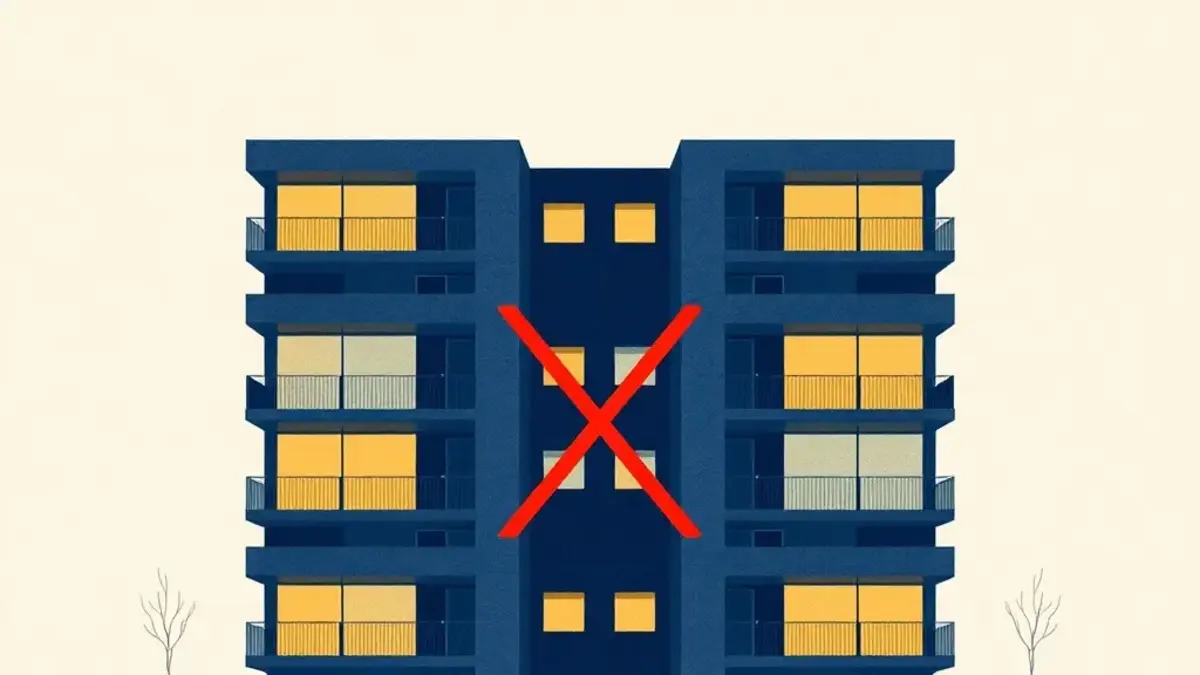
The French Supreme Court answered this question on 30 June 1992. Decision no. 91-10.116 is clear: an easement can only exist between two properties (land or buildings) belonging to different owners. However, in a condominium, each unit is not an independent property in the land: the unit is a fraction of the building, consisting of a private part and a share of the common parts. A unit cannot therefore be a "servient tenement" or "dominant tenement" in the legal sense.
In short, this decision puts an end to a common but erroneous practice: attempting to create easements between condominium units. But what does this actually change for you? And how can you secure your rights? Read on.
The Facts: A Story Like Many Others
Mr and Mrs Y., associate notaries, owned several units in a condominium building. In 1986, they promised to sell unit no. 38 to Mr and Mrs D. In the deed of sale, they stipulated that a right of way easement was granted by the seller over the landing on the 5th floor (a common part) in favour of the unit being sold. The parties also agreed to create an easement modifying the co-owners' rights over the common parts. However, the condominium challenged this clause: a co-owner cannot, alone, encumber the common parts with an easement without the consent of all.
The case went to court, then to the Court of Appeal. The trial judges annulled the easement. The Y. couple appealed to the Supreme Court, arguing that an easement between two units is possible. The Supreme Court dismissed their appeal: it confirmed that an easement can only exist between independent properties belonging to different owners. Condominium units do not meet this condition, because they are fractions of the same building. The right of way easement over the landing was therefore void.
What few people know is that this decision does not only concern the landing. It applies to any attempt to create an easement between units: right of way, view, drainage of water... everything is void. Buyers must therefore be vigilant when purchasing a unit: apparent easements in the condominium regulations may be illusory.
The Court's Reasoning — Explained
The Supreme Court relies on Article 637 of the Civil Code, which defines an easement as "a charge imposed on a property (the servient tenement) for the use and benefit of a property belonging to another owner (the dominant tenement)". It clarifies that this definition implies that the two properties are distinct and belong to different owners. However, in a condominium, the units are not independent properties: they are fractions of the same building, and the land is held indivisibly by all co-owners. In other words, a unit is not a "tenement" within the meaning of Article 637.
The Court adds that the common parts are the undivided property of all co-owners. A co-owner cannot, therefore, alone grant an easement over a common part (such as a landing) in favour of another unit. Such an easement would not only affect the neighbour's unit but the entire condominium. Only a decision of the general meeting of co-owners, by the required majority, could possibly create an easement over the common parts (for example, a right of way for a unit). But beware: even in that case, the easement would not be attached to a particular unit, but to the entire building.
In this case, the Court of Appeal had found that the disputed easement modified the co-owners' rights over the common parts. The Supreme Court validates this reasoning: an easement between two units is incompatible with the condominium regime. This is not a reversal of precedent: the Court confirms a consistent position since the 1970s. But it reminds us of a fundamental principle often overlooked.
What This Means for You — Practically
If you are the owner of a unit in a condominium: you cannot create a "private" easement with your neighbour. For example, if you want your neighbour to be able to cross your terrace to access their garden, you cannot sign a notarial deed of easement. However, you can enter into a personal right of way contract (a "right of use"), but it will not be attached to the unit and will end if you sell. If you are a buyer: before buying a unit, check the condominium regulations for any easements. If they are between units, they are probably void. In Saint-Vincent-de-Tyrosse, a developer tried to include a right of way easement between two units in a new building. The buyers, advised, obtained a price reduction of €15,000 after expert assessment.
If you are a co-owner: you can challenge any easement between units that encumbers the common parts without a vote of the general meeting. undefined, I have come across cases where a co-owner had "rented" part of the entrance hall to his neighbour to store bicycles, by way of an easement. The managing agent had to take the matter to court to have the deed annulled.
However, beware: legal easements (such as landlocked property, Article 682 of the Civil Code) remain possible, even in a condominium, but they concern the building as a whole, not a particular unit. If your unit is landlocked, you can request a right of way over the neighbouring property (another building), not over another unit in the same building.
Four Tips to Avoid This Type of Dispute
- Check the condominium regulations before any purchase: ask your notary to point out any easement clause between units. If it exists, negotiate a warranty against eviction or a price reduction.
- Never sign a deed of easement between units: even before a notary, such a deed will be void. Prefer a personal rights contract (lease, loan for use) that does not relate to the unit itself.
- If you are a co-owner and want a right over a common part (e.g., passage, terrace), have a decision voted at the general meeting by the majority required under Article 26 (majority of votes of all co-owners). This decision creates a right of use, not an easement.
- In case of a dispute, consult a lawyer lawyer: actions to annul an easement are subject to a five-year limitation period. Do not wait.
Besoin d'un conseil personnalisé ? Contactez Maître Zakine — première consultation 30 min à 45€.
Further Analysis: Related Case Law and Developments
The Supreme Court has confirmed this position on several occasions. For example, in a decision of 10 July 2013 (no. 12-21.063), it ruled that an easement of view cannot be established between two units in the same condominium. Similarly, in a decision of 4 February 2015 (no. 13-25.927), it recalled that the common parts can only be encumbered by an easement by all co-owners together. The trend is therefore consistent: the condominium regime is incompatible with "internal" easements. A recent development? The law of 10 July 1965 (governing condominiums) has not been amended on this point. But notarial practice has adapted: deeds of sale now state that easements between units are prohibited, unless they result from the condominium regulations (which is rare).
For the future, courts may need to clarify the boundary between an easement and a right of use. For example, a right of way granted by one co-owner to another may be reclassified as an easement and annulled. Caution is advised.
Frequently Asked Questions
Can I allow my neighbour to cross my terrace to access their meter? Yes, but not by an easement. Sign a personal authorisation (e.g., a "temporary right of way") that is not attached to your unit. If you sell, the new owner is not bound.
What if I bought a unit with an easement mentioned in the deed? Consult a lawyer. The easement is probably void. You may claim damages from the seller for failure to deliver conforming property, within 5 years of the sale.
What are the time limits to act? An action to annul an easement between units is time-barred 5 years from its creation (Article 2224 of the Civil Code). The warranty action against the seller is also 5 years (Article 1648).
Can the condominium regulations create easements between units? No, because the regulations are a contract between co-owners, but they cannot create real easements (attached to the unit) as this would require the units to be independent properties. However, they can provide for rights of use (e.g., exclusive use of a terrace).
How can I secure a right of way over a common part? Have a decision voted at the general meeting by the majority required under Article 26 (majority of votes of all co-owners). This decision will create a right of use, but not an easement. It can be annulled if it is abusive.
Are you in a similar situation? A first 30-minute consultation with Maître Zakine (€45) may save you months of litigation — and often much more. Book an appointment →
