Reference Decision: cc • No. 17-20.280 • 2018-06-14 • View the decision →
Imagine you own a beautiful bastide in Mougins, nestled in the heart of the hills. You have access to your land via a right of way easement (a right to cross another's land) that passes through your neighbour's property. Everything is fine until the day you decide to install a swimming pool or extend your house. For this, you need to run water and electricity pipelines under this path. Your neighbour categorically opposes this. Who is right?
I encounter this situation regularly in my practice between Grasse and Mougins. Property owners often think that the right of way automatically includes the right to lay underground pipes. But the legal reality is more complex, and a recent decision by the Court of Cassation has just forcefully reminded us of this.
On 14 June 2018, the highest French magistrates ruled on a crucial question: does a right of way easement give the right to run pipelines in the subsoil? Their answer is clear and will change how you approach your real estate projects. But what exactly does this change for you, as a property owner, tenant, or professional in the sector?
The Facts: A Story That Happens Every Day
The story begins with SARL Colline des Camélias, a company that owns a building plot. To access it, it benefits from a right of way easement over Rue des Marquis, a private path belonging to another owner. Everything goes well for years, until the company decides to build on its land.
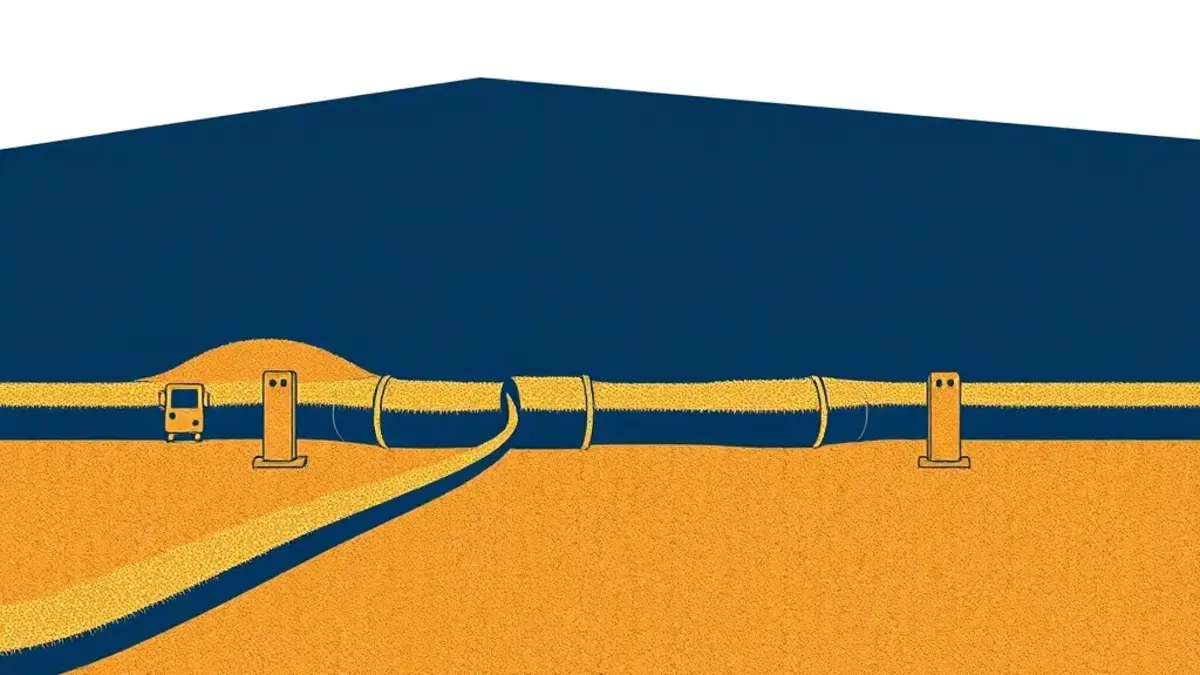
To supply its future construction with water and electricity, SARL Colline des Camélias plans to run pipelines in the subsoil of the easement area (the precise zone where the right of way is exercised). It considers that this right is included in its right of way easement. After all, how can you build without connections?
But the owner of the land crossed by the easement does not agree. He firmly contests this installation, considering that it constitutes an aggravation of the easement (an increase in its burden or extent). For him, the right of way is limited to surface circulation, full stop. The pipeline works, buried in his subsoil, exceed what was initially intended, according to him.
The conflict escalates and ends up before the courts. SARL Colline des Camélias applies to the court to have its right to install these pipelines recognised. It argues that without this possibility, its right of way easement becomes useless for building. The owner of the servient tenement (the land that bears the easement) maintains his opposition, fearing for his subsoil and considering that an additional, unforeseen burden is being imposed on him.
The lower court judges, those who examine the facts at first instance and on appeal, will have to settle this dispute. They analyse the instrument establishing the easement (the deed that created this right, often a notarial deed or a court decision). What exactly does this document say? Does it explicitly provide for the possibility of running pipelines? That is the whole question.
The Court's Reasoning — Analysed
The Court of Cassation, in its judgment of 14 June 2018, adopts rigorous reasoning that deserves to be explained step by step. The magistrates first recall a fundamental principle of easement law: strict interpretation. In other words, an easement cannot extend beyond what is expressly provided for in the instrument that establishes it.
The legal basis for this position is found in Articles 686 and 697 of the Civil Code. Article 686 states that easements can only be established by instrument (the legal deed that creates them). Article 697 specifies that the owner of the dominant tenement (the one benefiting from the easement) can only use the easement within the limits set by the instrument. In short, what is not written does not exist.
The Court therefore examines the instrument establishing the right of way easement benefiting SARL Colline des Camélias. If this document does not explicitly mention the right to run pipelines in the subsoil, then this right does not exist. The judges consider that the installation of pipelines does indeed constitute an aggravation of the easement, as it adds a new burden to the servient tenement.
But be careful however: the Court does not say that it is impossible. It specifies that a right of way easement can confer the right to run pipelines in the subsoil... but only if the instrument establishing this easement expressly provides for it. The difference is crucial. Everything therefore depends on what is written in the deed.
In this case, the instrument did not provide for this possibility. SARL Colline des Camélias could therefore not impose this installation on the owner of the servient tenement. The magistrates reject its claim, thus confirming the decision of the appeal judges. What few people know is that even if the pipeline seems necessary to make the easement useful, this is not enough to create it if it is not provided for.
This decision is in line with previous case law. It does not constitute a revolution, but rather a solemn confirmation of well-established principles. The Court thus reminds property owners and professionals of the crucial importance of drafting instruments. A word, a forgotten phrase can have considerable consequences years later.
What This Changes for You — Practically
If you are a landlord in Grasse and you rent a property with a right of way easement, this decision directly concerns you. Imagine that your tenant wants to install air conditioning that requires pipelines under the access path. You must first check what the easement instrument provides. If it does not mention pipelines, you cannot authorise these works without the agreement of the owner of the servient tenement. Refusing could expose you to a conflict with your tenant, but authorising could lead to a lawsuit with the neighbour.
For buyers, vigilance is essential. When you buy a property in Mougins with a right of way easement, always ask to see the instrument establishing this easement. Do not just know that it exists. Read precisely what it authorises. If you are considering future works requiring pipelines, and the instrument does not provide for it, you will have to negotiate with the owner of the servient tenement. This negotiation can take months and be expensive: in my practice, I have seen owners ask between €5,000 and €20,000 to authorise the passage of pipelines.
Tenants are also affected. If you rent a property and wish to make improvements, first check with your landlord whether the right of way easement allows it. Otherwise, your projects could be blocked. A client recently consulted me about installing a swimming pool in Grasse: the works were ready to start when it was realised that the easement did not allow the passage of water pipelines. Result: six months' delay and €15,000 in additional costs to find an alternative solution.
Co-owners must also be attentive. In a co-ownership with common areas crossed by easements, any decision to install new pipelines must be examined in light of the instruments. The managing agent must scrupulously check what is authorised before starting works. How to react if you discover that your project is incompatible with the easement? You must either give up or negotiate a modification of the instrument, which can be lengthy and complex.
In short, this decision strengthens the legal security of the owner of the servient tenement, but complicates the life of the one benefiting from the easement. It reminds us that in property law, what is not written does not exist. A simple lesson but often forgotten in the enthusiasm of a construction or renovation project.
Four Tips to Avoid This Type of Dispute
- Read the easement instrument carefully before any purchase or works project. Do not rely on verbal statements. Demand the notarial deed or court decision that establishes the easement and examine precisely what it authorises. If necessary, seek assistance from a legal professional.
- Anticipate your future needs when creating an easement. If you are the owner of the dominant tenement (the one benefiting from the easement), insist that the instrument explicitly mentions the right to run pipelines, cables, and other networks in the subsoil. It is better to plan broadly from the outset.
- Document any agreement with the owner of the servient tenement. If you negotiate an extension of the easement to include pipelines, have a notarial deed or an addendum to the original instrument drafted. A simple email exchange or handshake will not suffice in case of conflict.
- Consult a specialised lawyer before starting works affecting an easement. One hour of consultation can save you months of proceedings and tens of thousands of euros in costs. In the Grasse jurisdiction, disputes over easements are frequent, and judges are very attentive to compliance with instruments.
Deep Dive: Related Case Law and Developments
This decision of the Court of Cassation is part of consistent case law. Already in 1995 (judgment No. 93-16.902), the Court had ruled that a right of way easement did not include the right to lay water pipelines if the instrument did not provide for it. In 2007 (judgment No. 06-11.418), it had confirmed this principle for electrical cables.
What is interesting is that some courts had sometimes adopted a more flexible interpretation, considering that pipelines were a necessary accessory of the right of way. But the Court of Cassation firmly maintains its position: only the letter of the instrument is conclusive. This rigour protects the property of the servient tenement against abusive extensions.
The trend is therefore clear: judges favour legal security and predictability. They refuse to create rights that were not expressly intended by the parties. For the future, this means that the drafting of deeds will become even more crucial. Notaries and lawyers will have to be particularly precise when drafting easement instruments.
undefined, I have encountered cases where owners thought it wise to run pipelines without checking the instrument, thinking it was included. Result: they had to dig everything up at their own expense, plus pay damages to the neighbour. A mistake that can be very costly, especially on the Côte d'Azur where land has high value.
Summary and Next Steps
FAQ — Your Questions, Our Answers:
1. Does a right of way easement automatically give the right to run pipelines?
No. Only the instrument establishing the easement can give this right. If it does not expressly mention it, you cannot install pipelines without the agreement of the owner of the crossed land.
2. How do I know what my easement instrument provides?
Consult the notarial deed of sale or creation of the easement. If you do not have it, request it from the notary who established the deed or from the land registry service. In case of doubt, seek assistance from a lawyer.
3. What should I do if my instrument does not provide for pipelines but I need them?
You must negotiate with the owner of the servient tenement. If they agree, have an addendum to the instrument drafted by notarial deed. If they refuse, you will have to find an alternative solution (such as a connection via the public road if possible).
4. How long can such a negotiation take?
Between 3 months and 1 year depending on the complexity and goodwill of the parties. To be factored into your project timelines.
5. What are the risks if I proceed regardless?
The owner of the servient tenement can demand the removal of the pipelines at your expense, plus damages for abnormal neighbourhood disturbance. The amounts can be substantial, especially if the works damaged their land.
Do you find yourself in a similar situation? A first 30-minute consultation with Maître Zakine (€45) can save you months of proceedings — and often much more. Book an appointment →
Useful resources on cecile-zakine.fr
- servitude-droit-passage-avocat/" target="_blank" rel="noopener">right of way disputes in France: legal solutions
- French condominium law lawyer
- vefa-grasse-me-zakine-docteur-en-droit/" target="_blank" rel="noopener">property lawyer in Grasse
