Reference decision: cc • N° 24-12.678 • 2025-10-02 • View the decision →
Imagine: you have just acquired a beautiful villa in Roquebrune-Cap-Martin, with a breathtaking view of the Mediterranean. But to access it, you must every day use a path that crosses your neighbour's property. For decades, the previous owners used it without any problem. But one day, your neighbour changes his attitude: he installs a gate and forbids you to pass. What can you do? This question is asked every year by hundreds of property owners in Nice and the French Riviera.
The answer lies in a decision of the Cour de cassation of 2 October 2025 (n° 24-12.678). The judges ruled: when a right of way has been used for more than thirty years in a continuous, peaceful and unambiguous manner, that easement is acquired by prescription (usucapion). It matters not that the landlocked state results from a division of the land: the historic passage takes precedence over the usual rules of Article 684 of the Civil Code.
In short, if you or your predecessors have used the same path for thirty years without challenge, you can claim the right to do so. But beware: the proof of such use must be provided. Let us examine the details of this decision and what it actually means for you.
The facts: a story that happens every day
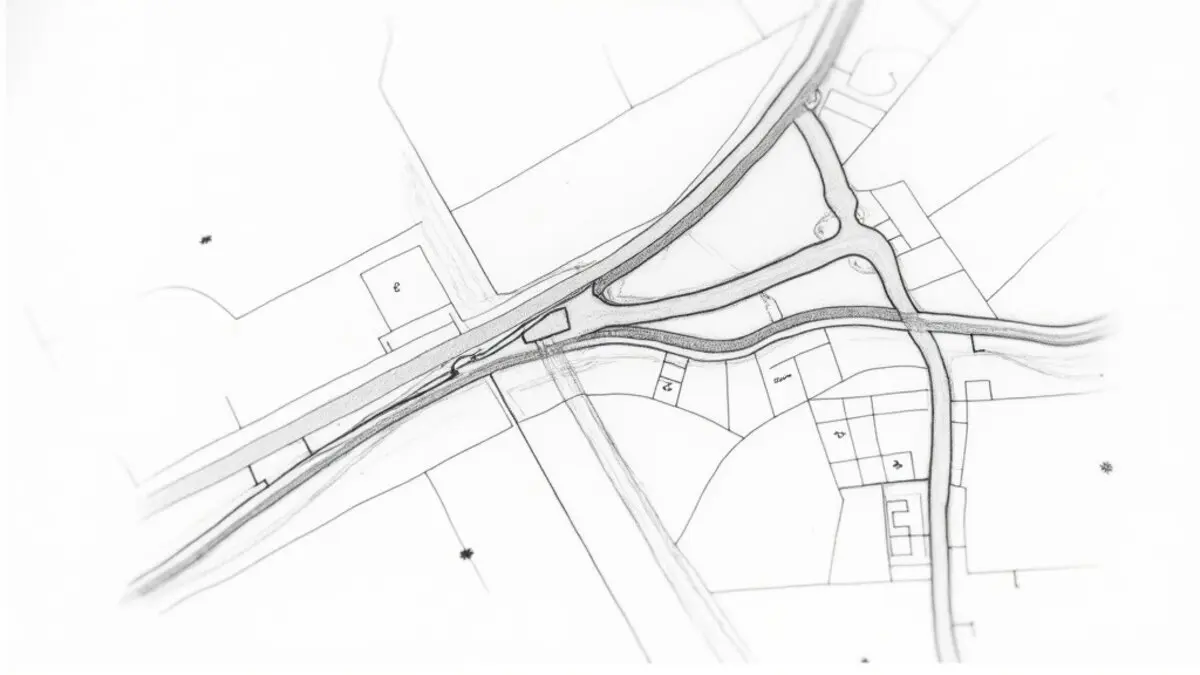
Mrs [U] owns a plot registered under section AB n° [Cadastre 3] in Nice, which is landlocked: it has no direct access to the public highway. To get out, she has always used a path along the neighbouring plot AB n° [Cadastre 5], owned by Mrs [R] [H]. This path is also used by other neighbours. The use has lasted for more than thirty years, without anyone objecting.
One day, Mrs [H] decides to block the passage. She argues that the landlocked state of Mrs [U]'s land results from a division of the land (plots originating from the same original property) and that, consequently, the route of the passage should be fixed solely over the plots that belonged to the former common owner, in accordance with Article 684 of the Civil Code. Mrs [U] refuses: she sues her neighbour to have her right of way recognised as acquired by thirty-year prescription (usucapion).
The Tribunal de grande instance of Nice rules in favour of Mrs [U]. Mrs [H] appeals. The Cour d'appel of Aix-en-Provence confirms: the right of way is acquired by prescription. Mrs [H] appeals to the Cour de cassation. The Cour de cassation, on 2 October 2025, dismisses her appeal. It upholds the reasoning of the lower courts: continuous thirty-year use renders Article 684 of the Civil Code inapplicable. The route of the passage is therefore that which has been established by use, even if it crosses a plot not resulting from the division.
The reasoning of the court — analysed
The core of the dispute concerned the interaction between two rules: Article 684 of the Civil Code (where the landlocked state results from a division, the passage must be taken over the divided plots) and acquisitive prescription for thirty years (Article 2258 of the Civil Code: possessing a real right for thirty years allows its acquisition).
Mrs [H] argued that Article 684 was mandatory: since the landlocked state derived from a division, the passage could only be established over the plots resulting from that division, and not over her own plot, which was not part of it. In other words, according to her, prescription could not circumvent this special rule.
The judges did not follow this argument. They recalled that acquisitive prescription is a mode of acquiring ownership and easements. If the use has lasted for more than thirty years, it creates a right of way independent of the origin of the landlocked state. Article 684 applies only when no easement has yet been constituted. But here, the easement already existed by virtue of prolonged possession.
What few people know is that this solution is not new: the Cour de cassation had already outlined it in a decision of 18 December 2013 (n° 12-28.893). But the 2025 decision affirms it forcefully: thirty-year use prevails, even if the landlocked state results from a division. This provides security for owners who have used a passage for a long time.
However, note: the possession must be continuous, peaceful, public and unambiguous. If the neighbour tolerated the passage out of pure courtesy, or if there have been challenges, the prescription may be set aside.
What this means for you — in practice
For owners of landlocked land (such as a villa in Nice or a plot in Roquebrune-Cap-Martin): if you have used a path for more than thirty years, you can claim the right of way, even if the landlocked state results from a division. You are not obliged to request a passage solely over the plots resulting from the division. In practice, this can save you years of proceedings to find another exit.
For owners of the servient land (the one bearing the passage): this decision limits your ability to challenge an old passage. If the path has been used for more than thirty years without opposition, you can no longer unilaterally remove it. Concrete example in Roquebrune-Cap-Martin: an owner allowed his neighbours to pass for 35 years to access their garage. He can no longer oppose it, even if the land was divided 50 years ago.
For buyers: before purchasing a potentially landlocked property, check the use of the passage. If the previous owner used it for thirty years, the right is acquired. But beware: you must prove this use. Obtain witness statements, old photographs, notarial deeds mentioning the passage.
undefined, I have encountered cases where property owners in Nice thought they were stuck because the landlocked state dated from a division. This decision offers them a breath of fresh air: the historic passage can be preserved.
Four tips to avoid this type of dispute
- Keep evidence of the use of the passage: photographs, letters, neighbour statements, notarial deeds. The more documents you have, the easier it will be to prove thirty-year prescription.
- Do not tolerate a passage without reacting: if you are the owner of the servient land, object from the very first months by registered letter. Otherwise, you risk allowing an easement to be established by prescription.
- Have the landlocked state recorded by a bailiff: before taking legal action, a bailiff's report can establish the lack of access and the use of the path. This strengthens your case.
- Consult a lawyer specialising in property law: every situation is unique. A professional can assess your chances and advise you on the strategy to adopt (mediation, legal action, etc.).
Besoin d'un conseil personnalisé ? Contactez Maître Zakine — première consultation 30 min à 45€.
Further analysis: related case law and developments
The Cour de cassation had already initiated this solution in a decision of 18 December 2013 (n° 12-28.893), where it held that thirty-year prescription could apply even in the case of a division. The 2025 decision confirms and clarifies this point. It also aligns with the position of the Cour de cassation on acquisitive prescription of continuous and apparent easements (Article 690 of the Civil Code).
On the other hand, the case law remains strict on the conditions for prescription: the use must be continuous, peaceful, public and unambiguous. The courts are demanding on proof. In Nice, the trend is to protect landlocked owners, but requiring solid evidence.
For the future, it can be expected that judges will be increasingly attentive to the age of the use, to the detriment of technical rules of division. This is a favourable development for possessors in good faith.
Frequently asked questions
Can I claim a right of way if I have used it for less than thirty years?
No, thirty-year prescription requires thirty years of use. Below that, you must rely on the landlocked state (Article 682) and request a judicial passage, the route of which will be fixed by the court.
What if my neighbour challenges my use of the passage?
Gather all evidence of the long-standing use (statements, photographs, deeds). If the conflict persists, bring the matter before the tribunal judiciaire to have the easement recognised by prescription. Mediation may be attempted first.
Does Article 684 still apply in certain cases?
Yes, when no prescription is invoked. If the landlocked state results from a division and the passage has not been used for thirty years, Article 684 determines the route: the passage must be taken over the divided plots.
What is the cost of legal action for a right of way easement?
Costs vary: bailiff's report (€200-400), lawyer (€1,500-5,000 depending on complexity), procedural costs (stamp duty, expert reports). A preliminary 30-minute consultation (€45) can help you assess the advisability of taking action.
Can I sell my land without an official right of way?
Technically yes, but the buyer risks difficulties. It is better to regularise the easement before the sale (notarial deed, recognition of prescription) to avoid disputes.
Are you in a similar situation? A first 30-minute consultation with Maître Zakine (€45) can save you months of proceedings — and often much more. Book an appointment →
📌 Does this apply to your situation? Maître Cécile Zakine, French real estate lawyer, practises throughout France.
servitude-droit-passage-avocat/" rel="dofollow">→ Avocat servitudes & foncier |
→ Browse all our legal articles
