Reference Decision: cc • No. 72-11.100 • 1973-06-19 • View the decision →
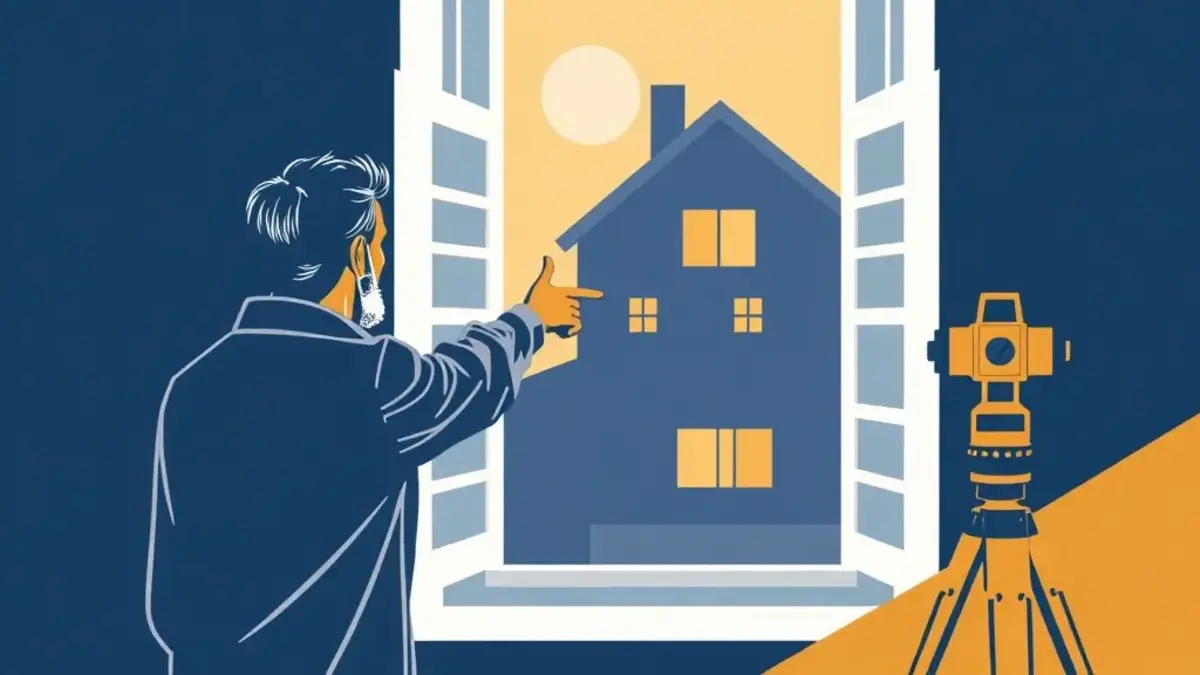
Imagine you are the owner of a house in Biscarrosse, with a terrace offering a magnificent view of the lake. For years, you have enjoyed this opening to the outdoors, without ever questioning it. But one day, your neighbour decides to build an extension that partially obstructs your perspective. You remind them that there is a servitude (a real right burdening one property for the benefit of another) that allows you to maintain this view. They reply: "Alright, but prove to me exactly what you can see!" Who is right?
This situation, much more common than one might think in residential areas of the South-West of France, raises a crucial question: when the extent of a right of view (servitude de vue) is contested, who must provide proof of what it exactly covers? Is it the person subject to the servitude (the owner of the servient tenement, the one whose property is burdened) who must demonstrate its limits, or the person who benefits from it (the owner of the dominant tenement) who must prove its scope?
The answer, given by the Cour de cassation in a judgment of 19 June 1973, is clear and has major practical implications for all property owners, tenants, and real estate professionals. It establishes a fundamental principle that, nearly 50 years later, continues to guide the courts in neighbourhood disputes. But what exactly does this change for your daily life?
The Facts: A Story as Common as Any
Let's go back to 1973. Yves de Labrusse is the owner of an apartment in Paris, but the story could just as well have taken place in Tarnos, in a residence with a view of the Adour river. His flat has a balcony that benefits from a right of view (servitude de vue) (the right to have openings overlooking the neighbouring property) over the adjacent property. For thirty years, without any issues, he enjoys this view.
But one day, the owner of the neighbouring property contests the extent of this servitude. They do not deny its existence—they acknowledge that there is indeed a right of view—but they contest its exact limits. In other words, they say: "Alright, you have a right to a view, but not to the one you claim to have!"
The conflict escalates and ends up before the courts. Yves de Labrusse, in his submissions (his written arguments presented to the court), insists that for thirty years, he and his predecessors have possessed this view continuously. He considers that this long possession should be sufficient to establish the extent of the servitude. But his neighbour maintains their objection: according to them, the proof of the exact extent has not been provided.
The case is first heard by the lower courts (the first instance and appeal courts), which must settle this dispute. They render a confirmatory judgment (a decision that confirms the previous judgment) that does not entirely rule in favour of Yves de Labrusse. Dissatisfied, he files an appeal (a recourse) before the Cour de cassation, the highest judicial court in France. It is here that the case takes a decisive turn for all French property owners.
The Court's Reasoning—Analysed
The Cour de cassation, in its judgment of 19 June 1973, establishes an essential principle. The judges first recall a fundamental rule of servitude law: when a servitude is contested in its extent, it is the owner of the dominant tenement (the one who benefits from the servitude) who bears the burden of proof (the obligation to prove what they assert).
In other words, if you benefit from a right of view (servitude de vue) and your neighbour contests its scope, it is up to you to prove exactly what this servitude allows you to see. You cannot simply say: "I have enjoyed this view for years, so it covers everything I see." The Court is very clear: possession for thirty years can establish the existence of the servitude, but not necessarily its precise extent.
In Yves de Labrusse's case, the Court considers that, since he contested the extent of the servitude while acknowledging its existence, it was up to Yves de Labrusse to prove that the disputed servitude truly had the scope he claimed. The lower courts were therefore right to require this proof from him.
This reasoning is based on general principles of evidence law, but also on the very nature of servitudes. A servitude is a burden that weighs on one property for the benefit of another. To protect the right of ownership (guaranteed by the Constitution), the courts require that limitations to this right be proven with certainty. If you claim that your neighbour must bear a limitation on their right to build or develop their land to preserve your view, you must be able to demonstrate precisely what this limitation consists of.
However, note: this is not a reversal of jurisprudence (a radical change in the courts' position), but rather a confirmation and clarification of an already existing principle. The Court simply recalls a rule that logically follows from the general distribution of the burden of proof in civil matters.
What This Means for You—Concretely
But what does this mean in practice, for you, as a property owner, tenant, or real estate professional? The implications are concrete and sometimes costly.
If you are a landlord (who rents out their property) in Biscarrosse and your tenant complains that a neighbouring construction obstructs their view, you will need to be able to prove the exact extent of the servitude before initiating legal proceedings. undefined, I have encountered cases where property owners thought they benefited from a panoramic view, whereas the servitude only covered a very restricted angle. Result: proceedings initiated wrongly, with legal and expert fees that could exceed €5,000.
If you are a purchaser of a property, this decision directly concerns you. Before buying a house "with an unobstructed view" in Tarnos, check not only the existence of a right of view (servitude de vue) but also its precise extent. A diligent notary will ask you to produce the titles (authentic deeds) that establish this extent. Otherwise, you risk discovering after the purchase that your "unobstructed view" is actually very limited, with a devaluation of your property that could reach 10 to 20%.
For co-owners, the question often arises in buildings with terraces or loggias. If a co-owner wants to modify their façade and you believe this infringes on your view, it is up to you to prove the extent of your right. Co-ownership regulations can sometimes specify these points, but they are often silent.
Finally, for real estate professionals (agents, developers), this decision requires increased vigilance. When you sell a property "benefiting from a right of view (servitude de vue)", you must be able to document this servitude precisely. Otherwise, you risk an action for latent defects (obligation to repair hidden defects of the sold property) from the disappointed purchaser.
How to react if you are in this situation? First step: gather all documents that could establish the extent of the servitude. Second step: consult a specialised lawyer before taking any action. The time limits for taking legal action are generally 5 years from becoming aware of the disturbance, but it is better not to wait.
Four Tips to Avoid This Type of Dispute
- Have a bailiff's report drawn up before any works or modifications by your neighbour. This authentic deed will precisely describe the state of the premises and can serve as evidence in case of a subsequent dispute over the extent of your view.
- Carefully keep all your property titles and notarial deeds. It is often in these documents that the extent of servitudes is specified. Digitise them to avoid any loss.
- When purchasing, insist on a specific clause in the preliminary agreement obliging the seller to produce all documents establishing the extent of the servitudes. Better yet: have these documents checked by a lawyer before the final signing.
- Regularly document your environment with dated photos. If you live in Biscarrosse with a view of the lake, take photos from different angles and in different seasons. These elements can serve as evidence of the extent of your view over the long term.
Deep Dive: Related Jurisprudence and Developments
The 1973 decision is part of a consistent line of jurisprudence from the courts. Already in 1956, the Cour de cassation had recalled that "the person who invokes a servitude must provide proof of it." But the 1973 judgment usefully specifies that this obligation of proof also concerns the extent of the servitude, not just its existence.
More recently, in a judgment of 6 July 2016, the Cour de cassation confirmed this orientation. It held that, even when a servitude results from a deed (a written document), it is up to the person invoking it to prove its extent if it is contested. This trend shows that the courts remain very demanding regarding proof of limitations to the right of ownership.
What few people know is that this jurisprudence also applies to rights of way (servitudes de passage), drainage of water (servitudes d'écoulement des eaux), or support (servitudes d'appui). Every time the extent of a servitude is contested, it is up to the person who benefits from it to prove precisely what it covers.
For the future, this trend should continue, or even strengthen with urban densification. In cities like Mont-de-Marsan where space is becoming scarce, neighbourhood disputes related to servitudes are likely to increase. The courts will therefore continue to require solid evidence before recognising the extent of a servitude.
In Practice: What to Do
1. If you are buying a property with a right of view (servitude de vue): Insist on the production of all documents establishing its extent. Have them checked by a professional. Insert a condition precedent clause in the preliminary agreement if these documents are not produced.
2. If your neighbour contests the extent of your servitude: Immediately gather all probative documents (notarial deeds, reports, old photos). Consult a lawyer before any contentious steps. Avoid direct conflictual exchanges that could worsen the situation.
3. If you are selling a property burdened by a servitude: Anticipate by gathering all documents establishing the extent of the servitude. Provide them to the purchaser and the notary. Explicitly mention this servitude and its extent in the preliminary agreement and the final deed of sale.
4. If you are a tenant and your view is obstructed: Immediately report the disturbance to your landlord. It is up to them to act, but you must provide them with all elements proving the extent of the view you had before the obstruction.
5. In case of judicial proceedings: Prepare to have to prove the extent of the servitude. A judicial expert assessment may be ordered, with costs shared or borne by the losing party. Allow at least 12 to 18 months for a complete procedure.
Do you find yourself in a similar situation? A first 30-minute consultation with Maître Zakine (€45) can save you months of proceedings—and often much more. Book an appointment →
Useful resources on cecile-zakine.fr
- servitude-droit-passage-avocat/" target="_blank" rel="noopener">right of way disputes in France: legal solutions
- property lawyer in Mont-de-Marsan
- vefa-retard-vefa-que-faire/" target="_blank" rel="noopener">VEFA delays in France: your legal options
