Reference decision: cc • No. 03-83.889 • 2004-05-04 • View the decision →
Imagine: you buy a bottle of wine labelled 'Château Belle-Épine', proudly placed on your dinner table in Arcachon. You pay €15, convinced you are tasting the fruit of a family terroir. But what if I told you that the grapes actually come from three different farms, miles away from the château? Would you be willing to pay the same price? This question, a company manager learned to his cost before the Court of Cassation. The issue? Compliance with the term 'château', a word that carries weight in the wine trade.
What does the law say? Since 1921, a decree prohibits calling a wine 'château' if the grapes do not come from the named estate. Yet some producers circumvent the rule by purchasing harvests externally. The decision of 4 May 2004 (No. 03-83.889) serves as a reminder that this practice is not merely an administrative infringement: it is a criminal offence of deception. The Bordeaux judges convicted the manager, and the Court of Cassation upheld their reasoning. Explanations.
For vineyard owners, négociants, or even simple enthusiasts, this ruling is a strong signal. It is not just a quarrel over labels: it is a matter of trust and value. So, how do you avoid falling into the trap? And what are the risks if you are on the other side? Let's dive into the facts.
The facts: a story as common as daily life
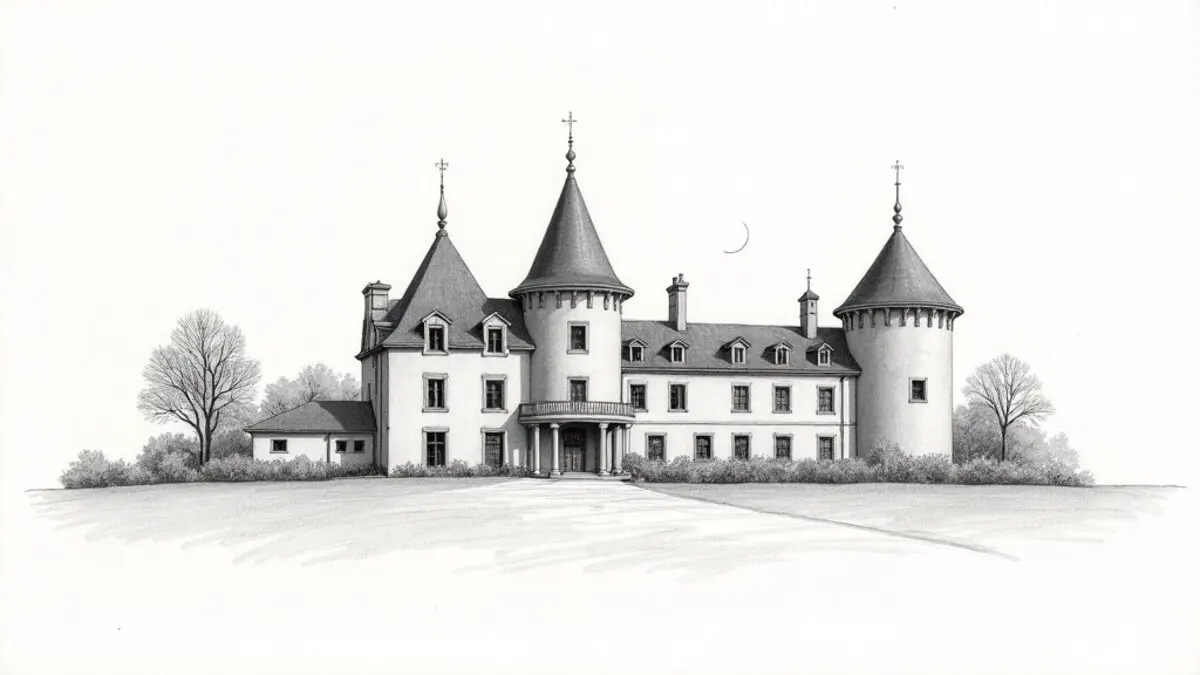
Mr Yves X, manager of a wine-growing company in the Bordeaux region, operated an estate with 12 hectares of vines. But the production was insufficient to fill his vats. To increase his volume, he purchased harvests from other producers in the area, then vinified the whole under the name 'Château de la Rivière'. On the label, the name of the château suggested that all the grapes came from his estate. However, under the decree of 19 August 1921 (Article 13.4°), the term 'château' is reserved for wines produced exclusively from the designated property.
The case was brought before the Criminal Court of Bordeaux. The manager was prosecuted for deception as to the substantial qualities of the product, an offence under Article L. 213-1 of the Consumer Code (now L. 441-1). At first instance, he was fined €15,000 and ordered to pay damages. He appealed. The Bordeaux Court of Appeal, on 20 May 2003, confirmed his guilt but reduced the fine to €10,000. Dissatisfied, Mr X appealed to the Court of Cassation.
Before the Court of Cassation, he raised two arguments. First, he argued that the 1921 decree had a different purpose from the offence of deception: one regulates labelling, the other punishes lying. Second, he contested the mental element of the offence, claiming he had no intention to deceive the consumer. But the Court was not convinced. It held that the Court of Appeal had sufficiently established the fraudulent intent, particularly because the manager knew that the purchased grapes did not come from his estate. The appeal was dismissed.
The reasoning of the court — dissected
The Court of Cassation had to decide a delicate legal question: can compliance with a specific regulation (the 1921 decree) in itself constitute deception within the meaning of the Consumer Code? The answer is yes, and here is why.
Article L. 213-1 of the Consumer Code (now L. 441-1) punishes anyone who deceives the other party as to the nature, origin, or substantial qualities of a product. Here, the designation 'château' is a substantial quality: it guarantees to the consumer that the wine comes from a single estate. By using this term for a wine made from purchased grapes, the manager lied about an essential characteristic. The 1921 decree, for its part, specifically prohibits the use of the word 'château' outside the prescribed conditions. For the Court, these two texts are not in conflict: they pursue the same goal – protecting fair dealing – but at different levels. One is a professional standard, the other a general criminal penalty.
The judges also examined the intention. The manager pleaded good faith, arguing that he had no intention to deceive. But the Court of Appeal noted that, as an informed professional, he could not have been unaware of the rule. Moreover, he had himself explained in his statements that he had made purchases of grapes to supplement his production. This finding suffices to establish the mental element: the lie was conscious, even if not malicious. The Court of Cassation therefore upheld this reasoning, recalling that ignorance of the law is no excuse for a professional.
This decision confirms settled case law: the abusive use of a regulated designation (such as 'château', 'grand cru', or 'AOC') can be criminally sanctioned. It fits into a line of consumer protection where trust in the label is paramount.
What this means for you — practically
Are you a vineyard owner in Saint-Médard-en-Jalles? If you sell wine under a 'château' designation, you must be able to prove that all the grapes come from your plots. A check by the DGCCRF (Directorate General for Competition, Consumer Affairs and Fraud Control) could result in a fine of up to €300,000 and a prison sentence of two years (Article L. 441-1 of the Consumer Code). Imagine: you buy 5 tonnes of grapes from a neighbour to cope with a poor harvest. If you vinify them and sell them under your château name, you are in breach. Even if you blend your production with his, the label must state the exact origin.
For consumers, this ruling is a protection. If you buy a 'château' wine in Arcachon and discover the grapes come from elsewhere, you can file a complaint. You could obtain damages, for example a refund of the purchase price plus 20% (as in this case where the court awarded €2,500 to a buyer).
Négociants and brokers must also be vigilant. If you market a wine knowing its dubious origin, you are an accomplice to deception. A client told me she bought 300 bottles for a wedding: the label mentioned a 'Château du Soleil', but the wine came from a cooperative. She was able to obtain cancellation of the sale and €1,500 in damages. Do not underestimate the impact of a simple label.
Four tips to avoid this type of dispute
- Check your supplies: If you buy grapes or must from outside, ensure the label does not mention 'château' or any other designation linked solely to your estate. If in doubt, have a contract drafted specifying the origin and permitted designations.
- Keep documentary evidence: Keep purchase invoices, harvest declarations, and vinification records. In the event of a check, you must be able to trace each batch to the plot. A simple Excel spreadsheet may suffice, but approved software is better.
- Train yourself on regulations: The 1921 decree has been amended several times, and EU Regulation (EU) No 1308/2013 imposes strict rules on PDOs/PGIs. Take continuing training, such as those offered by the Chamber of Agriculture of the Gironde.
- Consult a lawyer before launching a new cuvée: If you are unsure about a designation, prior legal advice can save you from prosecution. For example, the 'Château' designation requires the estate to have a minimum area and a built château. A 30-minute consultation with a specialist may cost you €45, but save you thousands of euros in fines.
Further reading: related case law and developments
This decision fits into a line of case law protecting the 'château' designation. Already in 1999, the Court of Cassation (No. 98-80.674) convicted a producer who used the term 'château' for a wine from several non-contiguous plots. More recently, in 2018, the Bordeaux Court of Appeal cancelled the sale of a counterfeit 'Château Haut-Brion', with record damages (€300,000). The trend is clear: judges are increasingly severe with designation frauds, as they harm the reputation of AOCs and deceive consumers.
However, note a subtlety: the offence of deception requires a mental element. A good faith producer who genuinely believed that purchasing grapes was authorised could escape criminal penalty. But proving good faith is difficult: courts consider that any professional must know the rules of his trade. The future? With the growth of online sales, checks are multiplying. A winemaker from Saint-Médard-en-Jalles told me he had been checked twice in three years. Better to be irreproachable.
Checklist before acting
- Am I authorised to use the term 'château'? Check that your estate includes a château (building) and that the vines are adjacent or in close proximity. The 1921 decree also requires that the harvest comes exclusively from these plots.
- What if I have already purchased grapes from outside? Do not blend these grapes with your main harvest if you want to keep the 'château' designation. Vinify them separately and sell them under another designation (e.g. 'Vin de France' or 'generic Bordeaux').
- What are the risks in case of a check? Criminal fine up to €300,000, imprisonment up to 2 years, confiscation of bottles, disqualification from managing a business. Not to mention civil damages to aggrieved consumers.
- How can I prove my good faith? Keep all documents: purchase contract, seller's attestation, grape analysis. If in doubt, ask for a ruling from the INAO (National Institute of Origin and Quality).
- Can I challenge a fine? Yes, before the Criminal Court. But case law is unfavourable: it is better to negotiate a criminal composition (reduced fine without admission of guilt) if the offence is minor.
Are you in a similar situation? A first 30-minute consultation with Maître Zakine (€45) can save you months of proceedings — and often much more. Book an appointment →
📌 Does this apply to your situation? Maître Cécile Zakine, French real estate lawyer, practises throughout France.
→ Prendre rendez-vous pour une consultation |
→ Browse all our legal articles
