Leading case: cc • No. 02-16.303 • 2003-10-23 • View the decision →
Imagine: you have just bought a lovely house in Villeneuve-lès-Avignon, with a large garden. To improve your comfort, you install an electrical transformer. A few months later, your neighbour complains: the humming noise keeps him awake. You reply that you are at home, on your own property. Does he really have any right to claim anything from you?
This question is asked by thousands of property owners every year. Can you do whatever you want on your own land? The answer is no, and the French Supreme Court (Cour de cassation) reminds us of this in a landmark decision of 23 October 2003. The right of ownership, although sacred, has its limits: it must not cause a neighbourhood disturbance to others. And this principle prevails even over the European Convention on Human Rights.
In this article, I will explain what this decision concretely changes for you, whether you are a property owner, tenant or real estate professional. No jargon, just concrete examples and practical advice to avoid ending up in court.
The facts: a story like many others
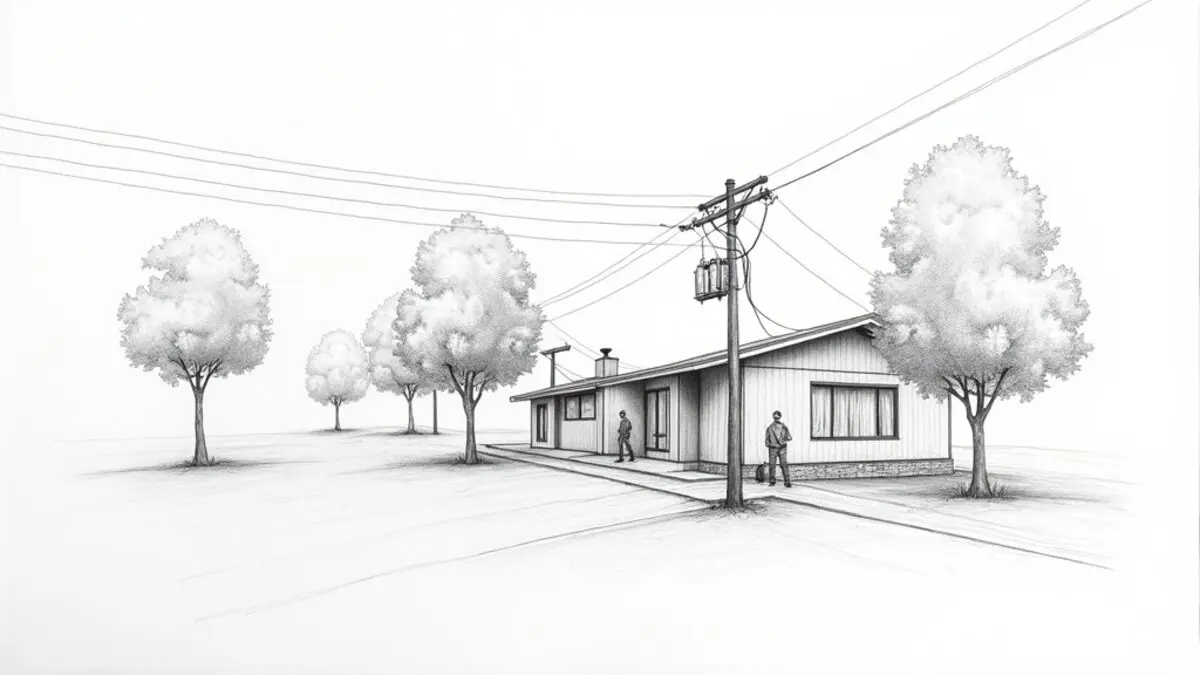
Mr X owns a plot of land in Villeneuve-lès-Avignon. To supply his house with electricity, he has a transformer installed on his property, on the boundary line. The problem? This transformer emits a constant humming noise, particularly annoying for his neighbour, Mr Y, whose bedroom overlooks the installation. Mr Y puts up with the noise for several months, but eventually takes the matter to court.
At first instance, the court orders Mr X to pay damages to Mr Y for neighbourhood disturbance. Mr X appeals: according to him, he has committed no fault. He installed the transformer in compliance with regulations, on his own land. Why should he pay? The Court of Appeal upholds the decision, and Mr X appeals to the Supreme Court.
Before the Supreme Court, Mr X invokes his right of ownership (Article 544 of the Civil Code) and the European Convention on Human Rights (Article 1 of Protocol 1). He argues that the disturbance is not serious enough to justify a restriction of his right. But the Court rejects his argument: the right of ownership is not absolute. It is limited by the principle that no one may cause a neighbourhood disturbance to another. And this limitation is not disproportionate under the Convention.
What is striking in this case is that Mr X had not committed any intentional fault. He had simply exercised his right as an owner. Yet he was ordered to pay. Why? Because neighbourhood disturbance is a strict liability: it is sufficient that the disturbance is abnormal (exceeding the ordinary inconveniences of neighbourhood) for the owner to be liable for damages.
The reasoning of the court — explained
The Supreme Court relies on two fundamental texts. First, Article 544 of the Civil Code, which defines the right of ownership as "the right to enjoy and dispose of things in the most absolute manner, provided that no use is made of them which is prohibited by laws or regulations." Second, Article 1240 of the Civil Code (formerly Article 1382), which establishes the principle of civil liability: "Any act of a person which causes damage to another obliges the person by whose fault it occurred to make reparation." But note: in matters of neighbourhood disturbance, case law has created a special regime where fault is not required. It is sufficient that the disturbance is abnormal.
In this decision, the Court clarifies that the right of ownership, protected by Article 1 of Protocol 1 of the European Convention on Human Rights, is not absolute. It may be limited to protect the rights of others, in particular the right to respect for private life and home (Article 8 of the Convention). This limitation is not disproportionate: the Convention itself permits restrictions necessary for the protection of the rights of others.
The Court therefore dismisses Mr X's appeal. It confirms that the installation of a transformer, even on one's own land, may constitute an abnormal neighbourhood disturbance if it causes excessive nuisance (noise, vibrations, etc.). And this is the case even if the owner has committed no fault. This is a classic application of the theory of abnormal neighbourhood disturbances, but with an important confirmation: compatibility with the European Convention.
Note that the outcome could have been different if the disturbance had been considered normal (for example, the noise of a lawnmower on a Sunday morning). But here, the constant humming of a transformer exceeds the ordinary inconveniences of neighbourhood. The trial judges (the judges who assess the facts) have definitively assessed this abnormal character, and the Supreme Court does not challenge this assessment.
What this changes for you — concretely
For landlord owners: if your tenant complains of nuisances caused by a neighbour, you can take legal action for neighbourhood disturbance. Conversely, if your tenant installs a noisy heat pump, it is you, as owner, who will be sued by the neighbour. You are responsible for disturbances caused by your property, even if you are not the direct perpetrator.
For tenants: you can take direct action against the neighbour who causes a disturbance, without going through your landlord. But be careful: if the disturbance comes from an electrical installation or construction, the owner of the land is responsible, not the tenant. So you must identify the right person.
For buyers: before buying a property in Uzès, find out about potential nuisances. A transformer, a mobile phone mast, a noisy workshop nearby can be sources of disturbance. You could, after the purchase, try to take action against the neighbour, but prevention is better. Ask for a clause in the sale deed or negotiate the price.
Example with figures: in Villeneuve-lès-Avignon, an owner was ordered to pay €5,000 in damages for the noise of a transformer, plus €1,500 for legal costs. This does not include the cost of work to soundproof the installation (often several thousand euros). If you are in this situation, you must: have the disturbance recorded by a bailiff (about €200), consult a specialised lawyer, and possibly take the matter to the judicial court. Timeframes: allow 6 to 12 months for a first instance, longer on appeal.
For co-owners: if the disturbance comes from a common part (boiler room, lift, etc.), the co-ownership association is responsible. You must formally request it to stop the nuisance.
Four tips to avoid this type of dispute
- Before installing potentially noisy equipment (transformer, heat pump, air conditioning), check the co-ownership regulations or the local urban development plan (PLU) of your municipality. Some areas require minimum distances from boundary lines. In Uzès, for example, the PLU may require a setback of 3 metres for an outdoor electrical installation.
- Have a preliminary acoustic study carried out if the equipment is likely to generate continuous noise. A specialised engineering firm can measure the sound level and advise you on the optimal location. Cost: €500 to €1,500, but this can save you from a €10,000 judgment.
- Talk to your neighbours before starting work. Explain your project, listen to their possible concerns. Sometimes, simply moving the installation a few metres can solve the problem. An amicable agreement, even informal, is better than a lawsuit.
- If you are a victim of a disturbance, act quickly. Have the nuisances recorded by a bailiff (bailiff's report) and send a registered letter with acknowledgement of receipt to your neighbour asking him to stop the disturbance. If nothing changes, take the matter to court within 5 years from the start of the nuisances (limitation period for neighbourhood disturbance).
Further information: related case law and developments
This 2003 decision fits into a consistent line of Supreme Court rulings. As early as 1971 (Cass. civ. 3e, 4 February 1971), the Court had laid down the principle that no one may cause an abnormal neighbourhood disturbance to another, without it being necessary to prove fault. The 2003 decision merely confirms this rule, by testing it against the European Convention.
Since then, case law has clarified several points. For example, in a decision of 24 November 2016 (No. 15-25.637), the Court ruled that an abnormal neighbourhood disturbance may exist even if the nuisance is temporary (e.g., construction work lasting several months). In another decision of 12 July 2018 (No. 17-22.899), it extended this liability to agricultural activities: a farm may be ordered to pay for excessive odours, even if it complies with regulations.
The trend is therefore towards increased protection of victims of nuisances, whether noise, smell or visual. Courts do not hesitate to order owners to pay for disturbances that, twenty years ago, would have been considered tolerable. In the future, we can expect judges to be increasingly attentive to environmental nuisances (electromagnetic fields, light pollution, etc.).
What you absolutely must remember
FAQ:
- Can I do whatever I want on my land? No, your right of ownership is limited by your neighbours' right not to suffer abnormal disturbances.
- What should I do if my neighbour installs a noisy transformer? Have the noise recorded by a bailiff, then send him a formal notice. If unsuccessful, take the matter to court. You can obtain damages and an order to stop the nuisance.
- How long do I have to take action? You have 5 years from the start of the nuisances to take legal action. After this period, your claim is time-barred.
- What is the cost of legal action? Allow at least €1,500 in lawyer's fees for a simple procedure, plus bailiff's costs (€200) and possibly expert fees (€1,000 to €3,000). But if you win, these costs may be borne by your neighbour.
- Can I be ordered to pay even if I have committed no fault? Yes, liability for abnormal neighbourhood disturbance is strict liability. It is sufficient that the nuisance is excessive.
Are you in a similar situation? A first 30-minute consultation with Maître Zakine (€45) can save you months of proceedings — and often much more. Book an appointment →
📌 Does this apply to your situation? Maître Cécile Zakine, French real estate lawyer, practises throughout France.
→ Prendre rendez-vous pour une consultation |
→ Browse all our legal articles
