Reference Decision: cc • No. 93-18.036 • 1995-11-29 • View the decision →
Imagine: you have just acquired a lovely country house in Onet-le-Château, with an open view of the hills. You hoped to spend your weekends there in peace. But one fine day, your neighbour decides to turn over his land and create a bank of earth that now obscures your horizon and makes the living room damp. What can you do? This situation, more common than one might think, was decided by the Court of Cassation in 1995. The judgment sets out an essential principle: even in the countryside, one cannot impunely modify the environment of a house to the point of affecting its habitability.
The Facts: A Story Like Many Others
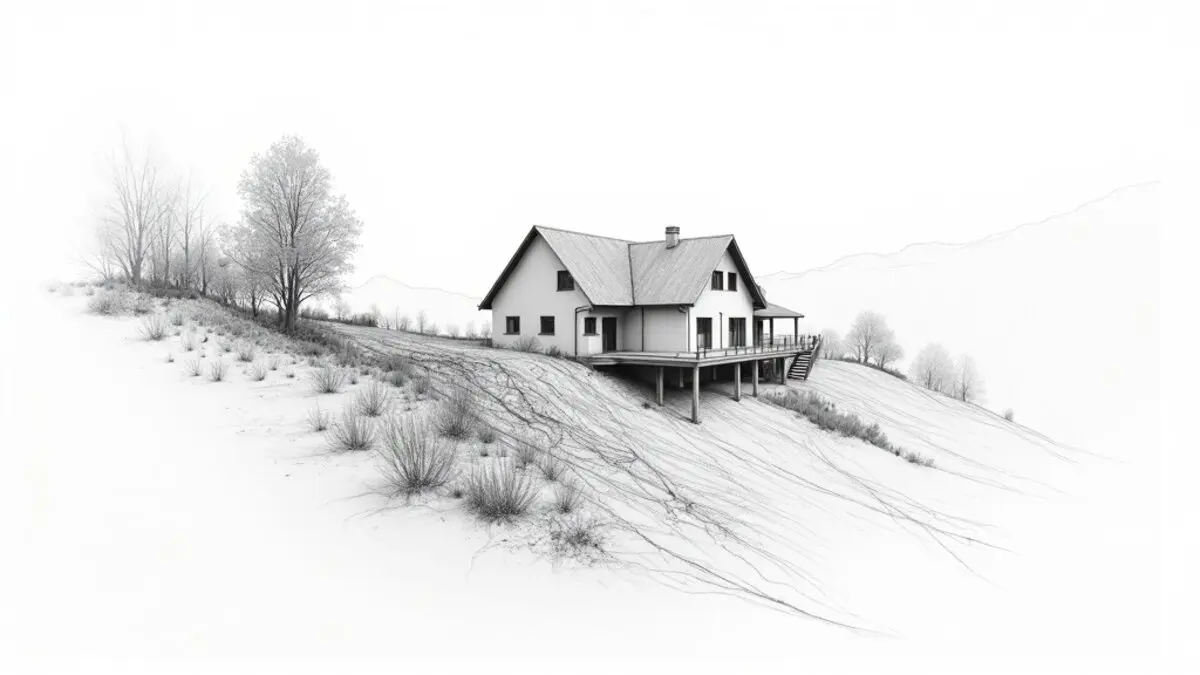
Mr and Mrs X are owners of a dwelling house located in the countryside, in Aveyron. This second home offers them a peaceful setting, with a view of the surrounding fields. Their neighbour, Mr Y, decides to modify his land: he turns over the soil and builds a bank running along the property of the X couple. Result: the bank, of significant height, obstructs the view and, above all, alters the flow of rainwater. Dampness sets in the house, making certain rooms almost uninhabitable. The X couple bring an action for abnormal neighbourhood disturbance. The court of first instance rules in their favour, but the Court of Appeal of Toulouse reverses this judgment on 26 May 1993. For the appeal judges, the aesthetic impairment of the environment is not a disturbance falling under private law liability. The X couple then appeal to the Court of Cassation. The Court of Cassation quashes the appeal judgment and remits the case. It affirms that a bank may constitute an abnormal disturbance as long as it affects the conditions of habitability, regardless of whether the prejudice is aesthetic or not.
The Reasoning of the Court — Analysed
The Court of Cassation relies on the theory of abnormal neighbourhood disturbance, based on Article 1240 of the Civil Code (formerly 1382), which provides that "any act of man, which causes damage to another, obliges the person by whose fault it occurred to repair it." In matters of neighbourhood, this liability is engaged without the need to prove fault: it suffices that the disturbance exceeds the normal inconveniences of neighbourhood. Here, the Court of Appeal had considered that only aesthetic prejudice was invoked, and that it did not fall under private law. But the Court of Cassation censures it: it recalls that the disturbance must be assessed concretely. The trial judges had sovereignly found that the bank modified the environment of the house and harmed its habitability (dampness, loss of view). Yet these elements constituted a direct, current and persistent nuisance. By excluding any disturbance on the pretext that it was an aesthetic issue, the Court of Appeal violated the rule of law. The High Court thus confirms that the nature of the disturbance (aesthetic, material, sanitary) matters little as long as it exceeds the measure of ordinary neighbourhood obligations. This decision is part of consistent case law: abnormal neighbourhood disturbance is a broad notion that protects the owner against any substantial impairment of his peaceful enjoyment.
What This Changes for You — Practically
This decision has direct implications for any owner, whether primary or secondary resident. If you suffer a modification of the neighbouring land (bank, raising, excavation) that degrades your home, you can take action. For example, in Decazeville, an owner whose garden was flooded after his neighbour raised his plot obtained €8,000 in damages and restoration of the premises. For landlords: if your tenant complains of dampness due to a neighbouring bank, you are obliged to provide him with decent housing. You can seek recourse against the author of the disturbance. For tenants: you can request a rent reduction or termination of the lease if the dwelling becomes unfit for habitation. Caution: you must act within 5 years from the appearance of the disturbance (limitation period). Do not wait for the situation to worsen.
Four Tips to Avoid This Type of Dispute
- Before buying: have a soil study and precise boundary survey carried out. Inquire about neighbouring development projects (local urban plan, building permits).
- If you are the neighbour: before modifying your land, inform your neighbours and, if possible, obtain their written agreement. A simple prior declaration of works may suffice to formalise the operation.
- In case of disturbance: compile a file of evidence (photos, videos, bailiff's report, witness statements). Have the dampness measured by an expert. Evidence is crucial.
- Act quickly: send a registered letter with acknowledgement of receipt to the author of the disturbance to attempt an amicable resolution. If nothing works, seize the judicial court within 5 years.
Further Reading: Related Case Law and Developments
This 1995 decision is part of a line of judgments that progressively extend the notion of neighbourhood disturbance. For example, in a judgment of 3 March 2016 (No. 15-10.783), the Court of Cassation held that the installation of a relay antenna too close to a dwelling could constitute an abnormal disturbance. Similarly, noise, odour or visual nuisances are now regularly sanctioned. The trend is towards increased protection of the owner's peaceful enjoyment, even in rural areas. The 1995 judgment thus paved the way for a broad interpretation of disturbance, beyond direct material damage alone.
Frequently Asked Questions
- Can I demand the removal of the bank? Yes, if the disturbance is abnormal. The judge may order restoration of the premises under penalty.
- What are the time limits for action? You have 5 years from the manifestation of the disturbance. After this period, the action is time-barred.
- Do I have to prove fault by the neighbour? No, liability for neighbourhood disturbance is no-fault. It suffices to demonstrate the abnormality of the prejudice.
- What if the disturbance comes from an authorised construction? The building permit does not exempt from liability. You can act even if the works are legal under planning law.
- Can I obtain damages? Yes, for loss of enjoyment, loss of property value, and costs of restoration.
Do you find yourself in a similar situation? A first 30-minute consultation with Maître Zakine (€45) can save you months of proceedings — and often much more. Book an appointment →
📌 Does this apply to your situation? Maître Cécile Zakine, French real estate lawyer, practises throughout France.
→ Prendre rendez-vous pour une consultation |
→ Browse all our legal articles
