Reference Decision: French Supreme Court • No. 74-11.576 • 1976-03-05 • View decision →
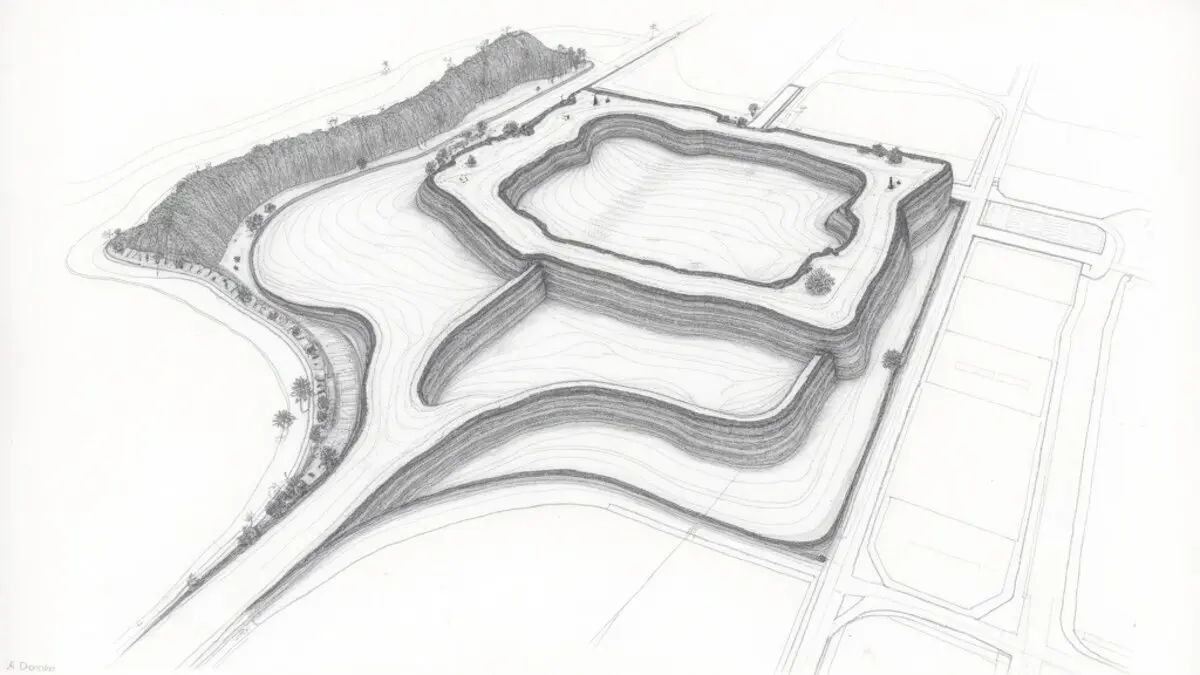
Imagine: you live in Trélazé, in Maine-et-Loire. For years, a stone quarry, with its crushing plant, has been operating a few hundred metres from your house. Noise, vibrations, dust make your daily life unbearable. You wonder: 'Can I obtain the closure of this operation?' This is exactly the question the French Supreme Court had to decide in 1976.
This decision, rendered in a case opposing a neighbour, Mr Julliard, to the Société des Carrières de Provence et de Ducru, established a fundamental principle: the judge may order the closure of an industrial operation if it causes abnormal neighbourhood disturbances. But attention, the closure must target the operation as a whole, not just part of it.
If you suffer nuisances – noise, dust, odours – from a neighbouring activity, this ruling concerns you. It reminds that the right to tranquility prevails over economic activity when the disturbances exceed the normal inconveniences of neighbourhood.
The Facts: A Story Like Many Others
Mr Julliard is a property owner in Trélazé. For several years, he has been suffering from the nuisances of the neighbouring quarry, operated by the Société des Carrières de Provence et de Ducru. The activity includes stone extraction and a crushing plant. The noise, vibrations and dust are such that his daily life becomes a nightmare. He can no longer open his windows, his garden is covered in dust, and his sleep is disturbed.
Mr Julliard sues the company, claiming damages and the closure of the operation. The court rules in his favour: it recognises the existence of abnormal neighbourhood disturbances and orders the company to compensate the harm, while ordering the closure of the quarry. The company appeals, but the Court of Appeal upholds the judgment. It finds that the disturbances are indeed abnormal and that closure is necessary.
The company appeals to the Supreme Court. The Supreme Court partially quashes the judgment: it annuls the closure of the operation, but leaves in place the award of damages. The case is remanded to another Court of Appeal. This one, interpreting the quashing restrictively, finds that closure is no longer at issue. Mr Julliard appeals again to the Supreme Court, arguing that the remand court misunderstood the scope of its referral.
The Reasoning of the Court — Analysed
The French Supreme Court, in its decision of 5 March 1976, recalls an essential procedural principle: when a quashing is pronounced 'without restriction' on a head of decision, the remand court must examine that head in its entirety. In this case, the first quashing had annulled the provision ordering the closure of the operation, without limiting this annulment to the crushing plant. However, the remand court considered that the closure only concerned the crushing plant, not the entire quarry. The Supreme Court censures this interpretation: the quashing was general, covering the operation as a whole.
On the merits, the decision confirms that abnormal neighbourhood disturbances can justify the closure of an industrial activity. The legal basis is Article 1240 of the Civil Code (formerly 1382), which imposes liability for damage caused by one's fault. Here, the fault lies in exceeding the normal inconveniences of neighbourhood. The operating company could not invoke its right to operate to exonerate itself from liability.
This decision is part of a consistent body of case law: every owner or operator must ensure that they do not cause disturbances to their neighbours exceeding ordinary limits. The particularity here is that closure was ordered, a radical measure but justified by the extent of the nuisances.
What This Changes for You — Practically
If you own property near a noisy or polluting activity, know that you can claim not only damages but also the cessation of the activity. Concretely, you need to gather evidence of the disturbances: bailiff's reports, witness statements, noise measurements (decibels).
Take a concrete example: in Trélazé, a resident of a quarry suffers noise levels of 75 dB during the day (regulatory threshold often 60 dB). He can claim €5,000 in damages for loss of enjoyment, and the closure of the operation if the disturbances are proven.
If you are an operator, this decision reminds you that your activity is not an absolute right. You must take measures to limit nuisances (soundproofing, reduced hours, etc.). Failing this, you risk a judicial closure, not to mention the compensation to be paid.
For tenants, the principle is the same: you can take action against the owner of the nuisance-causing activity, or against your own landlord if they do nothing to stop the disturbances (obligation of peaceful enjoyment).
Four Tips to Avoid This Type of Dispute
- Before buying or renting a property, inquire about neighbouring activities. Consult the local urban plan, ask the town hall, and visit the neighbourhood at different times (day, night, weekend). In Trélazé, for example, check for quarries or factories.
- If you are an operator, carry out an acoustic and environmental impact study. Install equipment to reduce nuisances (noise barriers, dust filters). Respect regulatory hours.
- In case of disturbances, act quickly. Have the nuisances recorded by a bailiff as soon as they appear. The longer you wait, the harder it will be to prove the duration and extent of the disturbances.
- First try an amicable solution. Send a registered letter to the operator, then engage in mediation. Legal costs are high: expect €3,000 to €10,000 for proceedings, with no guarantee of success.
Further Reading: Related Case Law and Developments
This 1976 decision has been confirmed by many subsequent rulings. For example, the French Supreme Court ordered the closure of a pig farm causing unbearable odours (Civ. 3e, 1995). More recently, in 2020, it condemned a noisy neighbour to cease musical activities after 10pm. The trend is constant: protecting residents' tranquility is a priority.
However, note: closure is an exceptional measure. The judge checks that the disturbances are 'abnormal', i.e., they exceed the ordinary inconveniences of neighbourhood. A mere temporary annoyance is not enough. Moreover, the principle of proportionality applies: if the operator can take corrective measures, the judge will prefer to impose them rather than an outright closure.
Frequently Asked Questions
Can I obtain the closure of an activity that bothers me? Yes, if you prove that the disturbances are abnormal (excessive noise, dust, odours) and that no technical solution can reduce them. Closure is a radical measure, but possible.
What are the time limits for taking action? You have 5 years from the manifestation of the disturbance to take legal action (civil prescription). But act quickly: the longer the disturbance lasts, the more damage you accumulate.
How much does a procedure cost? Expect €2,000 to €5,000 in lawyer's fees for a first instance, plus expert costs (bailiff, acoustic engineer). The damages obtained can cover these costs.
What if the operator is a tenant company? You can take action against the tenant (operator) and against the property owner, who has an obligation not to disturb the neighbours' enjoyment.
Can I take action as a tenant? Yes, you are entitled to peaceful enjoyment of your home. You can claim damages from your landlord or directly from the person causing the disturbances.
Are you in a similar situation? A first 30-minute consultation with Maître Zakine (€45) can save you months of proceedings – and often much more. Book an appointment →
📌 Does this apply to your situation? Maître Cécile Zakine, French real estate lawyer, practises throughout France.
→ Prendre rendez-vous pour une consultation |
→ Browse all our legal articles
