Reference decision: cc • No. 70-12.397 • 1971-11-25 • View decision →
Imagine: you are a winegrower in Saint-André-les-Vergers, and each year, at harvest time, a fine white film covers your grape bunches. This powder is cement dust escaping from the chimney of the neighbouring factory. Your grapes lose their appetising appearance, the leaves turn yellow, and your crop is devalued. What can you do? The factory owner replies that he has installed a state-of-the-art dust extraction system. Is that a sufficient excuse?
This question is often asked by a property owner or tenant faced with industrial nuisances: when does a disturbance become abnormal and give rise to a right to compensation? The decision of the Court of Cassation of 25 November 1971 (No. 70-12.397) provides a clear answer: mere compliance with technical standards is not enough to exonerate the responsible party. Even with sophisticated equipment, if the damage exceeds the normal inconveniences of neighbourhood, compensation is due.
This case, emblematic of the law on abnormal neighbourhood disturbances (since enshrined by judge-made law), reminds us that tolerance between neighbours has its limits. And that the courts, in Troyes as elsewhere, protect victims of excessive nuisances, whether dust, noise or odours. Let us analyse this decision and its consequences for you.
The facts: a story that happens every day
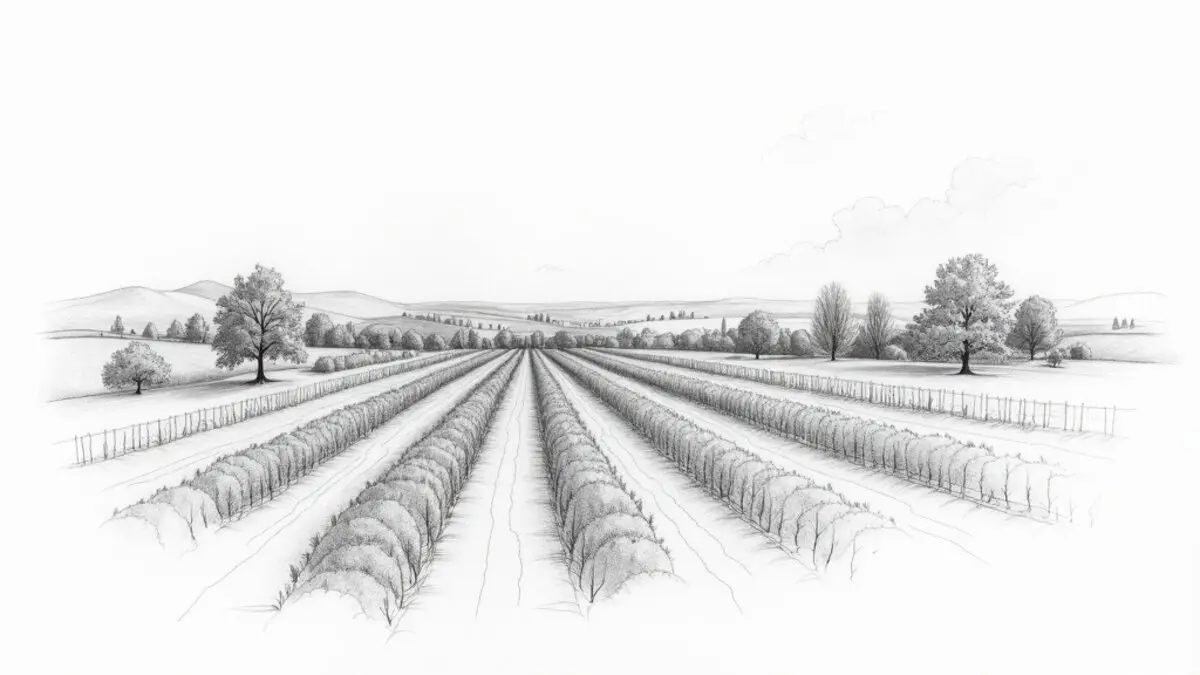
The case begins in a wine-growing area near Troyes, not far from Bar-sur-Seine. A company owning a cement works operates its factory, whose chimney emits dust. These fine particles settle on the neighbouring vineyards, forming a white film on the bunches and leaves. The winegrowers, owners of the plots, notice that their grapes are less attractive, and therefore sell for less. In addition, the chlorophyll function of the leaves (i.e., photosynthesis, essential for plant growth) is impaired, reducing yield.
Fed up, several winegrowers sue the cement company before the Tribunal de grande instance of Troyes. They claim damages for abnormal neighbourhood disturbance. The company defends itself by arguing that it has equipped its factory with a state-of-the-art dust extraction system, in line with the best available techniques. According to it, it has therefore done everything possible to limit the nuisance.
The Paris Court of Appeal (as the case was heard there on appeal) rules in favour of the winegrowers. It orders the company to compensate the loss. The company appeals to the Court of Cassation. Before the Court of Cassation, it argues that the lower courts did not establish the existence of disturbances exceeding the normal inconveniences of neighbourhood. It contends that its installations were efficient and that the dust emitted was within regulatory limits.
The Court of Cassation dismisses the appeal. It considers that the Court of Appeal legally justified its decision by noting that the white film harmed the presentation of the fruit and impaired the chlorophyll function of the leaves, and that these disturbances exceeded the normal inconveniences of neighbourhood. It does not matter that the factory was equipped with a dust extractor: the damage exists and must be compensated.
The reasoning of the court — dissected
The heart of the reasoning lies in the characterisation of "abnormal neighbourhood disturbance". This concept, although not written in the Civil Code, is now firmly anchored in case law. It is based on Article 1240 of the Civil Code (formerly 1382), which obliges any person to compensate damage caused by his fault. But here, there is no fault: the company did not act with intent to harm. Abnormal disturbance is a no-fault liability, based on the principle of equality of citizens before public burdens: he who causes to another a disturbance exceeding the normal inconveniences of neighbourhood must compensate, even if he has committed no fault.
The Court of Appeal found three essential elements:
- Material damage: the white film on the grapes and leaves, which harms the presentation of the fruit (thus its market value) and the chlorophyll function (thus the health of the vines).
- A disturbance exceeding the norm: the judges considered that these inconveniences went beyond what a neighbour must tolerate. It is not a mere inconvenience; it is an economic and biological harm.
- A causal link: the dust came from the factory chimney, as established by expert reports.
The Court of Cassation validates this reasoning. It adds that the company cannot exonerate itself by invoking the quality of its dust extraction equipment. Why? Because abnormal disturbance is assessed objectively: only the result matters, not the efforts of the author. If the neighbour suffers abnormal damage, he must be compensated, whether the factory complies with standards or not.
This decision is important because it confirms that liability for abnormal neighbourhood disturbances is a strict liability, without the need to prove fault. It protects victims of industrial nuisances, but also of any activity (commercial, artisanal, agricultural) that excessively encroaches on another's peace.
What this changes for you — concretely
Whether you are a property owner, tenant, or farmer, this decision has direct implications.
For landlords or occupiers: If you suffer nuisances (noise, dust, odours, vibrations) from a neighbour, you can claim compensation as soon as these nuisances exceed what is normally acceptable in the neighbourhood. For example, a butcher who installs a noisy air extractor in a residential building, or a joinery workshop whose shavings invade your garden. You do not have to prove that the neighbour did a bad job: it is enough to demonstrate the disturbance and its abnormal character. Compensation may cover the loss of value of your property, cleaning costs, loss of crop, etc.
For tenants: You are also protected. If your neighbour on the landing makes incessant noise, or if a commercial activity on the ground floor generates unbearable odours, you can act directly against the author of the disturbance. You are not obliged to go through your landlord. In practice, a tenant in Bar-sur-Seine obtained €3,000 in damages for noise nuisance due to a defective ventilation system from a neighbouring restaurant.
For buyers: When you buy a property, inform yourself about neighbouring activities. If you buy a house near a quarry or factory, you may be considered to have accepted the normal inconveniences (but not the abnormal ones). Case law distinguishes according to whether the buyer was aware of the disturbance or not. If the activity pre-existed, you cannot complain about what is normal, but you can still act for the abnormal.
For co-owners: Disturbances between co-owners (noise, vibrations, encroachments) also fall under this theory. The management company may be held liable if the leasehold regulations are insufficient. A co-owner who installs a noisy air conditioning unit on his terrace may be forced to move it, even if it complies with acoustic standards.
In terms of time limits, the action for liability for abnormal neighbourhood disturbance is subject to a 5-year limitation period from the day the right-holder knew or should have known the facts allowing him to exercise it (Article 2224 of the Civil Code). Caution: if the disturbance is continuous (noise, dust), the period runs at each manifestation of the damage, but you must act quickly to avoid limitation.
Four tips to avoid this type of dispute
- Document the nuisances as soon as they appear. Take photos, videos, note the dates, times, intensity. Have them recorded by a bailiff if necessary. The more evidence you have, the stronger your claim.
- First try an amicable solution. Before starting proceedings, send a registered letter with acknowledgement of receipt to the author of the disturbance, describing the facts and requesting cessation or compensation. Often, an explanation suffices to resolve the problem. Keep a copy of this letter.
- Consult a specialised lawyer before acting. A property law lawyer will help you assess the abnormal nature of the disturbance, estimate the loss and choose the most appropriate route (interim proceedings, full trial, mediation). The cost of a consultation is often much less than that of a poorly conducted trial.
- Check insurance. Your home insurance may cover the costs of defence or legal action. The insurance of the author of the disturbance (public liability) may also cover compensation. Do not hesitate to report the incident to your insurer.
Further reading: related case law and developments
The 1971 decision is part of a consistent line of the Court of Cassation. As early as 1915, in a decision "Coquerel", the Court laid down the principle that liability for neighbourhood disturbance is independent of any fault. Later, in a decision of 27 November 1968, it held that the owners of a dog kennel could be condemned for excessive barking, even if they complied with planning regulations.
Since 1971, case law has expanded the scope: olfactory disturbances (decision of 4 June 1997, No. 95-13.931), visual disturbances (construction of a building blocking the view), electromagnetic disturbances (mobile phone masts). The courts are increasingly sensitive to environmental nuisances. The trend is towards greater protection of victims, with higher compensation.
For the future, the recognition of "environmental liability" (Law of 1 August 2008) could strengthen these mechanisms. But the basis remains the same: abnormal neighbourhood disturbance, enshrined by case law, is an effective tool for individuals and professionals alike.
Frequently asked questions
Can I demand the cessation of the activity causing the disturbance?
Yes, the judge may order the cessation of the activity if the disturbance is serious and persistent. But he often favours less radical measures (soundproofing, dust extraction, limited hours) and damages.
What if my neighbour is a farmer using pesticides?
You can act on the basis of abnormal neighbourhood disturbance, but also on the basis of Articles L. 120-1 et seq. of the Rural Code (liability for damage caused by phytopharmaceutical products). Case law is divided, but consultation with a lawyer is recommended.
What are the time limits to act?
The action is subject to a 5-year limitation period from the manifestation of the damage. For a continuous disturbance (noise, dust), each new nuisance triggers a new period. But it is prudent to act within 5 years of the start of the disturbances.
How much does a procedure cost?
Costs vary: lawyer's fees (often between €1,500 and €5,000 depending on complexity), expert fees (€500 to €2,000), court costs (stamp, service). The losing party may be ordered to pay the other party's costs (Article 700 of the Code of Civil Procedure).
Can I act without a lawyer?
Before the Tribunal judiciaire, representation by a lawyer is compulsory for claims exceeding €10,000. Below that, you can act alone, but the assistance of a lawyer is strongly recommended to maximise your chances.
Are you in a similar situation? A first 30-minute consultation with Maître Zakine (€45) could save you months of proceedings — and often much more. Book an appointment →
📌 Does this apply to your situation? Maître Cécile Zakine, French real estate lawyer, practises throughout France.
→ Prendre rendez-vous pour une consultation |
→ Browse all our legal articles
