Reference Decision: cc • No. 03-10.434 • 2004-06-10 • View the decision →
Imagine: you are at home, in Rouen, in your garden. You hear a whistling sound, then a dull thud against your roof. A golf ball has just pierced a tile. This is not the first time. Since the neighbouring golf course opened, your property has become an involuntary shooting range. You live in constant fear that a projectile might injure a child or break a window. What does the law say? Can the operator be exempted by invoking normal neighbourhood inconveniences?
This question, crucial for any neighbour of a sports or industrial activity, was decided by the French Court of Cassation in 2004. The case concerned a golf course in Mont-Saint-Aignan, whose layout exposed a neighbour to powerful and random, but inevitable, strikes. The high court refused the exemption from liability provided for by Article L. 112-16 of the French Building and Housing Code, considering that this disturbance exceeded the normal inconveniences of neighbourhood.
This decision has become a reference for all neighbourhood conflicts related to noisy, dangerous or simply annoying activities. It reminds us that the right to peace and quiet prevails over the freedom to operate, as soon as the nuisances exceed a tolerable threshold. Let us dissect this case and see what it changes concretely for you, whether you are an owner, tenant or operator of a sports ground.
The facts: a story like many others
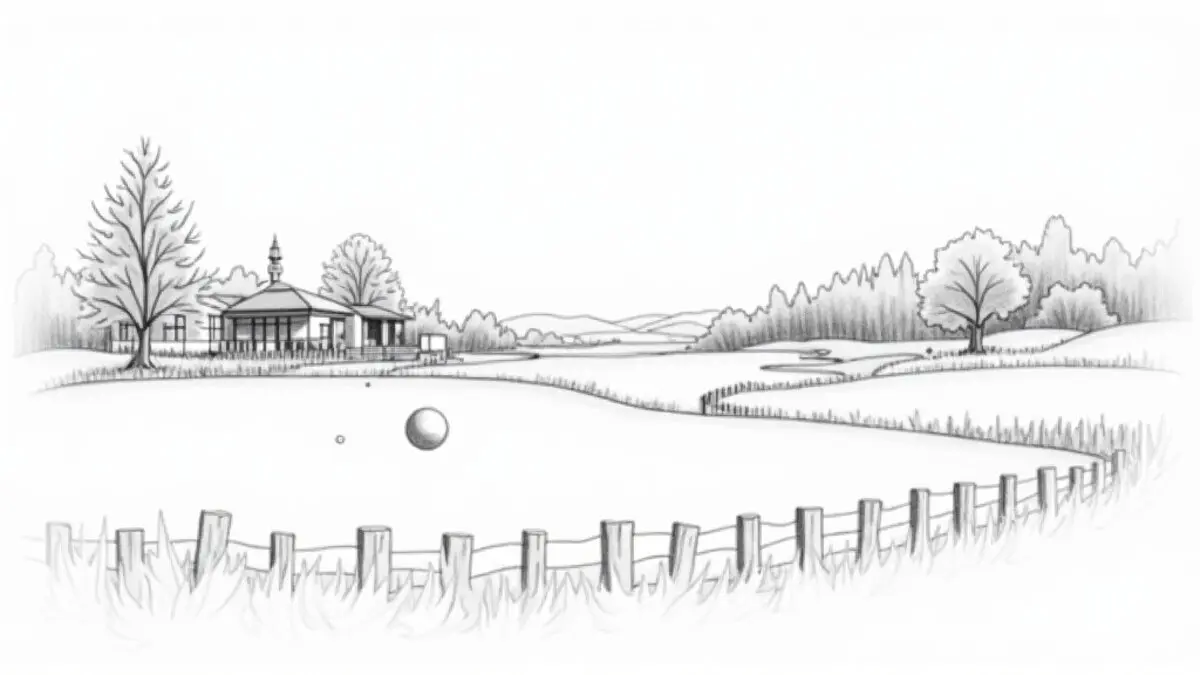
Mrs X, owner of a house in Mont-Saint-Aignan, near Rouen, had been suffering for years from golf ball strikes from the neighbouring course, operated by Massane Loisirs. The balls regularly landed in her garden, on her terrace, and even against her facade. The layout of the course, according to her, was defective: players shot in the direction of her property, without sufficient protection (nets, embankments).
After several incidents, Mrs X sued the company for abnormal neighbourhood disturbances. She sought compensation for her material damage (damage) and moral damage (stress, loss of enjoyment). The first instance court ruled in her favour, ordering the company to compensate her entire loss. The company appealed, invoking Article L. 112-16 of the French Building and Housing Code, which exempts the owner or operator of an activity when the disturbance results from normal neighbourhood inconveniences. According to it, ball strikes were part of the normal hazards of living next to a golf course.
The Court of Appeal upheld the judgment, and the company appealed to the Court of Cassation. The question was: does exposure to high-power strikes, even random but inevitable, constitute an abnormal disturbance exceeding the measure of ordinary neighbourhood obligations?
The reasoning of the court — dissected
The French Court of Cassation, in its judgment of 10 June 2004, dismissed the appeal. It held that the lower courts had legally justified their decision by finding that the disturbance suffered by Mrs X was abnormal. To understand this reasoning, two key concepts must be dissected.
First, Article L. 112-16 of the French Building and Housing Code (CCH): this text provides that the owner or operator of an activity is not liable for damage caused by nuisances that do not exceed the normal inconveniences of neighbourhood. In other words, if you live next to a golf course, you must tolerate a few stray balls from time to time. But here, the situation was different: the number of balls, their power and the design defect of the course made the strikes almost permanent and dangerous. The Court therefore held that these nuisances exceeded the tolerance threshold.
Second, Article 1240 of the French Civil Code (formerly 1382): it establishes the principle of liability for fault. In this case, the fault of the company was having designed a course without taking into account the safety of neighbours. The Court validated the reasoning of the lower courts: the design defect constituted a fault, and the damage (physical and moral) directly resulted from it. The exemption provided for by Article L. 112-16 could not apply because the disturbance was abnormal.
This decision is a confirmation of previous case law: judges assess in concreto (on a case-by-case basis) whether the nuisance exceeds normal inconveniences. It is not a reversal, but it clarified an important point: chance (the random nature of the strikes) does not exempt the responsible party if the strikes are inevitable in the long term. In other words: even if each strike is unpredictable, the repetition and high probability of damage make the disturbance abnormal.
What this changes for you — concretely
This decision has direct implications for several profiles. For you, owner neighbour of a golf course, a stadium, a paintball field or any activity generating projectiles: you are not condemned to suffer. If the nuisances are repeated and dangerous, you can obtain full compensation for your losses. Concretely, you must prove: 1) the existence of a disturbance (noise, projections, etc.); 2) its abnormal character (frequency, intensity, duration); 3) the link with the activity. Damages can cover material repairs (e.g., replacement of a damaged roof in Mont-Saint-Aignan for €8,000) and moral damage (sometimes assessed between €1,500 and €5,000).
For you, tenant of a dwelling located near a noisy activity: you can take action against your landlord (for lack of peaceful enjoyment) or directly against the operator. Attention: if you are a tenant, it is up to the owner to take the main steps, but you can join the action. If you are a buyer, before buying a house near a golf course, inquire about the history of disputes. Ask the seller for a declaration on the disturbances suffered (Article L. 112-16 CCH). And if you are a co-owner of a building suffering from strikes, you can mandate the syndic to act.
A concrete example: in Rouen, a client obtained €12,000 in damages after golf balls broke his triple-glazed windows and damaged his parked car. The court held that the golf course had not installed sufficient protective netting, despite several complaints.
Four tips to avoid this type of dispute
- Document nuisances systematically: keep a logbook with dates, times, photos, videos, and testimonies. The stronger your evidence, the more credible your case. Keep repair invoices.
- Send a formal notice to the operator by registered letter with acknowledgment of receipt: state the facts, request a solution (nets, layout modification). This formality is often a mandatory prerequisite before any legal action.
- Consult a lawyer specialised in property law: a professional will assess the strength of your case and guide you towards mediation or legal action. In Rouen, Maître Zakine handles this type of case regularly.
- Check your home insurance cover: some policies cover damage caused by third parties (such as golf balls). You could be compensated quickly without waiting for a trial.
Further reading: related case law and developments
This decision is part of a consistent line: courts are increasingly attentive to the protection of neighbours against leisure activities. One can cite a judgment of the Rouen Court of Appeal (2015) which condemned a paintball field for paintball strikes that injured a neighbour. Similarly, the French Court of Cassation (Civ. 2e, 12 June 2003, No. 01-15.123) had already ruled that the noise of a motocross track could constitute an abnormal disturbance if it exceeded regulatory thresholds.
The trend is clear: judges require operators to anticipate risks and take appropriate protective measures. In the future, it can be expected that the notion of "abnormal disturbance" will extend to olfactory or light nuisances, for example. For owners, this is a powerful legal weapon. For operators, it is a call for caution: better to invest in nets or hedges than in lawyers.
Summary and next steps
FAQ:
- What to do if golf balls regularly fall on my property? Gather evidence, send a formal notice to the operator, and consult a lawyer. You can claim damages for material and moral loss.
- Can I obtain an injunction to stop the strikes? Yes, the judge can order measures (installation of nets, layout modification) under penalty (e.g., €100 per day of delay).
- What are the time limits to act? The action for liability for neighbourhood disturbance is barred after 5 years from the day the disturbance manifested itself (Article 2224 of the French Civil Code). But it is advisable to act quickly to avoid the disturbance becoming "normal" by tolerance.
- Does the operator's insurance cover my damage? Yes, generally. You can request its insurer to intervene directly. In case of refusal, a lawyer will help you compel them.
- What if I am myself a golf course operator? Check your layout and protections. A safety audit can save you from costly convictions. Consider taking out appropriate public liability insurance.
Are you in a similar situation? A first 30-minute consultation with Maître Zakine (€45) can save you months of proceedings — and often much more. Book an appointment →
📌 Does this apply to your situation? Maître Cécile Zakine, French real estate lawyer, practises throughout France.
→ Prendre rendez-vous pour une consultation |
→ Browse all our legal articles
