Reference Decision: cc • No. 73-14.089 • 1975-01-28 • View the decision →
Imagine: you buy a lovely villa in Bruay-la-Buissière, a haven of peace. But a few months later, dull noises and vibrations shake your garden day and night. An industrial quarry has intensified nearby. Your house loses value, your quality of life deteriorates. Yet you do not want to sell. Can you still obtain compensation?
This is the question the French Court of Cassation decided in 1975 in a landmark judgment. The owner of a villa, victim of excessive noise nuisance caused by the operation of a neighbouring stone quarry, claimed compensation for the depreciation of his property. The Court of Appeal had awarded him a sum, but the owner considered that he had not been sufficiently compensated for the disturbance already suffered.
The Court of Cassation upheld the principle: the depreciation of real property is a certain and current loss, even if the owner has no intention of selling. In other words, you are not obliged to put your house on the market to prove that you have lost money. A decision that marked a turning point in compensation for abnormal neighbourhood disturbances.
The Facts: A Story Like Many Others
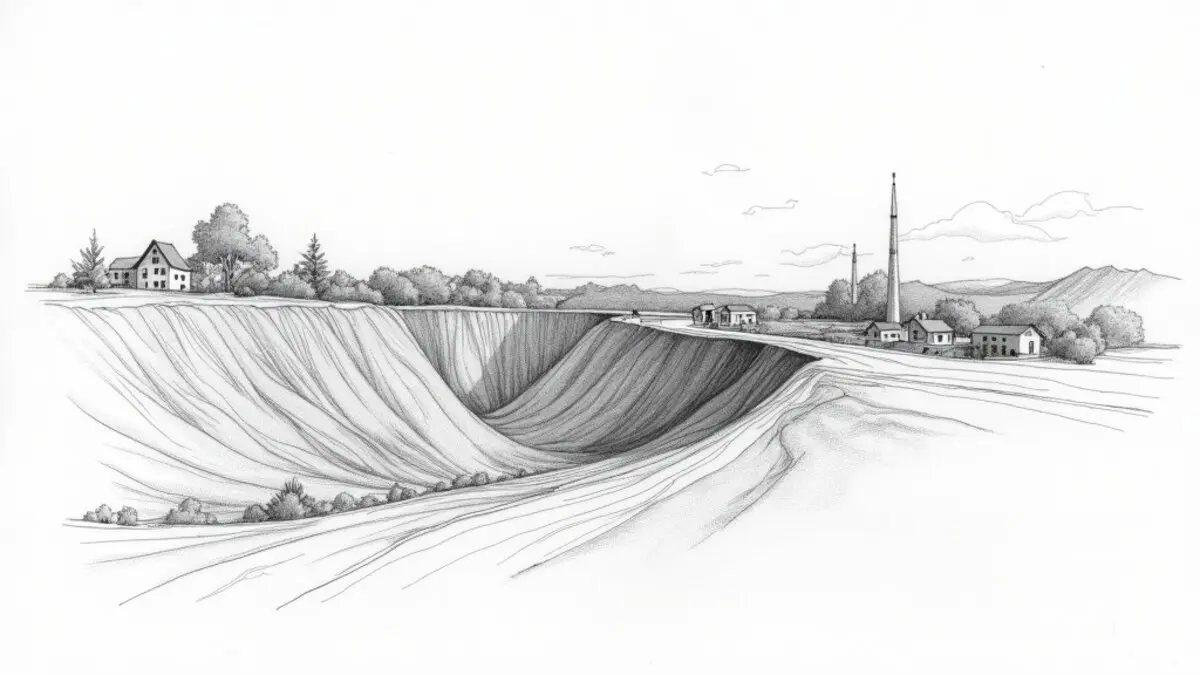
Mr X, owner of a villa located near a stone quarry in Bruay-la-Buissière, had been suffering for several years from noises and vibrations exceeding the normal inconveniences of neighbourhood (i.e., what a neighbour must reasonably tolerate). The industrial operation of the quarry, with its blasting, construction machinery, and crushing, made daily life difficult: disturbed sleep, unusable garden, reduced villa value.
Mr X sued the quarry operator before the Tribunal de Grande Instance of Béthune (within the jurisdiction of the Douai Court of Appeal). He claimed compensation for his loss, including both the disturbance of enjoyment suffered (the daily inconvenience) and the depreciation of his property (loss of value). The operator contested, arguing that the depreciation had not yet materialised since Mr X had not sold his villa.
The Amiens Court of Appeal (since the case was heard before the creation of the Douai Court of Appeal? No, the judgment was rendered by the Amiens Court of Appeal, seized after an initial judgment) partially ruled in favour of Mr X. It held that the nuisances constituted an abnormal neighbourhood disturbance (a compensable loss without needing to prove fault on the operator's part). It awarded him compensation of 15,000 francs (approximately €22,000 today) for the disturbance of enjoyment already suffered, and compensation of 20,000 francs (approximately €29,000) for the depreciation of the villa. But Mr X considered these sums insufficient and appealed to the Court of Cassation.
The Court of Cassation dismissed his appeal: it upheld the reasoning of the Court of Appeal, considering that it had correctly assessed the loss by taking into account the initial price of the villa (300,000 francs), its current value (estimated at 250,000 francs due to the nuisances) and the inconvenience caused. The judgment is particularly important because it affirms that the depreciation of real property is a certain and current loss, the existence of which is not conditional on the resale of the property.
The Court's Reasoning — Analysed
The legal basis of this decision is Article 1240 of the French Civil Code (formerly Article 1382), which provides that "any act of man which causes damage to another obliges the person by whose fault it occurred to make reparation." In matters of neighbourhood disturbances, case law has developed a theory known as "abnormal neighbourhood disturbances": without needing to prove fault on the part of the neighbour, as soon as the nuisances exceed the normal inconveniences of neighbourhood (what a neighbour must tolerate given the location), the person causing the disturbance must compensate the loss.
In this case, the Court of Appeal first characterised the abnormality of the nuisances: noises and vibrations exceeding tolerable thresholds for a residential area. Then it assessed the loss into two components: disturbance of enjoyment (the inconvenience suffered daily, already experienced) and property depreciation (the loss of market value of the villa). It was on this second point that the debate was heated: the operator argued that the depreciation was only hypothetical as long as the villa had not been sold.
The Court of Cassation rejected this argument. It held that the depreciation of real property is a certain and current loss, as long as it results from nuisances already suffered and can be established by an expert report or comparison with similar properties. It does not matter whether the owner sells or not: the loss of value is real because it affects their assets. The Court of Appeal had therefore correctly compensated "a certain and current loss caused by neighbourhood inconveniences already experienced and by a depreciation now suffered by the said villa, the existence of which is not conditional on its potential resale."
This decision confirms an already established trend: judges do not require the property to have been sold for the diminution in value to be compensated. This is essential protection for owners who wish to keep their home despite the nuisances.
What This Means for You — Practically
This case law has very strong practical implications, regardless of your profile:
Owner-occupier: If you suffer abnormal nuisances (noise, odours, vibrations) from a neighbour, you can claim compensation for the loss of value of your house, even if you have no intention of selling. For example, if your house in Bully-les-Mines loses 20% of its value due to a neighbouring industrial activity, you can obtain compensation corresponding to this diminution in value, in addition to compensation for the inconvenience suffered.
Landlord: If your rental property is affected by nuisances, you can also claim depreciation, even if the tenants directly bear the disturbance. You suffer a direct patrimonial loss.
Purchaser: Before buying a property, inquire about neighbouring activities. If nuisances exist, the price should reflect this. And if they appear after the sale, you can take action against the person causing the disturbances, even if you have just bought.
Co-owner: Nuisances can affect the entire co-ownership. The syndic can take action to obtain compensation for the depreciation of the units.
Concretely, to assess depreciation, it is necessary to call on a real estate expert who will compare your property with similar unaffected properties. The compensation can range from a few thousand to several tens of thousands of euros, depending on the extent of the nuisances and the value of the property.
Four Tips to Avoid This Type of Dispute
- Before buying, do a neighbourhood survey: Inquire about industrial, agricultural or commercial activities nearby. Check the local urban plan (PLU) to identify activity zones. A visit on a Saturday afternoon may reveal noise nuisances that you would not have noticed during the week.
- Build a case file from the first nuisances: Keep a log of the disturbances (dates, times, duration, intensity), make audio or video recordings, seek neighbour testimonies, and request a bailiff's report (count around €200 to €300). The more evidence you have, the stronger your claim will be.
- First try an amicable resolution: Before starting legal proceedings, send a registered letter with acknowledgement of receipt to the person causing the nuisances asking them to stop or reduce the disturbance. Propose mediation. If the response is negative, you will have proof of your approach.
- Consult a specialised lawyer before any action: The law on neighbourhood disturbances is complex. A lawyer will help you assess your chances, quantify your loss (especially depreciation) and choose the right procedure (interim proceedings for an expert report, main action for damages).
Further Reading: Related Case Law and Developments
The 1975 judgment fits into a consistent line of the Court of Cassation. As early as 1915, the Court established the principle of no-fault liability for abnormal neighbourhood disturbances (Civ., 27 November 1915). More recently, the Court specified that the disturbance must exceed the normal inconveniences of neighbourhood, a notion assessed in concreto (Civ. 3e, 4 July 2019, No. 18-16.815).
The particularity of the 1975 judgment is that it clearly dissociated the depreciation of the property from its resale. Before this decision, some judges required an actual sale to establish the loss. Afterwards, the trend became uniform: the diminution in value is compensable as soon as it is certain, even without a sale.
Courts today are very attentive to proof of abnormality: they often require an acoustic expert report or measurement of vibrations. In Bruay-la-Buissière, for example, a recent case saw a quarry operator ordered to pay €40,000 in damages to neighbours, including €25,000 for the depreciation of their houses alone.
Key Points to Remember
Practical FAQ:
- Can I obtain compensation for the loss of value of my house without selling it? Yes, that is the very principle of the 1975 judgment. Depreciation is a certain and current loss, compensable as soon as it is established.
- What types of nuisances are covered? Noise, odours, vibrations, dust, views, overshadowing... any disturbance exceeding the normal inconveniences of neighbourhood.
- What is the time limit to take action? The limitation period for liability actions is 5 years from the day the holder of the right knew or should have known the facts allowing them to exercise it (Article 2224 of the Civil Code). Note that this period runs from the manifestation of the disturbance, not its appearance.
- Do I have to prove fault on the part of the operator? No, the theory of abnormal neighbourhood disturbances is a no-fault liability. It is sufficient to prove the abnormality of the nuisances and the loss.
Are you in a similar situation? A first 30-minute consultation with Maître Zakine (€45) could save you months of proceedings — and often much more. Book an appointment →
📌 Does this apply to your situation? Maître Cécile Zakine, French real estate lawyer, practises throughout France.
→ Prendre rendez-vous pour une consultation |
→ Browse all our legal articles
