Reference Decision: cc • No. 07-13.769 • 2008-05-21 • View the decision →
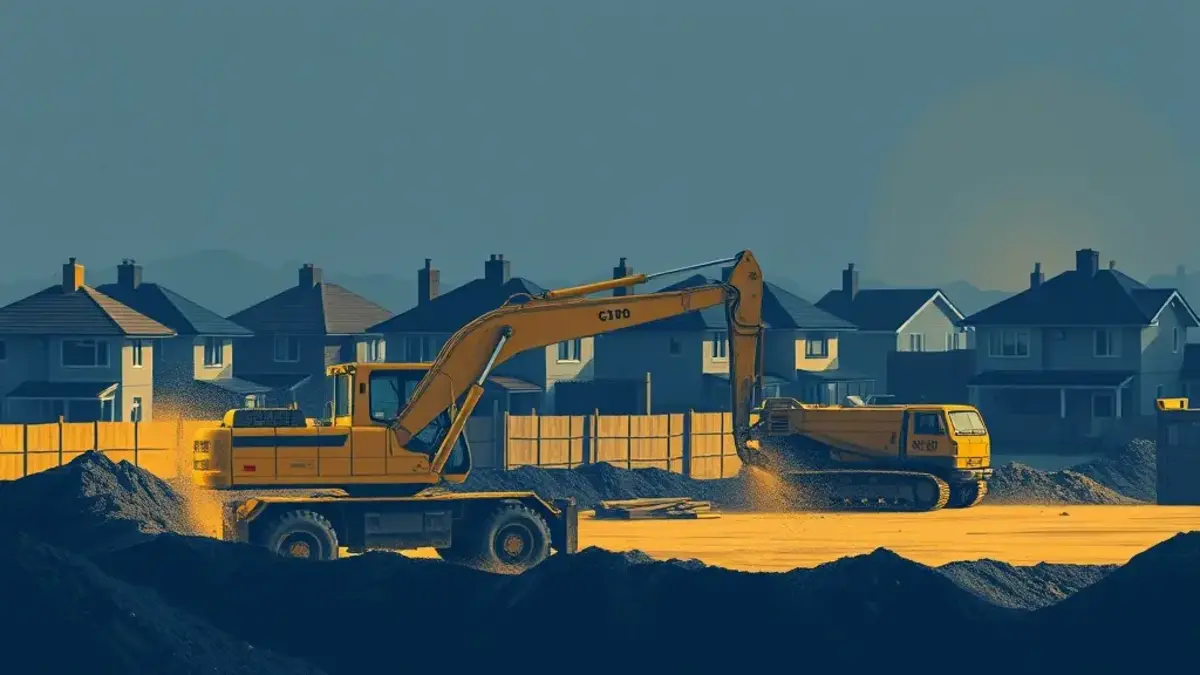
Imagine yourself in Vallauris, in your characterful house with a view of the hills. For three months, the renovation site of the neighbouring villa has been in full swing: jackhammers from 7 a.m., omnipresent dust, trucks blocking your driveway. Your quality of life is eroding day by day. Who should pay for these nuisances? The main contractor managing the site, or only the subcontractors actually making the noise?
This question is asked by hundreds of property owners in the Grasse region every year. Between villa renovations in Mougins and extension projects in Vallauris, neighbourhood disputes related to construction work are commonplace. But how to identify the right responsible party when nuisances become unbearable?
The Court of Cassation answered clearly in a ruling of 21 May 2008. Its position? The victim of nuisances exceeding the normal inconveniences of neighbourhood (i.e., nuisances that go beyond what one should normally tolerate from neighbours) cannot take action on this basis against the contractor who, having subcontracted the work causing the nuisance, is not the direct author of these nuisances. In short, you must target the right party.
The Facts: A Story That Happens Every Day
Mr. Dubois, owner of a house in Vallauris for twenty years, sees his daily life upended when his neighbours decide to completely renovate their property. The main contractor, the company Bâtiments & Co, wins the contract and subcontracts different parts of the work: demolition to Démolition Express, masonry to Pierre & Ciment, electrical work to Élec Pro.
Problems start quickly. Démolition Express works without caution: jackhammers resonate from dawn, rubble invades Mr. Dubois's property, and a party wall suddenly shows worrying cracks. Mr. Dubois first attempts dialogue, then sends registered letters. Nothing works. The nuisances persist, even affecting his wife's health, who develops chronic migraines.
Exasperated, Mr. Dubois sues the main contractor, Bâtiments & Co, believing it is the overall responsible party for the site. He invokes abnormal neighbourhood nuisance and claims €15,000 in damages for moral prejudice, cleaning costs, and expert assessment of the cracks. The company Bâtiments & Co defends itself by arguing that it did not carry out the contentious work: it was its subcontractors, and thus it is not the author of the nuisances.
The court of first instance rules in favour of Mr. Dubois, considering that the main contractor, as an occasional neighbour (i.e., temporary during the site duration), is strictly liable. But Bâtiments & Co appeals, then appeals to the Court of Cassation. The Court of Cassation will settle this debate that goes far beyond Mr. Dubois's case.
The Court's Reasoning — Analysed
The Court of Cassation, in its ruling of 21 May 2008, quashes the appeal court's judgment and rules in favour of the main contractor. Its reasoning is based on a fundamental principle: liability for abnormal neighbourhood nuisance is an extra-contractual liability (i.e., outside contract) that requires a direct link between the author of the nuisance and the damage suffered.
The judges recall the legal basis: Article 1240 of the Civil Code (formerly 1382), which obliges repair of damage caused by one's fault. To hold someone liable on this basis, three elements must be proven: a fault, damage, and a causal link between the two. However, in this case, the main contractor committed no direct fault: it did not operate the jackhammers, nor spread the rubble.
The court specifies that the status of occasional neighbour is not sufficient to establish liability. In other words, the mere fact of being present on the site does not automatically make one responsible for nuisances caused by others. What matters is the material author of the nuisance. If the main contractor had itself carried out the noisy work, it would have been liable. But having subcontracted, it escapes liability on this specific basis.
Caution, however: this does not mean the main contractor is completely shielded. It could be liable on other grounds, such as contractual liability towards the client (the property owner who commissioned the work), or a fault in selecting or supervising the subcontractors. But for the direct victim of the nuisances, the primary route remains action against the direct author.
This reasoning confirms consistent case law: liability for neighbourhood nuisance is personal. You cannot 'catch' the first person on the site; you must precisely identify who caused the harm. An important nuance that many ignore.
What This Changes for You — Practically
But what exactly does this change in your life as a property owner or professional? Let's take concrete examples by profile.
If you are a landlord (i.e., renting out your property) in Mougins and your tenants complain of nuisances from a neighbouring construction site, you must first identify the direct author of the nuisance. Do not rely solely on the main contractor's sign. Inquire on-site: which company is making the noise? Who manages the machinery? Document everything (photos, videos, bailiff's reports) and target that company directly. undefined, I have encountered cases where property owners wasted months pursuing the wrong party, with unnecessary legal fees of €3,000 to €5,000.
If you are a tenant suffering nuisances, immediately alert your landlord or agency. But know that your direct recourse against the main contractor will be difficult. Prioritise joint action with the landlord against the faulty subcontractor. Damages can be substantial: for nuisances over six months, courts often award €2,000 to €6,000 depending on severity.
If you are a co-owner and work in a neighbouring unit affects you, first check the co-ownership regulations. Some include specific obligations. But again, target the direct executor. A tip: always demand, before work begins, the name and contact details of all parties involved.
For real estate professionals (developers, agents), this decision is a warning. When selling a property under construction or renovation, clearly inform buyers of the risks of neighbourhood nuisance and cascading liabilities. A well-drafted clause in the contract can avoid costly disputes.
Four Tips to Avoid This Type of Dispute
- Precisely identify all parties involved: before work begins, ask the client (the property owner commissioning the work) for a complete list of companies with their contact details. Do not rely only on the main contractor's name.
- Systematically document the nuisances: keep a detailed log (dates, times, nature of the nuisance), take photos or videos, and have a bailiff's report made if the nuisances are serious. A report costs about €200 to €400 but can be decisive in court.
- Send targeted formal notices: at the first problems, send a registered letter with acknowledgment of receipt to the company directly causing the nuisance, with a copy to the main contractor. Give a reasonable deadline (7 to 15 days) to remedy the nuisances.
- Consult a specialised lawyer quickly: do not let the situation escalate. Early consultation (expect €45 to €150 depending on firms) can guide you towards the right strategy and avoid lengthy, costly procedures.
Deep Dive: Related Case Law and Developments
The 2008 ruling fits into a coherent line of case law. Already in 1995, the Court of Cassation (ruling of 8 November 1995, No. 93-18.172) had recalled that liability for neighbourhood nuisance requires a direct link between the faulty activity and the damage. It thus refused to hold a property owner liable for nuisances caused by their tenant, unless they committed a personal fault.
More recently, decisions have clarified the boundaries. For example, a 2019 ruling (Court of Cassation, 3rd civ., 10 October 2019, No. 18-20.106) confirmed that the owner of land can be liable for nuisances caused by occupants without title (like squatters) if they did not take necessary measures to evict them. The trend is clear: courts require a personal fault or effective control to establish liability.
What this means for the future? Victims of nuisances will need to be increasingly precise in identifying responsible parties. Conversely, main contractors can better protect themselves by clearly contracting with their subcontractors and ensuring their compliance with norms. An evolution pushing towards professionalisation of all actors.
Checklist Before Taking Action
Are you facing neighbourhood nuisance related to construction work? Here is what to do, step by step:
- Identify the direct author: who is making the noise, dust, damage? Note the company name, vehicle registration numbers.
- Collect evidence: nuisance log, dated photos/videos, neighbour testimonies, possibly bailiff's report.
- Attempt dialogue: contact the faulty company directly, then the client if necessary. Propose concrete solutions (adjusted hours, protections).
- Send a formal notice: registered letter to the faulty company, with copy to the main contractor. Give a deadline of 7 to 15 days.
- Consult a lawyer: if nothing changes, meet with a property law lawyer to assess your chances and the amounts at stake.
And if you are the main contractor? Check your subcontracting contracts, impose clauses for respecting neighbourhood norms, and actually supervise the site to avoid faults in supervision that could make you liable.
Do you find yourself in a similar situation? A first 30-minute consultation with Maître Zakine (€45) can save you months of procedure — and often much more. Book an appointment →
Useful resources on cecile-zakine.fr
- French condominium law lawyer
- vefa-grasse-me-zakine-docteur-en-droit/" target="_blank" rel="noopener">property lawyer in Grasse
- vefa-retard-vefa-que-faire/" target="_blank" rel="noopener">VEFA delays in France: your legal options
📌 Does this apply to your situation? Maître Cécile Zakine, lawyer in French real estate law, practises throughout France.
servitude-droit-passage-avocat/" rel="dofollow">→ Avocat servitudes & foncier |
→ Browse all our legal articles
