Reference Decision: cc • No. 05-10.855 • 2006-12-20 • Consult the decision →
Imagine you own a house in Mimizan, facing the beach. Your neighbour undertakes major renovation work: for months, you endure noise pollution, vibrations, perhaps even cracks appearing on your walls. The work is perfectly legal, carried out by competent professionals, but your daily life becomes a nightmare. What can you do? Can you claim compensation when the construction site complies with all regulations?
This question is asked by hundreds of property owners and tenants each year in the jurisdiction of Mont-de-Marsan, where property development projects are multiplying. Between new constructions in the town centre and villa renovations on the Landes coast, neighbourhood disputes related to construction work are commonplace. But how does the judiciary arbitrate these situations where no one has really committed a fault?
The answer lies in a Cour de cassation ruling of 20 December 2006, which clarifies a crucial question: who must pay when construction work causes disturbances exceeding the normal inconveniences of neighbourhood, even without fault on the part of the builders? This decision, often unknown to individuals, radically changes the situation for all those undertaking or suffering from construction work.
The Facts: A Story as Common as Any
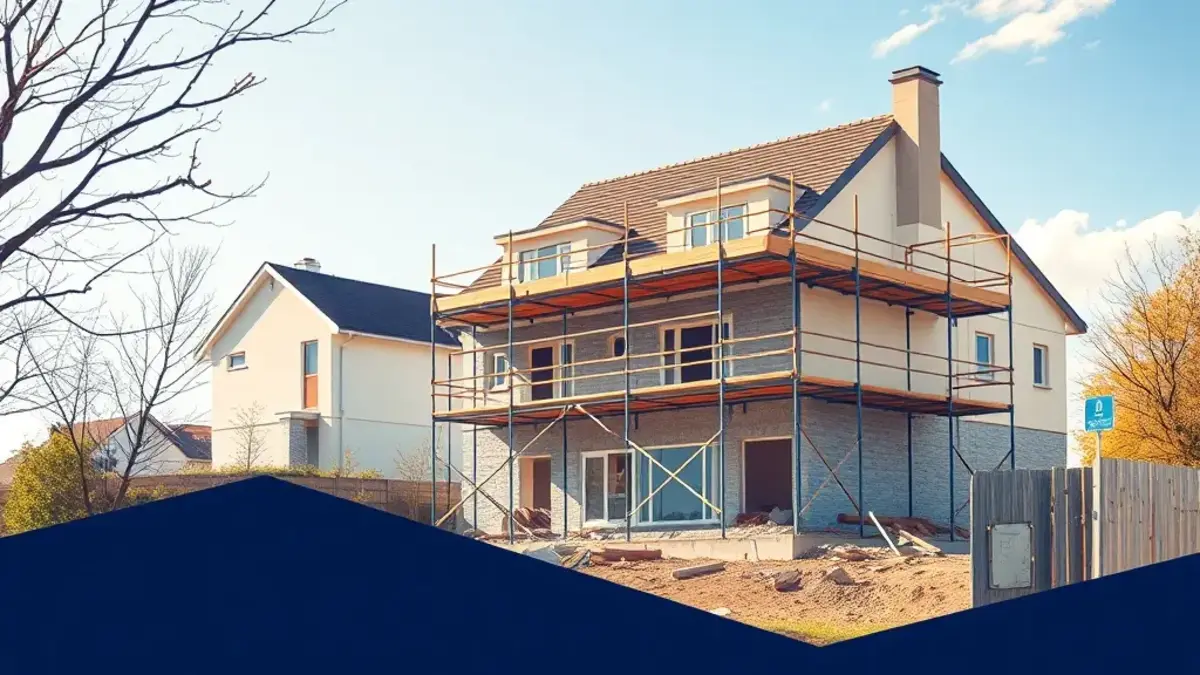
The story begins like so many others in our region. Mr and Mrs Martin, owners of a house in Mont-de-Marsan, see their immediate neighbour, Mr Dubois, undertake the construction of a three-storey building. The work lasts nearly a year: earthworks, deep foundations, intensive concreting. Quickly, the Martins notice cracks appearing in their walls, doors that no longer close properly, and above all, almost permanent vibrations that make their house uninhabitable.
The Martins decide to act. They have the damage assessed by an expert, who establishes a direct link between the neighbour's work and the damage suffered. They then notify their home insurance, which compensates for the prejudice suffered. But the story does not end there: the Martins' insurer, having paid for the repairs, seeks recourse against the builder, Mr Dubois, and his own insurer, to recover the sums paid.
The builder defends himself with a strong argument: the work was designed and executed in compliance with professional standards, with all necessary permits, under the direction of a qualified architect. No technical or administrative fault is attributable. For him, the damage suffered by the Martins would fall under "unforeseen site events" inherent to any construction, normal inconveniences of neighbourhood that every property owner must accept.
The dispute progresses through the judicial levels. At first instance, the court rules in favour of the builder: no fault, no liability. But the court of appeal reverses this decision, considering that the disturbances suffered by the Martins manifestly exceed the normal inconveniences of neighbourhood. The builder then files an appeal to the Cour de cassation, supported by his insurer. It is at this stage that the highest French court intervenes to definitively settle the question.
The Court's Reasoning — Analysed
The Cour de cassation, in its ruling of 20 December 2006, adopts reasoning that deserves step-by-step explanation. First, the judges recall the legal basis: Article 1240 of the Civil Code (which obliges repair of damage caused by one's fault). But they immediately specify that liability for abnormal neighbourhood disturbances can be engaged even in the absence of fault.
In clear terms, what the Court says: when a construction site causes nuisances that exceed what a neighbour must normally endure, the builder's liability can be engaged, even if the work is perfectly legal and well executed. In other words, it is not because you have complied with all regulations that you are automatically protected from a judgment.
But here is the crucial point of the decision: how to apportion this liability between the different parties? The builder (client/developer) and his insurer are considered as co-obligors (persons jointly liable for the same obligation). The Court decides that, in the absence of fault, contribution to the debt is shared equally between them. Concretely, if the damages amount to €20,000, the builder and his insurer must each pay €10,000.
What few people know is that this solution represents confirmation of prior case law, but with an important clarification on the apportionment method. The Court rejects the builder's argument that the disturbances would be part of "unforeseen site events" for which he could not be held liable. It considers that when nuisances exceed the normally acceptable level, they must be repaired, regardless of the presence or absence of fault.
undefined, I have encountered cases where builders thought they were protected by the absence of technical fault. This decision reminds them that liability for abnormal neighbourhood disturbances constitutes a specific regime, distinct from liability for fault. An essential nuance that every construction professional should know.
What This Changes for You — Concretely
But what exactly does this change in your daily life? Let's take concrete examples according to your situation.
If you are a landlord in Mont-de-Marsan and you undertake major works, know that even with a perfectly managed construction site, you could be held liable to repair half the damage caused to your neighbours. Imagine foundation work for an extension: total cost €50,000. If this work causes cracks in the neighbour's property assessed at €15,000, you will have to pay €7,500 (your insurer covering the other half). An unforeseen expense that can unbalance your budget.
If you are a tenant suffering disturbances related to neighbouring construction work, this decision gives you tools. You can require your landlord to have the damage assessed and initiate necessary procedures. However, be careful: the disturbances must truly exceed normal inconveniences. Drill noises during permitted hours are generally insufficient. But permanent vibrations causing structural damage, yes.
If you are purchasing a property in Mimizan, always check whether major works have been recently carried out in the neighbourhood. Cracks that appeared during neighbouring construction work could reappear. And if you are a co-owner voting for works in the building, require appropriate liability insurance that will cover your share in case of disturbances caused to neighbours.
How to react if you find yourself in this situation? First step: have the damage assessed by a bailiff or independent expert. Second step: contact your home insurance which can cover the repairs, then seek recourse against the builder. Third step: do not wait! The limitation periods (time limit beyond which legal action cannot be taken) are generally 5 years from knowledge of the damage.
Four Tips to Avoid This Type of Dispute
- Before starting works, organise a meeting with your immediate neighbours: present them with the schedule, foreseeable nuisances, and exchange contact details so they can alert you quickly in case of problems.
- Have a joint inspection report prepared for neighbouring properties: before the start of the construction site, have a bailiff record the condition of walls, floors, and structures of adjacent houses. This document will serve as reference in case of subsequent damage.
- Take out appropriate construction site liability insurance: check with your insurer that your contract specifically covers abnormal neighbourhood disturbances, including in the absence of fault. In the jurisdiction of Mont-de-Marsan, some insurers offer specific extensions for works in dense urban areas.
- Regularly monitor the impact of your works on neighbouring buildings: designate a responsible person to visually inspect adjacent properties at least once a week during critical phases (earthworks, foundations, structural work).
Further Analysis: Related Case Law and Developments
The 2006 ruling fits within consistent Cour de cassation case law on liability for abnormal neighbourhood disturbances. Already in 1986, in a famous ruling (Cass. civ. 3e, 19 June 1986, no. 84-17.299), the Court had affirmed that this liability could be engaged without fault. But it had not specified how to apportion the burden between the builder and his insurer.
More recently, the Court confirmed this orientation in several decisions, notably in 2015 (Cass. civ. 3e, 8 July 2015, no. 14-17.189) where it recalled that the abnormal character of disturbances is assessed in concreto (according to the particular circumstances of each case). This means that identical works could cause abnormal disturbances in a quiet residential area of Mimizan, but not in an active commercial zone of Mont-de-Marsan.
The trend of the courts is clear: they increasingly protect victims of excessive disturbances, even when the responsible party has committed no fault. This evolution corresponds to a modern conception of liability, where equity and compensation for prejudice sometimes take precedence over finding fault. For the future, we can expect more frequent application of this principle, particularly with the development of construction sites in dense urban environments.
Summary and Next Steps
FAQ — Your Questions, Our Answers:
1. My neighbour is doing legal work that damages my house. Can I obtain compensation?
Yes, if the disturbances exceed normal inconveniences of neighbourhood. Contact your home insurance which will initiate procedures.
2. I am carrying out works without fault. Am I still responsible for damage at my neighbour's?
Yes, up to 50% of the damages (your insurer will pay the other half).
3. What is an "abnormal disturbance"?
It is a nuisance that exceeds what a neighbour must normally endure, assessed case by case (structural cracks, permanent vibrations, etc.).
4. How long do I have to take action?
Generally 5 years from knowledge of the damage, but consult a solicitor quickly to secure your rights.
5. Does this rule also apply to tenants?
Yes, but it is generally the landlord who initiates the procedure, with the tenant able to require him to do so.
Do you find yourself in a similar situation? An initial 30-minute consultation with Maître Zakine (€45) can save you months of proceedings — and often much more. Book an appointment →
Useful resources on cecile-zakine.fr
📌 Does this apply to your situation? Maître Cécile Zakine, lawyer in French real estate law, practises throughout France.
servitude-droit-passage-avocat/" rel="dofollow">→ Avocat servitudes & foncier |
→ Browse all our legal articles
