Reference Decision: cc • No. 13-17.254 • 2014-06-25 • View the decision →
Imagine buying a house in Saint-Paul-lès-Dax, captivated by its stone fireplace from the Landes region and its authentic charm. You move in, light the fire for the first winter evening, and discover that the fireplace insert smokes abnormally. Worse, when checking the electricity, you find exposed wires and faulty sockets. The question every property owner then asks: "Did the seller know about this? Can I cancel the sale or get reimbursed for the repairs?"
This situation is not a disaster scenario, but the daily reality for many purchasers in our region. Between the character houses of Saint-Vincent-de-Tyrosse and the more recent properties in Chalosse, old installations can hide unsuspected dangers. How does the justice system assess these situations?
A 2014 Court of Appeal decision provides concrete answers. It shows that even when the dangerousness is established, everything is not as simple as it seems. The judges developed a subtle reasoning that balances the rights of purchasers and sellers, with direct financial consequences. Without revealing too much for now, remember this: the amount of repairs relative to the purchase price changes everything.
The Facts: A Story That Happens Every Day
Mr and Mrs Y, a couple in their forties, buy a €380,000 house in 2010 in a commune in the South-West. Captivated by the property's character, they sign the authentic deed with enthusiasm at the notary's office. The seller, a private individual who had inherited the house, had inserted a non-guarantee clause for latent defects in the contract (a provision by which the seller declares not to guarantee hidden defects of the property).
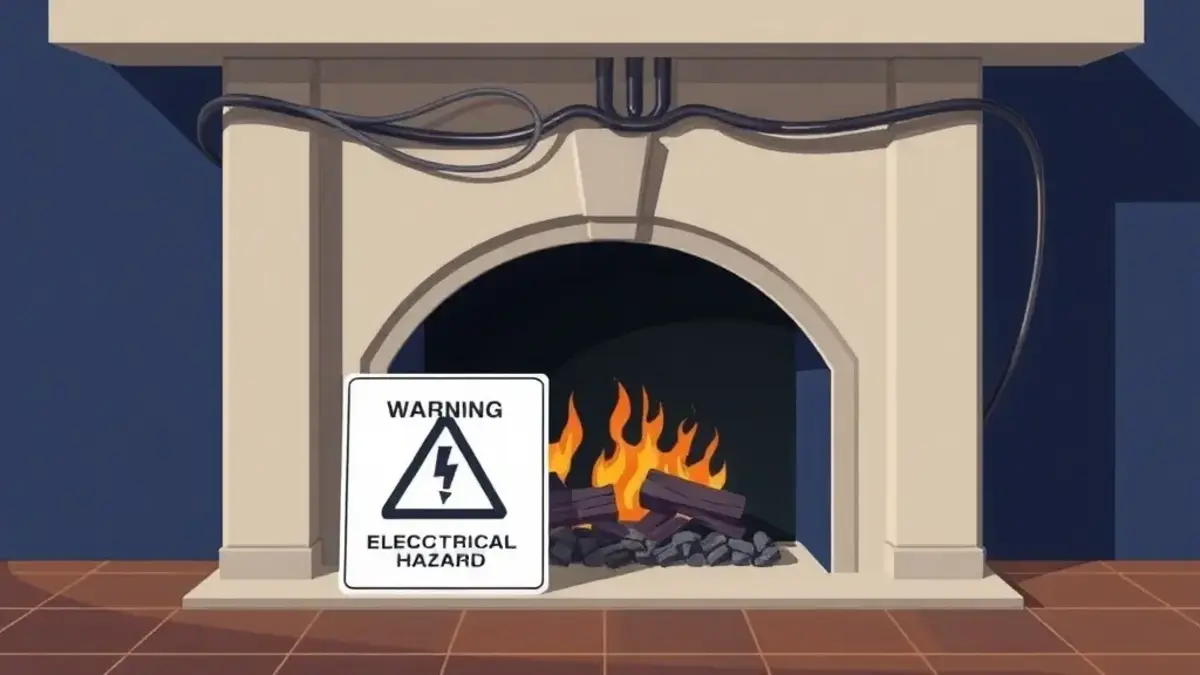
A few months after moving in, problems appear. The fireplace insert, presented as functional during the viewing, proves dangerous: it smokes uncontrollably, risking fire or carbon monoxide poisoning. Simultaneously, the electrical installation shows serious anomalies: uninsulated wires, faulty circuit breakers, overheating sockets. The purchasers call in an expert, who estimates the cost of safety works at €15,416.90.
Mr and Mrs Y then decide to act. They sue the seller, first requesting rescission of the sale (cancellation of the contract with refund of the price) on the basis of the guarantee for latent defects. If this main claim is rejected, they formulate a subsidiary claim (an alternative claim) for payment of damages corresponding to the cost of works. The first instance court partially rules in their favour, but it's on appeal that the case becomes clearer.
The seller, for his part, strongly contests. He invokes the non-guarantee clause, claiming he was unaware of these defects and that the purchasers should have conducted a more thorough inspection. The case thus bounces to the Court of Appeal, where the magistrates will settle this common dispute in our region, where old properties are numerous.
The Court's Reasoning — Analysed
The appeal judges built their decision in several logical steps. First, they examined whether the defects constituted a latent defect. According to Article 1641 of the Civil Code (which defines a latent defect as a defect making the property unfit for its purpose or diminishing its use so much that a buyer would not have acquired it, or would have paid less), they held that the dangerousness of the insert and electrical installation met these criteria. In other words, a serious defect, not apparent at the time of sale, and which the purchaser could not reasonably have discovered.
Next, the court noted a crucial point: the Y couple would have paid a lower price if they had known about these defects. This finding is essential to characterise the prejudice. But beware: the presence of a latent defect does not automatically give the right to rescission of the sale. The magistrates applied Article 1644 of the Civil Code (which gives the purchaser the choice between returning the property and getting a refund, or keeping the property and obtaining a price reduction).
Here, the judges compared two figures: the sale price (€380,000) and the cost of works (€15,416.90), approximately 4% of the price. They deduced that the defect, although real, was not of such gravity as to justify cancellation of the contract. In short, the disproportion between the defect and the price was insufficient to allow rescission. What few people know is that this assessment is left to the judges' discretion, on a case-by-case basis.
The court therefore rejected the redhibitory action (the claim for cancellation) but granted the subsidiary claim for damages. It ordered the seller to pay €15,416.90, corresponding to the cost of repairs. Regarding the non-guarantee clause, the judges set it aside because the seller could not exonerate himself from liability for defects he knew or should have known about. This decision confirms consistent case law: good faith and proportionality are at the heart of the analysis.
What This Means for You — Concretely
If you are a purchaser of real property, this decision teaches you several things. First, the mere existence of a latent defect does not guarantee cancellation of the sale. Judges assess the gravity of the defect relative to the price paid. For a €200,000 purchase in Saint-Vincent-de-Tyrosse, €8,000 worth of works (4%) could follow the same logic: compensation rather than rescission. How to react? Document defects precisely and have them assessed quickly by an expert.
For sellers, property owners, landlords, or holders, the lesson is twofold. A non-guarantee clause is not absolute protection, especially if you were aware of the problems. undefined, I have encountered cases where sellers had hidden leaks in Landes houses, thinking they were covered by the clause: they were held liable. Moreover, anticipate: a serious technical survey before sale can avoid costly disputes.
Tenants are indirectly concerned. If you rent accommodation with dangerous installations, your landlord must repair them. This decision reminds that safety comes first, and that judges sanction negligence. For co-owners, this applies to common areas: a defective electrical installation in a building hall could engage the liability of the managing agent.
Regarding time limits, recall that the action for guarantee of latent defects is subject to a two-year limitation period from discovery of the defect (Article 1648 of the Civil Code). Act quickly: in our jurisdiction of Mont-de-Marsan, court processing times can reach 18 to 24 months. The amounts at stake, like €15,000 here, often justify action, but weigh the pros and cons with a professional.
Four Tips to Avoid This Type of Dispute
- Have a thorough technical survey conducted before any transaction: beyond mandatory surveys, instruct a professional to check the condition of electrical, heating, and fireplace installations. Average cost: €500 to €1,000, but it can save you €15,000 in unexpected works.
- Document all exchanges with the seller or estate agent: questions about the fireplace condition, answers received, photos during viewings. In case of dispute, this evidence will be decisive to establish knowledge or ignorance of the defects.
- Negotiate an adapted guarantee clause in the deed of sale: rather than a standard non-guarantee clause, consider a guarantee limited to certain elements (like the electrical installation) or a price reduction in case of necessary works.
- Act within legal time limits if you discover a problem: upon discovery of a defect, have it recorded by a bailiff or expert, and formally notify the seller by recorded delivery letter with acknowledgment of receipt. The two-year period runs from this moment.
Besoin d'un conseil personnalisé ? Contactez Maître Zakine — première consultation 30 min à 45€.
In-Depth Analysis: Related Case Law and Developments
This decision fits into a balanced jurisprudential trend. Before it, judgments like that of the Court of Cassation of 15 February 2012 (No. 11-10.302) had already emphasised that rescission of sale is only granted in case of a serious defect making the property unfit for its purpose. The novelty here lies in the concrete application of proportional calculation: 4% of price = compensation rather than cancellation.
A divergent, but earlier, decision is the Bordeaux Court of Appeal judgment of 5 March 2009, where for works representing 3% of the price, rescission had been granted because the defect (structural cracking) threatened the building's stability. The difference lies in the nature of the risk: immediate danger to physical integrity vs. potential danger requiring works. The courts thus distinguish based on urgency and criticality.
For the future, this proportional approach should strengthen. With rising property prices in the Landes (a house in Saint-Paul-lès-Dax can exceed €400,000), even costly works in absolute terms (€20,000) might no longer justify rescission if they represent less than 5% of the price. This encourages prior negotiation and preventive expertise.
Frequently Asked Questions
Q: Does a latent defect costing €10,000 on a €250,000 purchase justify cancellation of the sale?
A: Probably not, according to this decision's logic (4% of price). Judges would likely favour compensation corresponding to the cost of works, unless the defect presents an immediate and serious danger.
Q: Does the non-guarantee clause always protect the seller?
A: No. It is ineffective if the seller knew about the defect or if it is proven he should have known about it (negligent fault). Judges assess on a case-by-case basis.
Q: What to do if I discover a dangerous fireplace after purchase?
A: 1) Have it recorded by a certified heating expert. 2) Formally notify the seller by recorded delivery letter. 3) Consult a specialised solicitor to assess your chances of obtaining compensation or rescission.
Q: Are mandatory surveys (asbestos, lead, etc.) sufficient?
A: No, they do not cover the condition of installations like fireplaces or electricity. Supplement them with a voluntary technical inspection, especially for old properties.
Q: What is the time limit to act?
A: Two years from discovery of the defect. But act upon discovery to preserve your evidence and avoid limitation.
Do you find yourself in a similar situation? A first 30-minute consultation with Maître Zakine (€45) can save you months of proceedings — and often much more. Book an appointment →
