Reference Decision: cc • No. 10-16.967 • 2011-05-11 • View the decision →
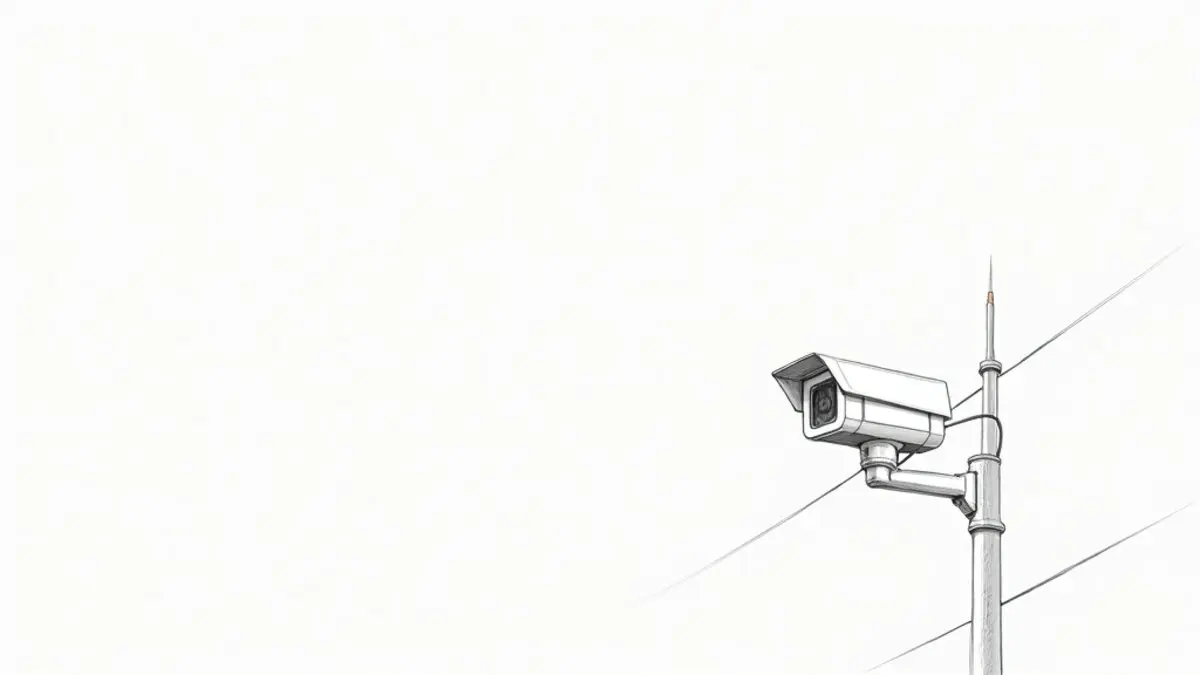
Imagine: you own a flat in Nancy, in a fairly quiet building. But for a few months, tensions with a neighbour have escalated: insults, threats, even an attempted break-in. You feel vulnerable. So, you install a small camera above your door, pointing towards your landing. After all, it's your floor, isn't it? Not quite. Because that landing is also a common area. And without the approval of the general meeting of co-owners (AG), your camera becomes a source of conflict. This is exactly what happened to a flat owner in Nancy, whose case went all the way to the Court of Cassation (cc) in 2011. The question is simple: can a flat owner install CCTV filming common areas for protection, without authorisation? The answer from the highest court is clear: no, even in cases of threat.
This decision, handed down on 11 May 2011 (No. 10-16.967), is a classic of co-ownership law. It reminds us that common areas belong to everyone, and that no one can dispose of them alone. But it also raises questions about the balance between individual security and respect for collective privacy. So, what exactly does the judgment say? And above all, what should you do if you are in this situation?
In this article, I will break down this decision as I do with my clients in Nancy, Laxou or elsewhere: without unnecessary jargon, with concrete examples. You will know what is allowed, what is not, and how to avoid costly litigation. Because yes, a badly placed camera can cost you much more than a simple inconvenience.
The Facts: A Story Like Many Others
Mr and Mrs X are co-owners in a building in Nancy. For several months, they have been subjected to threats to their physical integrity and damage to their property by certain neighbouring co-owners. Worried, they decide to react. Their solution: install a CCTV system on their lot, i.e. on the part of the building that belongs to them outright. The problem is that the camera, to be effective, inevitably films a fraction of the common areas: the landing, the entrance, the corridor. They do not seek authorisation from the general meeting (AG) of co-owners, believing that their right to security prevails.
Other co-owners consider themselves aggrieved: their privacy is exposed, their comings and goings filmed without their consent. They bring proceedings before the Tribunal de Grande Instance (TGI) of Nancy in summary proceedings (urgent procedure) to obtain the removal of the system. Their argument: the installation constitutes a manifestly unlawful disturbance (flagrant breach of the law) because it infringes their rights over the common areas and their privacy. The TGI rules in their favour. Mr and Mrs X appeal to the Court of Appeal of Nancy, which confirms the decision.
The Xs then appeal to the Court of Cassation. They raise several grounds: violation of Article 9 of the Civil Code (right to respect for private life) and Articles 6 and 8 of the European Convention on Human Rights (ECHR) (right to a fair trial and to private life). According to them, the Court of Appeal should have taken into account the threats they were facing and their right to security. But the Court of Cassation dismisses their appeal. It holds that the installation, filming the common areas without authorisation from the AG, compromises the free exercise of the rights of each co-owner over those areas, and therefore constitutes a manifestly unlawful disturbance justifying its removal.
The Reasoning of the Court — Explained
To understand this decision, we must go back to the basics of co-ownership law. The Law of 10 July 1965 governs relations between co-owners. Article 9 of this law provides that each co-owner has the use of their private areas (their flat, cellar, etc.) but cannot use them in a way that harms the rights of others. Common areas (corridors, stairs, roof, etc.) belong to everyone and their use is collective. Installing a camera that films the common areas without the AG's consent is appropriating a right that does not belong to you alone.
The Court of Cassation, in its judgment, reiterates this principle. It does not deny that the Xs may have been threatened — that is indeed why they installed the camera. But it considers that this reason does not justify overriding the rules of co-ownership. The infringement of the rights of other co-owners is immediate and established: being filmed without one's knowledge in a shared space is an intrusion into privacy (Article 9 of the Civil Code). And the lack of authorisation from the AG makes the installation unlawful in itself.
The judges do not just say 'it's prohibited'. They explain that the disturbance is manifestly unlawful, i.e. it is obvious. It is not necessary to wait for a decision on the merits (a long trial) to put an end to it. Summary proceedings are perfectly suited. In this respect, the decision is in line with consistent case law: cameras on common areas without AG approval are prohibited, even in cases of neighbour disputes. This is neither an evolution nor a reversal, but a solid confirmation.
The Xs also invoked the European Convention on Human Rights, but the Court dismisses the argument: the right to private life (Article 8) also protects the other co-owners. And the right to a fair trial (Article 6) is not violated because the proceedings were regular. In short, individual security does not justify trampling on collective rights.
What This Changes for You — Practically
Are you a landlord in Laxou? Do you rent a flat in Nancy? Are you a co-owner in a building? This decision directly concerns you. Here is how to apply it in your daily life.
If you are a co-owner and want to install a camera: never do so without the AG's consent. Even if you think you are only filming your door, the angle of view may capture a corner of the corridor or a bit of the communal garden. The AG must vote by a simple majority (Article 24 of the 1965 Law) or sometimes by an absolute majority (Article 25) depending on the case. If you disregard this, you risk an order for removal under a penalty payment (e.g. €100 per day of delay) and damages. A client in Nancy had to pay €2,500 in legal costs and remove his camera.
If you are a tenant and notice a camera filming the common areas, report it to the management company. The tenant does not have the power to act alone, but can inform the owner or the co-ownership council. If nothing is done, you can bring proceedings before the Tribunal Judiciaire (TJ) for disturbance of enjoyment.
If you are a victim of threats from neighbours, as in this case, do not give in to the temptation of a rogue camera. Other solutions exist: file a complaint, seek mediation, install an alarm system that only films your interior (without pointing at the common areas). Once, I advised a client in Laxou to install a wide-angle door viewer and an indoor motion detector. Result: no dispute, and enhanced security.
Finally, if your AG refuses to authorise a camera, you can challenge that decision if it is abusive (e.g. if it systematically blocks any security measure). But this is rare: case law is very protective of common areas.
Four Tips to Avoid This Type of Dispute
- Obtain written approval from the AG before any installation. Put the question on the agenda and provide a precise description of the camera (angle, area filmed, retention period of images). Without a favourable vote, you are at fault.
- Prefer adjustable or motion-activated cameras that only film your door or private entrance, without capturing common areas. For example, a camera fixed on your door frame, with a limited field of 90°.
- If you are a victim of threats, file a complaint and inform the management company. This creates an official record. Then, propose a collective solution (e.g. a common CCTV system, voted on at the AG) rather than an individual one.
- Consult a solicitor before installing anything. A simple 30-minute call can save you months of proceedings. In Nancy, legal costs for removing a camera can exceed €3,000 if the case goes to appeal.
Further Insight: Related Case Law and Developments
This 2011 decision is part of a consistent line of authority. As early as 2004, the Court of Cassation had held (Civ. 3e, 20 October 2004, No. 03-13.196) that installing a camera filming common areas without AG authorisation was a manifestly unlawful disturbance. More recently, in 2019, the Paris Court of Appeal ordered the removal of a camera installed by a co-owner in the hall, even though he cited repeated thefts (CA Paris, 14 March 2019, No. 18/00747).
The trend is therefore clear: judges are very strict about respect for common areas. The only notable exception concerns CCTV systems authorised by the AG or required by the co-ownership rules (e.g. upmarket buildings with cameras in common areas). But even in that case, the images must be protected and accessible only to the management company or the police.
For the future, with the proliferation of connected objects (doorbells with built-in cameras like Ring, etc.), disputes are likely to increase. Courts may need to clarify what constitutes a private lot (the door, the doormat) and what is common (the landing, the staircase). In the meantime, the golden rule remains: no camera on common areas without a vote of the AG.
Key Takeaways
FAQ:
- Can I install a camera that only films my door if it is in a common corridor? No, because the corridor is a common area. Even if you target your door, the angle of view inevitably captures the comings and goings of others.
- What should I do if my neighbour installs a camera that films me? Notify the management company by registered letter, then apply to the Tribunal Judiciaire in summary proceedings for removal under a penalty payment.
- Can the AG refuse a camera even if I have been a victim of an assault? Yes, it can refuse if it considers that other solutions exist (alarm, improved lighting, etc.). But it must give reasons for its decision.
- What is the cost of proceedings to remove a camera? Expect between €1,500 and €5,000 in solicitor's fees and court costs, depending on complexity and location. In Nancy, fees are often moderate.
- Can I film my interior with a camera that faces the street? Yes, if it only films your interior and you respect the privacy of passers-by (no capture of the public highway).
Besoin d'un conseil personnalisé ? Contactez Maître Zakine — première consultation 30 min à 45€.
In a similar situation? A 30-minute initial consultation with Maître Zakine (€45) can save you months of proceedings — and often much more. Book an appointment →
📌 Does this apply to your situation? Maître Cécile Zakine, French real estate lawyer, practises throughout France.
→ Avocat copropriété & ASL |
→ Browse all our legal articles
