Reference Decision: cc • No. 73-10.858 • 1974-07-02 • View decision →
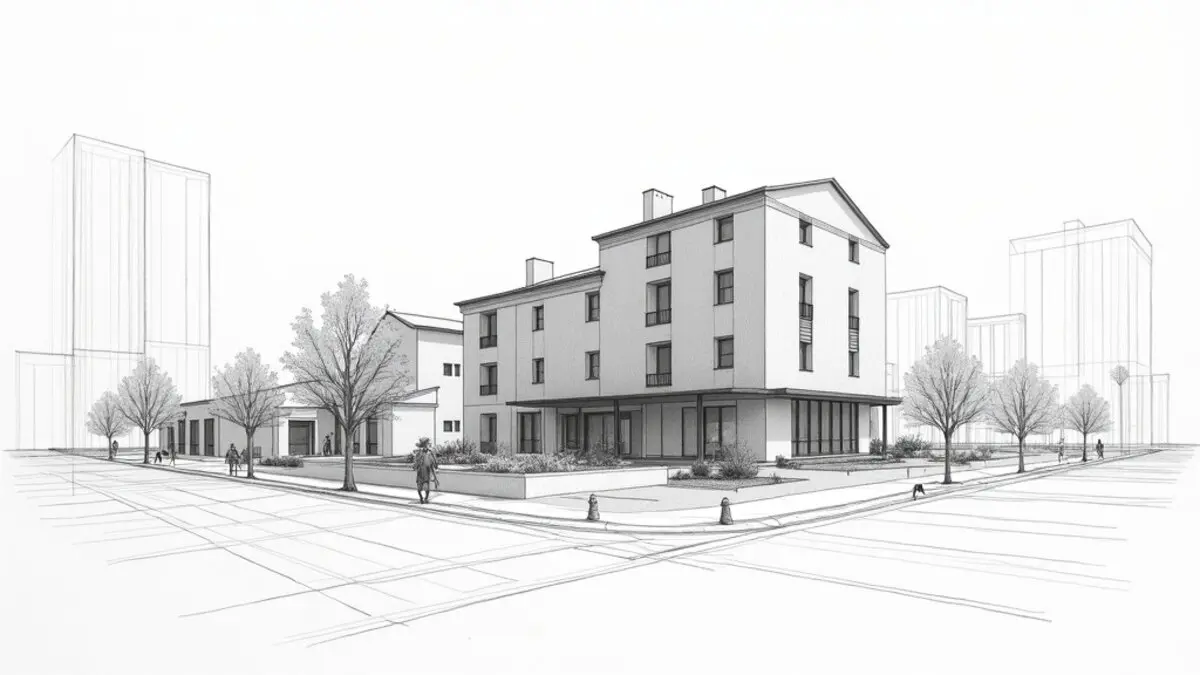
Imagine: you own a beautiful villa in Dax, with a clear view of the arena. One day, your neighbour decides to raise the height of his building. You lose part of your view, and the sunlight in your garden decreases. Furious, you sue him for breach of the local planning plan (PLU). But the court dismisses your claim: you have no direct loss. How is this possible?
This is exactly the situation that the Court of Cassation ruled on in a judgment of 2 July 1974 (No. 73-10.858). This decision, still relevant today, sets out an essential rule: before civil courts, an individual can only rely on a breach of planning regulations if he proves personal, direct loss connected with the purpose of the rule breached. In other words, it is not enough that the regulation has been infringed: the infringement must also cause you specific harm.
In this article, I will dissect this landmark decision, explain its reasoning, and above all give you concrete keys to know whether you can take action in the event of irregular construction near you. Whether you are an owner in Capbreton or Mont-de-Marsan, these principles concern you.
The facts: a story like many that happen every day
We are in the 1970s. Mr and Mrs Y own a villa in Nice. Their neighbour, Mr X, decides to raise his building by several floors, which reduces the view and sunlight of the Y's villa. The Ys sue Mr X for demolition of the additional floors, relying on breach of the planning plan (the predecessor of the PLU) which set rules on height and setback (distance between buildings).
The Court of Appeal of Aix-en-Provence dismisses their claim. Why? Because, in its view, the planning rules relied upon were intended to ensure sunlight for neighbouring buildings, but not to protect views. Yet the Ys complained mainly of loss of view. Moreover, their villa was not adjacent to the raised building: there was another building between them. The court concluded that the Ys could not rely on direct and personal loss.
The Ys appeal to the Court of Cassation. They argue that any breach of a planning regulation causes loss to all neighbours, without having to prove a specific link. But the Court of Cassation dismisses their appeal, confirming the reasoning of the Court of Appeal. It states the principle: to rely on a breach of an administrative planning regulation before civil courts, the claimant must prove direct and personal loss, i.e. a causal link between the breach and the damage suffered, and this damage must correspond to the purpose of the rule breached.
The court's reasoning — dissected
To understand this decision, we must return to the applicable law. In principle, a breach of an administrative regulation (such as a planning plan) can be relied upon by an individual before a civil court on the basis of Article 1240 of the Civil Code (formerly Article 1382), which provides: "Any act of man which causes damage to another obliges the person by whose fault it occurred to repair it."
But careful: it is not enough to show fault (the breach of the regulation). You must also prove damage and a causal link between the fault and the damage. That is what the Court of Cassation reminds us: the loss must be direct and personal. Direct means it must arise directly from the breach, not from another fact. Personal means it must affect the claimant personally, not the community as a whole.
In this case, the planning rule breached was intended to guarantee sunlight for neighbouring buildings. The Ys complained of loss of view. However, view is not protected by this rule. So, even if the rule had been breached, the loss they relied on (loss of view) was not connected with the purpose of the rule. Moreover, their villa was not directly adjacent to the raised building, which further weakened the causal link.
This reasoning is important because it prevents "pure neighbourhood" actions based simply on a breach of planning regulations. The rule breached must specifically protect the claimant's interest. For example, a rule on distances between constructions (setback) protects sunlight and privacy of direct neighbours. A rule on height may protect view if expressly provided. But a general rule on the external appearance of buildings does not benefit a particular neighbour.
What this means for you — concretely
This decision has very concrete implications for owners, tenants and property professionals. Here is what you need to remember according to your situation:
- Landlord owner: If a neighbour builds in breach of the PLU, you cannot automatically demand demolition. You must prove that this construction causes you direct loss (loss of sunlight, obstructed view, etc.) and that the rule breached precisely protects that interest. For example, in Capbreton, if a construction blocks your view of the ocean, you must check whether the PLU provides for protection of panoramic views.
- Purchaser: Before buying a property, check the planning restrictions (height, setback, etc.) and neighbouring constructions. If a neighbouring construction project risks causing you loss, act quickly at the town hall or in court. But bear in mind that your action can only succeed if you suffer personal loss.
- Co-owner: If your condominium suffers collective loss (e.g. obstructed view of common parts), the action may be brought by the condominium association. But each co-owner individually must prove personal loss to act personally.
- Property professional: When drafting a sale agreement, inform the purchaser of applicable planning rules and any neighbouring construction projects. An omission could engage your liability.
Concretely, the loss can be assessed based on the decrease in property value. For example, a loss of view can reduce the value of a villa by 10 to 20% depending on the case. But careful: courts are demanding on evidence. You will need to produce photos, expert reports, extracts of the PLU, etc.
Four tips to avoid this type of dispute
- Consult the PLU before any project: Whether you are an owner or neighbour, obtain the local planning plan of your commune (available at the town hall or online). Check the rules on height, setback, view, etc. This will avoid surprises.
- Gather evidence from the start: If you notice suspicious construction, take dated photos, measure distances, note dates. Later, it will be difficult to prove the prior existence of your loss.
- Report the breach to the town hall: The town hall may issue a planning certificate or issue a stop work order. This can stop the trouble more quickly than a court action.
- Consult a specialised lawyer before acting: A lawyer can assess your chances of success based on the nature of the loss and the rule breached. Court action is expensive (lawyer's fees, expert fees, etc.) and can last several years. Better to seek advice in advance.
Besoin d'un conseil personnalisé ? Contactez Maître Zakine — première consultation 30 min à 45€.
Further analysis: related case law and developments
This 1974 decision has been confirmed several times. For example, in a judgment of 15 June 1983 (No. 82-10.123), the Court of Cassation held that a breach of a land occupation coefficient (COS) can only be relied on by a neighbour if it causes him direct loss, such as loss of sunlight or privacy.
More recently, the Court of Cassation clarified that the loss may be moral (loss of enjoyment) or material (loss of market value). But the link with the rule breached must always be established. For example, a rule on the external appearance of buildings (materials, colours) only protects the general interest, not a particular neighbour, unless that neighbour proves specific loss (e.g. degraded view from his property).
This case law remains relevant despite the evolution of planning law. It reminds us that civil courts are not guardians of administrative legality: they cannot annul a planning permission, but only repair loss caused by an illegal construction. To challenge the legality of a permission, you must apply to the administrative court.
Summary and next steps
Here is a checklist of what to do if you are faced with a neighbouring construction that seems irregular:
- Identify the rule breached: Which article of the PLU? What does it protect (view, sunlight, privacy, etc.)?
- Assess your loss: Is this loss direct and personal? Does it correspond to the purpose of the rule?
- Gather evidence: Photos, witness statements, bailiff's report, etc.
- Consult a lawyer: He will tell you whether you have chances of success and what action to take (interim injunction, full claim, etc.).
- Act quickly: Civil liability claims are time-barred after 5 years from the date the loss became apparent (Article 2224 of the Civil Code).
In summary, the 1974 decision teaches you that breach of a planning regulation is not enough to obtain compensation: you must prove personal loss. This is a protection for builders, but also a requirement of rigour for claimants.
Are you in a similar situation? A first 30-minute consultation with Maître Zakine (€45) can save you months of proceedings — and often much more. Book an appointment →
