Reference decision: Court of Cassation, Civil Chamber • No. 75-70.004 • 10 February 1976 • View the decision →
Imagine the scene: in Valenciennes, a company that owns a piece of land receives an expropriation order. The manager, overwhelmed, entrusts his faithful employee with a formal mandate, giving him "full authority to represent the company in all dealings with the Administration and to undertake, if necessary, in its name, any proceedings he deems appropriate." The employee acts, appeals the judgment fixing the compensation. But the opposing administration raises a procedural question: is this mandate, given before the judgment, sufficient? The Court of Cassation ruled in 1976: yes. But what does this actually change for you, as a property owner or real estate professional? Analysis.
The facts: a story like any other
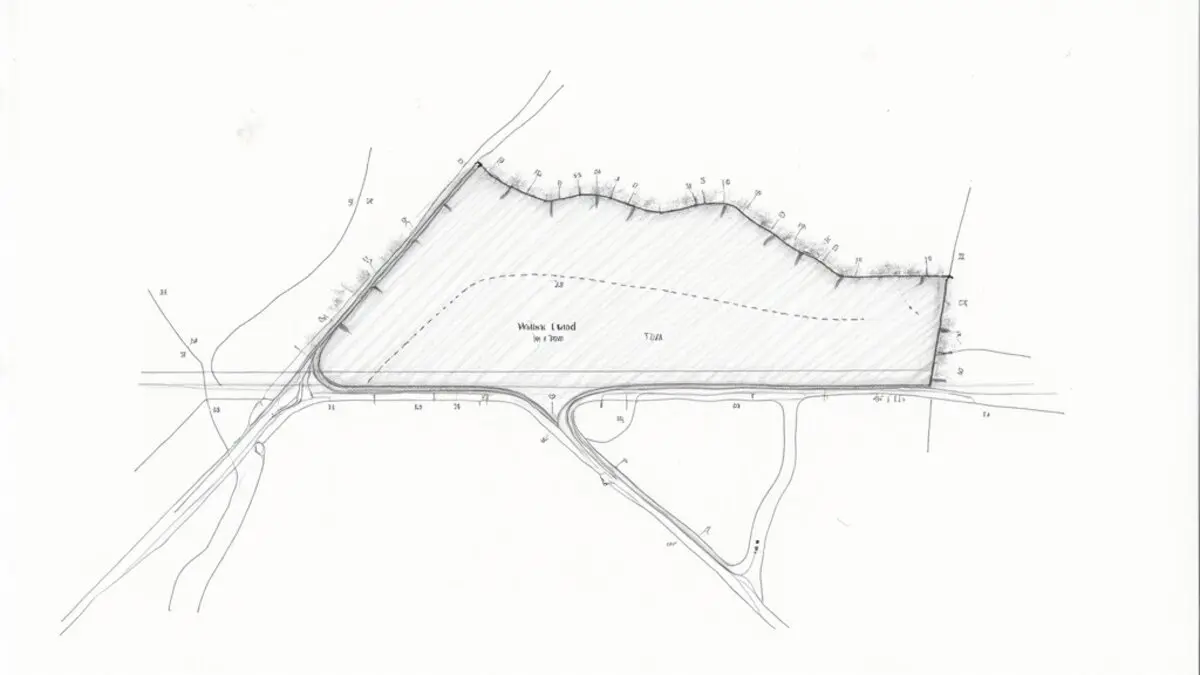
In this case, a public limited company (whose name is not specified) owned a piece of land located along the route of a future alignment – in other words, a planned public road. The administration had erected a fence on this land, and the company, which knew about the future alignment, did not protest. Later, expropriation proceedings were initiated for reasons of public utility. A judgment fixed the expropriation compensation due to the company. Dissatisfied with the amount, the company wanted to appeal. But who could do so? The manager had given a general mandate to a third party (an agent) before the judgment was rendered. This mandate authorised the agent to represent the company in all its dealings with the administration and to initiate any necessary proceedings. The agent therefore appealed. The administration contested the validity of this appeal, arguing that the mandate, drafted in general terms and given before the judgment, did not allow the agent to take legal action for a specific and future dispute. The dispute went all the way to the Court of Cassation.
The reasoning of the court — dissected
The Court of Cassation ruled in favour of the agent. It held that the appeal was admissible because the mandate, although general, conferred on the agent the power to represent the company in all necessary proceedings. In short, the Court considered that a general mandate may suffice to appeal, even if the mandate was given before the judgment was rendered. The implicit legal basis is Article 1984 of the Civil Code (which defines a mandate as an act by which one person gives another the power to do something for the principal). The Court specified that the clause "full authority to represent the company in all dealings with the Administration and to undertake, if necessary, in its name, any proceedings he deems appropriate" was sufficiently clear to include the power to appeal. However, this decision does not mean that any general mandate is valid for any proceeding. The judges examined the precise terms of the mandate. What few people know is that the Court also noted that the company had erected the fence with full knowledge of the facts, which may have influenced its position on admissibility.
What this changes for you — practically
This decision is reassuring for companies and landlord owners: it relaxes the rules of legal representation in expropriation matters. Concretely, if you own a property expropriated in Sin-le-Noble and you have given a general mandate to a property manager or a lawyer, this mandate may suffice to appeal, even if it was signed before the judgment. For example, a landlord owner who has given a mandate to his property manager "to take legal action" may have the appeal declared admissible, provided the mandate is drafted in sufficiently broad terms. On the other hand, if you are a tenant, this decision does not directly concern you, as the tenant is not a party to the expropriation. For buyers, be vigilant: if you purchase a property undergoing expropriation, check that the seller has a valid mandate to act. undefined, I have encountered cases where a too vague mandate was contested, leading to delays and additional costs. Here, the Court validates a general mandate, but it must explicitly mention the power to litigate.
Four tips to avoid this type of dispute
- Draft a precise and extensive mandate: even if a general mandate may suffice, it is better to include an express clause authorising the agent to "litigate, appeal and lodge any recourse."
- Date and sign the mandate before any dispute: the decision shows that a mandate given before the judgment is valid, but to avoid any challenge, have it signed as soon as the agent is appointed.
- Check the capacity of the agent: ensure that the natural or legal person you mandate has the legal capacity to represent a company (e.g., a lawyer, an accountant, a property manager).
- Keep a copy of the mandate: in case of a challenge, you will need to prove the existence and scope of the mandate. Keep the original or a certified true copy.
Further analysis: related case law and developments
This 1976 decision is part of a consistent line of case law: judges are favourable to the admissibility of appeals lodged by an agent, provided the mandate confers a general power to take legal action. However, an earlier decision of the same Court (Civil Chamber, 12 December 1961) had seemed to require a special mandate to appeal. The 1976 ruling therefore marks a relaxation. Since then, the trend has been to validate general mandates, provided the terms are sufficiently clear. In practice, the courts examine each mandate on a case-by-case basis. For the future, it is advisable to always include an explicit clause on the power to appeal, to avoid any challenge.
What you absolutely must remember
FAQ:
- Can I appeal an expropriation judgment if I have given a general mandate to a third party? Yes, if the mandate authorises them to initiate any necessary proceedings, as in this case.
- Do I have to give a mandate after the judgment? No, a mandate given before is valid, but it must be in force at the time of the appeal.
- What if my agent has a too vague mandate? You can regularise by giving a special mandate for the appeal, or ask the court to find that the general mandate is sufficient.
- What is the risk if the mandate is contested? The appeal could be declared inadmissible, which would cost you time and money. Better to provide a solid mandate.
- Does this decision apply to individuals? Yes, by analogy, an individual can also give a general mandate to act in expropriation.
Are you in a similar situation? A first 30-minute consultation with Maître Zakine (€45) may save you months of proceedings — and often much more. Make an appointment →
📌 Does this apply to your situation? Maître Cécile Zakine, French real estate lawyer, practises throughout France.
→ Prendre rendez-vous pour une consultation |
→ Browse all our legal articles
