Leading case: cc • No. 71-13.441 • 1973-01-17 • View the decision →
Imagine: you are the owner of a commercial premises in La Chapelle-Saint-Luc, let to a caterer. The lease specifies that the tenant may carry on "within the demised premises" a business selling soft drinks for consumption on the premises. One day, you discover that its customers are consuming on an adjoining terrace, even though it is not expressly mentioned. Can you seek termination of the lease?
Many landlords ask themselves this question. The answer? It depends on the interpretation of the clauses. And this is where a 1973 decision of the French Supreme Court, little-known but still in force, sheds light on the debate.
In this judgment (No. 71-13.441), the judges ruled: if the lease authorises without distinction a business of on-site consumption "within the demised premises", and the terrace is an appurtenance of the demised premises, then the tenant has the right to serve drinks there. A lesson for lease draftsmen and overzealous owners.
The Facts: A Story That Happens Every Day
In Rennes, in the 1970s, an owner (Mr X) granted a commercial lease of premises to a tenant (Mr Y) to operate a business selling soft drinks for consumption on the premises. The lease stipulates that the tenant carries on its activity "within the demised premises", without further detail.
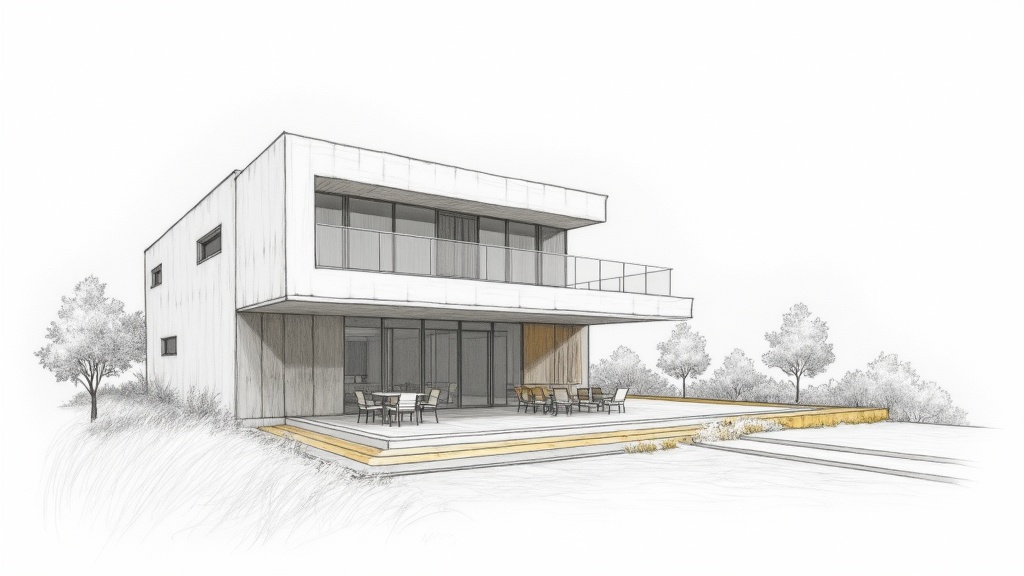
The premises have a terrace, adjoining and included in the leased area. The tenant installs tables and chairs on this terrace, and its customers consume drinks there. The owner considers himself aggrieved: in his view, the terrace is a "passageway", not intended for consumption. He sues the tenant for termination of the lease for breach of the use clause.
The court of first instance rules in favour of the owner, but the Rennes Court of Appeal reverses this judgment: it accepts that the terrace is an appurtenance of the commercial premises and forms part of the "demised premises". The owner appeals to the French Supreme Court.
The French Supreme Court, in its judgment of 17 January 1973, quashes and annuls the appeal judgment... but not in the expected sense. It criticises the Court of Appeal for having held that drinks were served on a terrace intended to be a passageway, while accepting that this terrace was an appurtenance of the demised premises. In other words, the Court of Appeal distorted the lease: since the terrace forms part of the demised premises and the lease authorises on-site consumption without restriction, the tenant is within his rights. Termination is unjustified.
The Reasoning of the Court — Deconstructed
The French Supreme Court relies on a fundamental principle: the judge cannot distort a clear and precise agreement. Here, the lease is clear: the authorisation to carry on a business of on-site consumption applies "within the demised premises". Since the terrace is an appurtenance of those premises, it is included.
The owner argued that the terrace was a "passageway", which the Court of Appeal had accepted. But the French Supreme Court considers that this characterisation is contradictory with the acceptance that the terrace forms part of the demised premises. If it forms part of them, then the clause applies to it, full stop.
This judgment reminds us of the force of contractual clauses. Judges cannot add restrictions that are not contained therein. Here, the lease did not prohibit consumption on the terrace; therefore, it is permitted.
This decision is part of consistent case law: the contract is the law of the parties. It confirms that the lessor must be precise in drafting the use clause if he wishes to restrict the use of certain parts of the demised premises.
What This Means for You — Practically
For landlord owners: if you let premises with a terrace, and you wish to restrict its use, you must expressly stipulate this in the lease. For example, in Nogent-sur-Seine, an owner recently lost a dispute because the lease did not specify that the terrace was reserved for circulation. Result: the tenant installs tables there, and the owner can do nothing about it.
For tenants: you may consume on the terrace if it is included in the demised premises and the lease does not prohibit it. Check your contract. If a clause is ambiguous, have it clarified in writing.
For purchasers: before buying a commercial premises, ask to see the lease and check the use clause. A terrace can be an important commercial asset.
Example figures: in La Chapelle-Saint-Luc, a similar dispute cost the owner €8,000 in legal fees and costs, which could have been avoided with a well-drafted clause.
Four Tips to Avoid This Type of Dispute
- Draft the use clause precisely. Do not simply write "within the demised premises", but detail: "within the interior of the premises and on the adjoining terrace" or "only within the interior of the premises".
- Define the notion of terrace in the lease. Specify whether it is a passageway, parking area, or consumption area. Indicate the hours and permitted furniture.
- Carry out a detailed inventory of fixtures. Mention the terrace, its area, and its intended use. This will avoid subsequent disputes.
- In case of doubt, consult a lawyer before signing or contesting. A consultation costing €45 may save you thousands of euros in legal costs.
Further Exploration: Related Case Law and Developments
This decision is part of a line of judgments that protect contractual freedom. For example, in a judgment of 8 February 1989, the French Supreme Court held that a lease clause authorising "all trades" included a bar activity, even though the premises were located in a residential area. Conversely, in a judgment of 12 June 2002, it upheld the termination of a lease where the tenant used an interior courtyard to store goods, because the lease limited the use to the interior of the premises.
The trend is clear: judges respect the letter of the contract. If the lessor wishes to restrict the use, he must write it in black and white. Failing that, the tenant may exploit the demised premises as he sees fit, subject to the intended destination.
For the future, with the development of heated terraces and seasonal extensions, this issue remains crucial. Leases should include specific clauses on the occupation of public or private land.
Frequently Asked Questions
Can I prohibit my tenant from using the terrace if the lease does not mention it? No, if the terrace forms part of the demised premises and the lease authorises the activity without restriction. You must obtain its agreement or amend the lease.
What if the tenant installs a terrace on public land? That is different: public land is not within the demised premises. You may require compliance with municipal authorisations. Consult a lawyer.
What are the time limits for seeking termination? Generally, you must act within 5 years from the date of the breach. But it is better to react quickly.
Can the tenant sublet the terrace? No, unless expressly authorised by the lease. Partial subletting is prohibited without agreement.
How to draft a use clause without risk? Engage a lawyer specialising in property law. A standard clause could be: "The tenant shall carry on business exclusively within the interior of the premises, to the exclusion of any terrace, even adjoining."
Are you in a similar situation? An initial 30-minute consultation with Maître Zakine (€45) may save you months of proceedings — and often much more. Book an appointment →
📌 Does this apply to your situation? Maître Cécile Zakine, French real estate lawyer, practises throughout France.
→ Avocat bail commercial |
→ Browse all our legal articles
