Reference decision: French Court of Cassation • No. 64-92.952 • 18 November 1964 • View the decision →
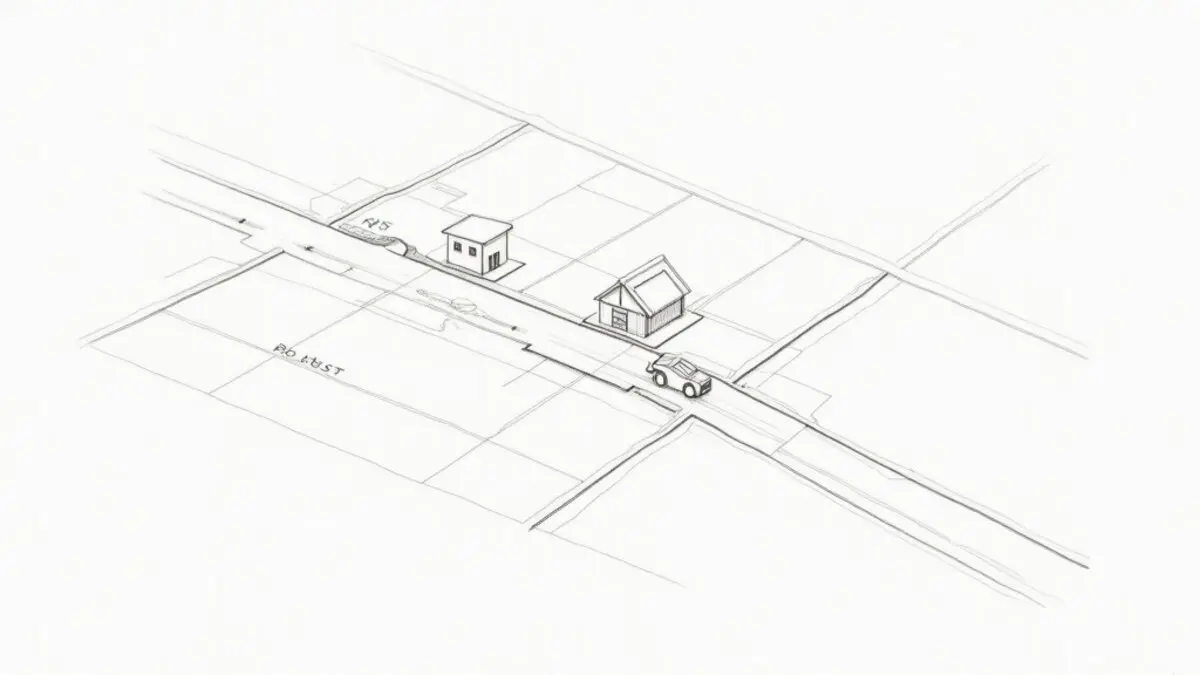
Imagine yourself in Tournefeuille, in the suburbs of Toulouse. You have owned an agricultural plot for decades. One day, the land consolidation commission decides to allocate it to another owner in exchange for another piece of land. Dissatisfied, you challenge this decision before the administrative court. Good news: the court annuls the decision. Relieved, you return to cultivate your plot as before. But then, the new owner files a complaint for obstruction of cultivation. You risk a fine. Unfair, right? That is precisely what the French Court of Cassation ruled in 1964, in a decision that still stands as authority.
The question every owner affected by a land consolidation asks: from when can I retake possession of my plot? The answer is more subtle than it seems. This decision of the Criminal Chamber of the French Court of Cassation of 18 November 1964 (No. 64-92.952) reminds us of an essential rule: as long as the new decision of the departmental commission is not enforceable, the former owner is not entitled to cultivate the plot allocated to another. And this is so even if the initial decision has been annulled.
In short, this decision protects the stability of land consolidation operations. It prevents owners from retaking their land by their own means, which would create legal chaos. But it also imposes great caution on the farmers concerned. So, what should be done in practice?
The Facts: A Story Like Many Others
The case took place in the 1960s, probably in the South-West, perhaps around Toulouse. An owner, let's call him Mr. Dupont, owned an agricultural plot. As part of a land consolidation operation, the departmental commission for land reorganisation and consolidation decided, in 1961, to allocate this plot to another owner, Mr. Martin. Mr. Dupont disagreed. He challenged the decision before the administrative court, which ruled in his favour: the commission's decision was annulled. Relieved, Mr. Dupont believed he was authorised to return to cultivate his plot. He planted, ploughed, harvested. But Mr. Martin, who still considered himself the new owner, filed a complaint. He invoked Article 53 of the (former) Rural Code, which punishes anyone who obstructs cultivation after land consolidation.
The criminal court convicted Mr. Dupont for this offence. Mr. Dupont appealed, then appealed to the Court of Cassation. He argued that since the consolidation decision had been annulled, he had become the owner again and could therefore cultivate freely. The Court of Cassation dismissed his appeal. It held that even if annulled, the commission's decision had produced effects as long as a new decision had not become enforceable. In other words, the transfer of ownership was not retroactively erased. One must wait for the new decision of the departmental commission, after annulment, for rights to be restored. In the meantime, Mr. Dupont was not authorised to cultivate the disputed plot.
The Court's Reasoning — Analysed
The legal basis is Article 53 of the (former) Rural Code, which provides: "Anyone who obstructs cultivation after land consolidation shall be punished by a fine of 25,000 to 50,000 francs." This article aims to ensure the effectiveness of land consolidation operations. But the central question was: what happens when the consolidation decision is annulled?
The Court of Cassation answers: the offence is constituted even if the decision has been annulled by the administrative court, for as long as the new decision of the departmental commission, which is to rule after the annulment of the previous one, has not become enforceable. In other words, the annulment does not have an immediate effect on the right of ownership. The original owner cannot take the law into his own hands. He must wait for the commission to rule again.
This reasoning is based on the principle of continuity of land consolidation operations. The judges consider that the annulment of an administrative decision does not retroactively erase the property transfers that have taken place. Otherwise, there would be chaos: everyone would retake their plot, and no one would know who cultivates what. The solution is harsh for Mr. Dupont, but it is legally logical. The Court of Cassation thus confirms its earlier case law, which favours legal certainty in land consolidation operations.
Note, however: the decision does not say that Mr. Dupont has definitively lost his plot. It simply says that he must wait for the new decision of the commission. If this new decision returns the plot to him, he will then be able to cultivate it. But in the meantime, he must refrain.
What This Means for You — Practically
For owners affected by a land consolidation, this decision is a warning: do not retake your land before the new decision of the commission is enforceable. Concretely, if you have challenged a consolidation decision and obtained its annulment, you must be patient. The delay can be several months, or even years, depending on the complexity of the case.
For tenants or agricultural operators, be vigilant: if you cultivate a plot allocated to another, you may be prosecuted for obstruction. Even if the former owner authorised you to cultivate, you are not safe.
Take a concrete example in Toulouse. A farmer, Mr. Garcia, sees his plot allocated to a neighbour during a land consolidation. He challenges and obtains an annulment. Thinking everything is settled, he sows wheat on his plot. The new owner files a complaint. Mr. Garcia risks a fine of 25,000 to 50,000 francs (approximately €3,800 to €7,600 today, with inflation). Not to mention legal costs. If you are in this situation, you must wait for the new decision of the departmental commission. In practice, inform yourself of the timetable for the new procedure from the commission.
For buyers of consolidated plots, check that the decision is final. If it is challenged, wait for the end of the procedure before investing.
Four Tips to Avoid This Type of Dispute
- Never cultivate a plot until the consolidation decision has become enforceable. Even if an annulment gives you hope, wait for the new decision of the departmental commission.
- If you challenge, follow the procedure through to the end. Do not rely on a partial annulment; ask the commission to rule quickly.
- Consult a solicitor specialising in rural law. They will advise you on the steps to take and the criminal risks.
- Document all administrative decisions. Keep the dates of notification and appeals. This may be crucial to prove your good faith.
Besoin d'un conseil personnalisé ? Contactez Maître Zakine — première consultation 30 min à 45€.
Further Reading: Related Case Law and Developments
This 1964 decision is part of a consistent line of case law from the Court of Cassation. For example, a judgment of 20 February 1963 (No. 62-91.234) had already held that the original owner who retakes his plot after annulment of the consolidation decision commits the offence of obstruction. The case law is therefore stable. More recently, the Court of Cassation recalled in a judgment of 12 January 2010 (No. 09-80.123) that the offence is constituted as soon as the plot is cultivated without right, regardless of the validity of the administrative decision.
Note, however: since 1964, the Rural Code has been amended. Article 53 has become Article L. 123-1 of the Rural and Maritime Fishing Code, but the notion of obstruction of cultivation remains. The courts continue to apply the same rule. What few people know is that good faith is not a defence: even if you thought you were entitled to cultivate, you can be convicted.
For the future, the trend is towards strengthening legal certainty in land consolidation operations. The judges are very strict about compliance with administrative procedures. So it is better to be patient and follow the legal channels.
Key Points to Remember
FAQ:
1. Can I cultivate my plot if the consolidation decision has been annulled? No, as long as the new decision of the departmental commission has not become enforceable, you commit an offence.
2. What do I risk if I cultivate despite the annulment? A fine of up to 50,000 francs (approximately €7,600 today), and procedural costs.
3. How do I know if the new decision is enforceable? It becomes so after its adoption by the commission and its notification to the parties. Ask the commission.
4. Can I claim damages if I lose my harvest? Yes, if you believe the commission delayed in ruling, you can bring a liability action, but that is a separate procedure.
5. What should I do if the former owner cultivates my plot? File a complaint for obstruction of cultivation. The police or gendarmerie can record the facts.
Are you in a similar situation? A first 30-minute consultation with Maître Zakine (€45) can save you months of procedure — and often much more. Book an appointment →
📌 Does this apply to your situation? Maître Cécile Zakine, French real estate lawyer, practises throughout France.
servitude-droit-passage-avocat/" rel="dofollow">→ Avocat servitudes & foncier |
→ Browse all our legal articles
