Reference Decision: cc • No. 12-17.277 • 2013-09-11 • View the decision →
Imagine yourself in Mimizan, on the Landes coast. You received from your parents, twenty years ago, a beautiful 2,500 m² plot in a buildable zone. You built your holiday home there, thinking you had made the right choice. But then, upon your parents' death, the municipality revises its local urban plan (PLU): from now on, to be buildable, a plot must be at least 3,000 m². Your parcel, once valued, suddenly loses a large part of its value. How does this affect the division of the inheritance with your brothers and sisters?
This situation, much more common than one might think in our Landes region, was settled by the Cour de cassation in a fundamental decision. Every property owner who has benefited from a donation (an act by which one gives an asset during one's lifetime) asks this question: if the value of the asset changes between the time of the donation and the opening of the succession (the death of the donor), how does this influence the rights of the other heirs?
The answer, technical but crucial, touches the heart of patrimonial transmission. It concerns all those who have received a property through donation, but also donors concerned with fairness between their children. In municipalities like Saint-Vincent-de-Tyrosse where urban planning evolves rapidly, this question is not theoretical.
The Facts: A Story That Happens Every Day
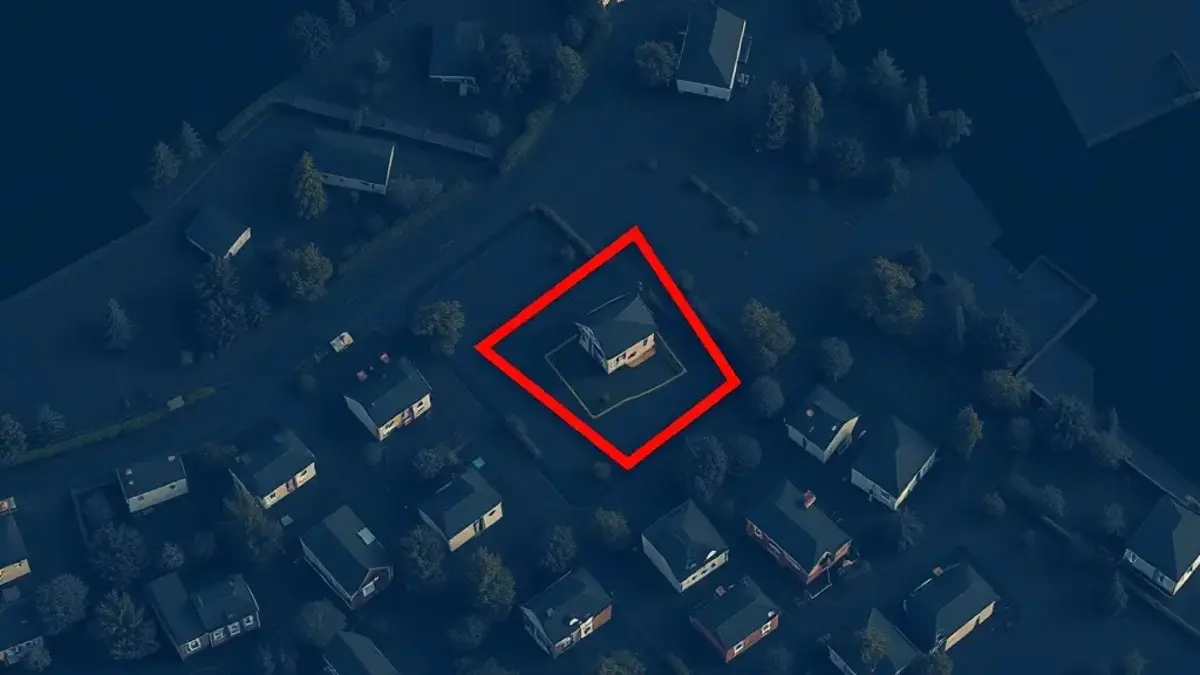
The story begins in the 1990s, somewhere in a municipality in the Landes. Mr. Roland, owner of several plots, makes a donation (a gift during his lifetime) to his daughter, Ms. Z. He gives her two plots classified in zone NB (natural and forest zone, often buildable under conditions) in the land use plan (POS, the predecessor of the PLU) of the time. These plots were then buildable, and Ms. Z builds her house there, thinking she had received an asset of stable value.
But in 2001, the municipality revises its POS. The rules change: from now on, to be buildable in zone NB, a plot must have a minimum area of 3,000 m². However, the plots given to Ms. Z are smaller than this surface. Overnight, their potential value collapses: they can no longer accommodate new construction, except for very limited exceptions.
A few years later, Mr. Roland dies. His other children, who did not benefit from donations, claim their legitimate share in the succession. They believe that the donation made to their sister should be revalued at its current value, much lower than at the time of the donation. Ms. Z, on the other hand, maintains that the donation should be counted at its value at the time she received it. The disagreement is total, and the family ends up in court.
After a first judgment in favour of the brothers and sisters, Ms. Z appeals. The court of appeal rules in her favour, considering that the loss of value due to the zoning change should not be taken into account. But the other heirs do not give up: they appeal to the Cour de cassation (they ask the highest court to verify whether the law was correctly applied). This is where the case takes a decisive turn.
The Court's Reasoning — Explained
The Cour de cassation, in its judgment of 11 September 2013, will settle this dispute by relying on Article 922 of the Civil Code in its version prior to 2006. This article organises what is called the réduction (the possibility for heirs to request that excessive donations be brought back to the share due to each). The reasoning of the judges is precise and technical, but I will simplify it for you.
Article 922 provides that, to calculate what each heir should receive, one must first constitute a masse (a whole) of all assets existing at death. To this masse, one fictitiously adds (i.e., without physically taking them back) the assets that were given during the deceased's lifetime. But — and this is the crucial point — these donated assets must be evaluated "according to their condition at the time of the donation and their value at the opening of the succession".
In other words, one looks at the condition of the asset at the time of the donation, but applies to it the value it has at the time of death. In Ms. Z's case, this means that one takes into account the fact that the plots were buildable in 1990 (their condition at the time of the donation), but attributes to them the value they have in 2013, after the zoning change.
The Cour de cassation adds an essential clarification: if the condition of the asset has changed between the donation and the death, this must be taken into account only if this change results from a fortuitous cause or is independent of the action of the donee (i.e., independent of the action of the person who received the gift). Here, the zoning change by the municipality is clearly a cause independent of Ms. Z: she did nothing to provoke this regulatory modification. Therefore, the loss of value must be taken into account.
This reasoning confirms a consistent case law: the judges protect the balance between heirs. If the value of a donated asset decreases for reasons independent of the beneficiary, this decrease benefits the other heirs. undefined, I have encountered cases where plots in Saint-Vincent-de-Tyrosse, formerly in zone UA (urban), have moved to zone N (natural) after a revision of the PLU, creating similar situations.
What This Changes for You — Concretely
But what exactly does this change for you, property owner, tenant, or real estate professional? Let's take concrete examples.
If you are an heir who has not received a donation: This decision protects you. Imagine that your brother received a plot in Mimizan worth €200,000 at the time of the donation. If, at your parents' death, this plot is now worth only €100,000 due to a zoning change, it is this reduced value that will be taken into account for the division. You will thus receive a larger share of the other assets in the succession. Concretely, on a total succession of €500,000, this can gain you several tens of thousands of euros.
If you are the beneficiary of a donation: However, be careful: you must anticipate this risk. If you received a plot in Saint-Vincent-de-Tyrosse ten years ago and the planning rules evolve, the value of your donation can decrease. This means that at the donor's death, you might have to "return" part of the advantage received, not in kind, but by receiving less in the rest of the succession. In some extreme cases, if the donation exceeds your reserved share (the minimum share that the law guarantees you), you might even have to compensate the other heirs.
If you are a notary or a wealth management advisor: This decision reinforces the need for precise evaluation of donations. When you advise a client on a property donation, you must alert them to the risks of regulatory evolution. A clause of rapport à valeur constante (which fixes the value of the donation irrevocably) can be considered, but it is regulated by law.
If you are a purchaser: When you buy a plot, check not only its current zoning but also the planned evolutions in the PLU. A plot in a buildable zone today may no longer be so tomorrow, which would impact its value and, if you received it through donation, your future succession.
Four Tips to Avoid This Type of Dispute
- Consult the PLU before any property donation: Go to the town hall or the municipality's website to know the applicable planning rules and planned evolutions. In Mimizan, for example, some coastal zones are particularly sensitive to restrictions.
- Have the asset evaluated by an expert: Do not rely on an approximate estimate. A surveyor-expert or a notary can give you a precise value, taking into account regulatory risks. Expect €500 to €1,500 for a complete appraisal.
- Consider a donation-partage: This act allows the distribution of assets among heirs in a definitive manner, by locking in the values at the time of the donation. It is more complex but avoids subsequent disputes.
- Document any change in the condition of the asset: If you improve the plot (servicing, clearing), keep the invoices and authorisations. This will prove that you contributed to its value, which can influence its evaluation.
Deep Dive: Related Case Law and Evolutions
This decision fits into a consistent line of case law. Already in 1995 (Cass. 1re civ., 28 June 1995, no. 93-15.902), the Cour de cassation had ruled that the value of donated assets should be assessed at the opening of the succession, taking into account modifications that occurred. But it clarifies an important point here: only modifications independent of the donee are taken into account.
What few people know is that this rule also applies in the other direction. If the value of the asset has increased for causes independent of the beneficiary (for example, a new bus line serving the neighbourhood), this increase also benefits the other heirs. The trend of the courts is clear: they prioritise equity between heirs over the stability of donations.
For the future, with the multiplication of PLU revisions in the Landes (notably to protect natural zones), this type of dispute is likely to increase. Property owners must be vigilant, especially in municipalities with strong evolution like Saint-Vincent-de-Tyrosse where urban planning is a major issue.
Frequently Asked Questions
Q: My father gave me a plot 15 years ago. If the PLU changes and makes it less buildable, do I have to repay my brothers?
A: No, you do not repay directly. But the value of the donation will be reduced in the calculation of the succession, which means that your brothers will receive more of the other assets. If the donation exceeds your reserved share, you might owe compensation.
Q: How to react if I am the beneficiary of a donation and the zoning changes?
A: Consult a specialised lawyer immediately. They can advise you on the options: family renegotiation, insurance, or preparation of the succession. Act before the donor's death.
Q: Does this also apply to apartment donations?
A: Yes, the principle is the same. If the value of the apartment decreases due to a regulatory change (like classification as a degraded co-ownership), this affects the evaluation of the donation.
Q: Can this rule be circumvented by a contract?
A: Partially. A clause of rapport à valeur constante can fix the value, but it is subject to conditions and can be challenged if it prejudices the reserved heirs (those entitled to a minimum share).
Do you find yourself in a similar situation? A first 30-minute consultation with Maître Zakine (€45) can save you months of proceedings — and often much more. Book an appointment →
Useful resources on cecile-zakine.fr
